

Don't want to trade it yourself?
Our desk runs DEX portfolios on profit share.
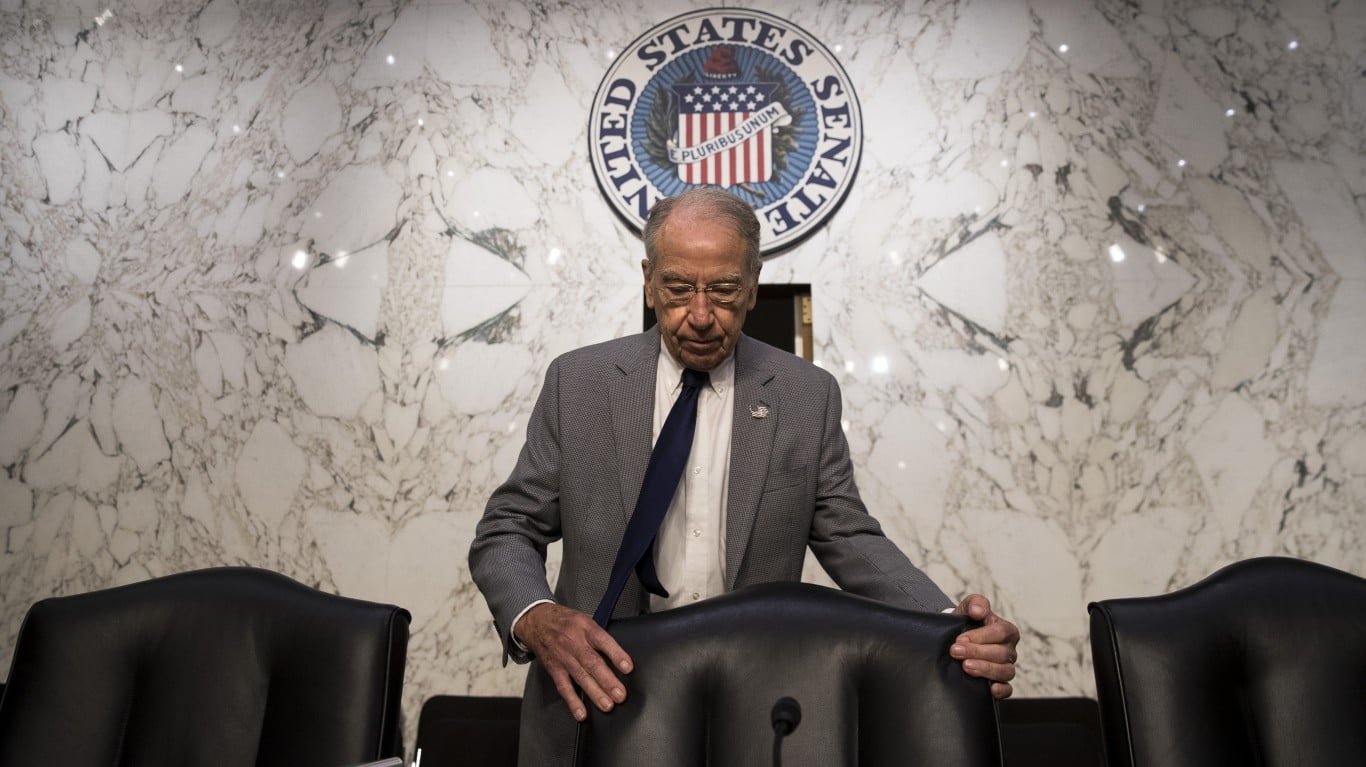
The Senate votes at 2:15 p.m. ET on September 15 on whether it can start debating the CLARITY Act. XRP (CRYPTO:XRP), Bitcoin (CRYPTO:BTC), Ethereum (CRYPTO:ETH) and Solana (CRYPTO:SOL) are already commodities in the eyes of the SEC and the CFTC,…
This post may contain links from our sponsors and affiliates, and Flywheel Publishing may receive compensation for actions taken through them.
The Senate votes at 2:15 p.m. ET on September 15 on whether it can start debating the CLARITY Act.XRP(CRYPTO:XRP),Bitcoin(CRYPTO:BTC),Ethereum(CRYPTO:ETH) andSolana(CRYPTO:SOL) are already commodities in the eyes of the SEC and the CFTC, but the agencies said so in a document the next SEC can rewrite.
So what is the CLARITY Act, and what does today’s vote decide for the four biggest coins?
The CLARITY Act Splits Crypto Between Two Regulators
TheDigital Asset Market Clarity Act, filed as H.R. 3633, sorts every coin into one of two boxes. A digital commodity is a coin whose value comes from people using and trading the network, the way Bitcoin works, and the Commodity Futures Trading Commission would police those. A digital security is a coin whose value depends on a company doing the work, and the Securities and Exchange Commission would police those.
Today regulators answer it one enforcement action at a time. The SEC files a complaint, a court rules, and one more token gets its label years after anyone needed it. Ripple spent four years in that process over XRP.
The House passed the bill in July 2025 by 294 votes to 134, and the Senate Banking Committee cleared it 15 to 9 on May 14, 2026. Senators Cynthia Lummis, John Boozman and Tim Scott released the substitute text on September 13 and 14, running 635 pages and carrying 126 changes Democrats had asked for.
Today’s Vote Needs 60 Senators and Two Ethics Holes Could Cost It
Cloture ends debate on whether the Senate takes a bill up, and it needs 60 votes. Clearing it does not pass the CLARITY Act. Republicans hold 53 seats, so at least seven Democrats have to cross the aisle before senators can start arguing about the text.
Those seven have a reason to hold back. Democrats made the ethics package the price of moving the bill. The text released on September 13 and 14 makes federal officials, judges and their spouses divest their crypto or put it in a blind trust, and it bars them from issuing or sponsoring tokens. Both the Justice Department and state attorneys general can enforce it.
However, the package leaves two holes. Officials’ children fall outside it, and the whole provision expires in January 2029, which is roughly when the current presidential term ends. Democratic negotiators are still pressing on both gaps. Polymarket traders price the bill at 29.5% to become law this year, and Kalshi reads 37%, so the market expects those seven votes to stay home.
Bitcoin, Ethereum, Solana, and XRP Are Already Commodities on Paper
The SEC and CFTC issued a 68-pagejoint interpretationon March 17, 2026, naming 16 tokens as digital commodities instead of securities. Bitcoin, Ethereum, Solana and XRP all appear on it, alongside Dogecoin, Cardano, Chainlink and nine others. The document binds both agencies, which puts it above the staff guidance the industry worked from before.
Crypto classification climbs a four-rung ladder, with staff guidance at the bottom, then a Commission interpretation, then a formal rule, then a statute at the top. The joint interpretation put crypto on rung three, and a future Commission can pull it back down without asking Congress. Only the CLARITY Act reaches the fourth rung.
Beyond that shared gain, each coin picks up something different. Bitcoin gains nothing new, because no regulator has questioned its status in years. Ethereum picks up the staking rules and the DeFi language, which forces trading venues that call themselves decentralized to register.
The apps and trading venues people use to buy Solana tokens would have to register for the first time, and the SEC named SOL a core ETF asset on September 5, 2026. XRP gets permanence on a classification that took seven years and a courtroom to reach.
The Vote Decides Whether Crypto Reaches the Fourth Rung
A yes vote sends the CLARITY Act to floor debate, and the four coins keep the commodity label with a statute behind it instead of a document. Ripple and every exchange that has guessed at the rules since 2018 get an answer that survives the next election.
A no vote leaves the March interpretation standing, and it still binds both agencies. The SEC’s own Regulation Crypto Assets proposal from September 1, 2026 becomes the next best route to a rule. However, the bill would be dead until after the November 3 midterms. The House has already canceled the weeks of September 21 and 28, and Lummis has warned the next realistic attempt may not come until 2030.
Contact [email protected] for any questions or corrections.
Sam Daodu is a crypto analyst who’s spent nearly a decade making blockchain understandable—no easy task when most whitepapers read like fever dreams. He writes for 24/7 Wall St., covering Bitcoin, altcoins, and crypto market analysis for investors. Before crypto, he was a tech writer (back when explaining “the cloud” was peak innovation). Since 2018, he’s written for CoinTelegraph, Yahoo Finance, The Block, Cryptonews, Zypto, Rain, and more—basically anywhere people want crypto news without the headache. Sam runs MacLabs Marketing, a content agency for crypto brands tired of sounding like AI wrote their website. He also publishes free crypto education on his site for Web3 enthusiasts who think “gas fees” is a typo. When he’s not writing or staring at charts, Sam’s either: – Watching anime (currently convinced One Piece has better tokenomics than most altcoins) – At the gym sculpting himself into a Greek god – Listening to the music your mum warned you only bad boys listen to Connect: LinkedIn | Email | MacLabs Marketing
Source: 247wallst.com