

Don't want to trade it yourself?
Our desk runs DEX portfolios on profit share.
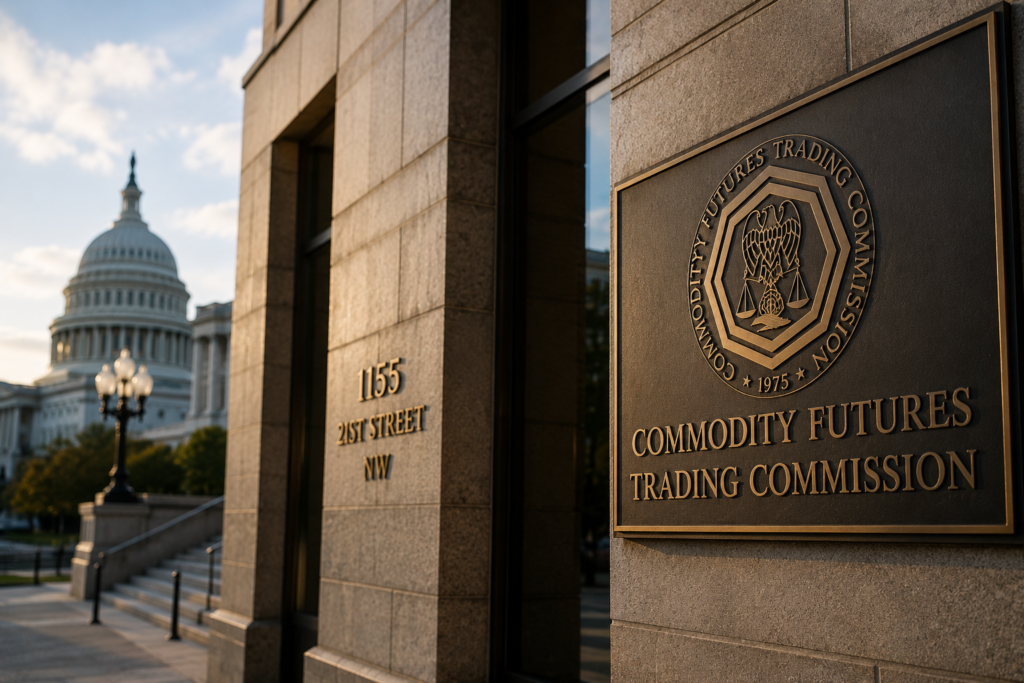
CFTC Chair Michael Selig says the agency will move ahead with its own crypto market rules if the CLARITY Act keeps stalling in the Senate. Legal experts say a CFTC-only framework would leave the industry’s core security-versus-commodity question unresolved, and warn any rules it produces could prove far less durable than the legislation it’s meant to replace.
As the United States Senate continues to delay its vote on the CLARITY Act, Commodity Futures Trading Commission (CFTC) Chair Michael Selig has stepped up to the challenge.
“If CLARITY continues to stall because of Democratic obstruction, the CFTC will utilize its existing authorities to begin establishing a regime for crypto asset markets. We owe it to the American people to do so,” Selig said on August 19.
The next scheduled vote for the Senate on the CLARITY is September 15. However, the industry has already seen two delays: in January and again in August.
Legal experts note that it is “more likely” the industry will see proposed CFTC rules before CLARITY becomes law. However, the September 15 vote could also change that assessment.
Charles Farrell, a senior managing associate at Dentonsspecializing in securities, commodities, and digital assets, added that the vote is only “cloture on the motion to proceed.”
“CFTC staff has already begun exploring rules and, given Selig’s pace and the industry input already collected, a proposal could be prepared relatively quickly; however, his pledge to give CLARITY ‘breathing room for a vote’ suggests publication is more likely after September 15 if the bill stalls,” Farrell said.
Want to see more from DefiRate? Add us as a preferred news
CFTC crypto rules vs CLARITY Act
Selig was clear about what his backup plan would actually look like. A framework that could enable any crypto exchange to register as a new type of designated contract market, called a “crypto asset market” and offer cryptocurrency trading on a leveraged or margined basis under the agency’s regulatory oversight.
While a meaningful regulatory lift, legal experts caution it looks nothing like a full replacement for the CLARITY Act itself.
“CLARITY draws the line between the CFTC and the SEC by statute. The CFTC acting alone can’t draw that line. It can only build on its side of it,” Braden Perry, a former CFTC senior trial attorney and co-founder and partner at Kennyhertz Perry, LLC said.
If it goes ahead any CFTC framework will cover exchange registration, leveraged retail products, and a new crypto asset market designation. This would also mean the security-versus-commodity question will likely remain unanswered
“An agency framework covers the plumbing. It can’t settle the property line,” he noted.
Farrell added that the CFTC’s current authority does not extend to the kind of broad oversight that the CLARITY Act would hand it. While it does hold authority over derivatives, certain leveraged retail commodity transactions, and anti-fraud and anti-manipulation authority in spot commodity markets, it does not have the general supervisory authority over unleveraged spot digital commodity trading that CLARITY would provide.
“Because the CFTC cannot by itself determine the outer boundary of the federal securities laws, any asset-classification framework would require close coordination with the SEC and would remain less durable than a statutory allocation of jurisdiction,” Farrell said.
A weaker form of certainty
Selig himself has acknowledged that legislation would be harder to unwind than agency rulemaking.
“Passing CLARITY is the surest way that we can prevent another Gary Gensler from running a rogue campaign of lawfare against the individuals and companies in this room,” he said, framing the bill as a “future-proofing” mechanism for the digital assets industry.
Perry noted that Selig is not wrong. Agency rules can be rewritten by the next administration and vacated by courts. Perry added that after the Loper Brightcase, where the Supreme Court endedChevron defense, ruling that Federal courts, not government agencies, have the final authority to interpret ambiguous laws, judges tend to give agencies “far less benefit of the doubt on ambitious readings of old statutes.”
However, in the absence of legislation, CFCT rulemaking could be the “the next strongest avenue for the industry to have legal certainty,” Ron Hammond, head of policy and advocacy at Wintermute said.
“We’ve seen a plethora of rules from previous agencies either go away entirely or do a 180-degree pivot from the original intention,” Hammond said. “The difference this time is that this administration has prioritized new rulemaking for digital assets, rather than relying on laws from 90 years ago.”
For an industry that has spent years navigating regulation-by-enforcement, they could be concerned about a rule the next administration could rewrite.
According to Felix Shipkevich, a fintech regulatory attorney and a special professor of law at Hofstra University, this could make digital asset firms more reluctant to make long-term structural or capital decisions until Congress provides a framework that is much harder to unwind.
Perry noted companies could be pushed to register in areas where it is “cheap” and to litigate in areas where it is “expensive,” while lobbying for statute.
“Firms won’t make ten-year infrastructure bets on a framework that could be gone in three.”
The upshot seems to be a kind of split-track compliance while the industry waits for the outcome of the vote. With 60 votes required and significant issues still needing resolution, the CFTC could beat the Senate to the punch.
And even if the vote in favor passes it is just a “procedural step,” meaning the CFTC “has a strong incentive to continue developing a regulatory framework in parallel.”

House Committee Holds CLARITY Act Field Hearing to Rally Support for Legislation
Tribal Leaders Press Senate to Add Sports Prediction Market Ban to CLARITY Act
July or Never? Clarity Act’s Final Stretch
Source: defirate.com
1 Comment
Pingback: Thailand SEC: Advances Bitcoin ETF Regulations – xpertsstudio