

Don't want to trade it yourself?
Our desk runs DEX portfolios on profit share.
Add to Google Preferred Sources
SEC Chairman Paul Atkins said he expects the Senate to hold a procedural vote on the CLARITY Act on September 15, expressing hope the bill will pass and reach President Donald Trump for signature. The cloture vote requires 60 votes to open formal debate on the digital asset market structure legislation, which would divide regulatory authority between the SEC and CFTC. The House passed its version in July 2025, and the Senate Banking Committee advanced a companion measure in May 2026, but full-chamber action was delayed past the August recess amid disputes over stablecoin rewards and ethics provisions tied to Trump family crypto interests. Regulators are moving ahead independently, with the SEC sending a crypto custody proposal to the White House on August 25 and the CFTC preparing its own digital asset rules if Congress fails to act.
Key Elements
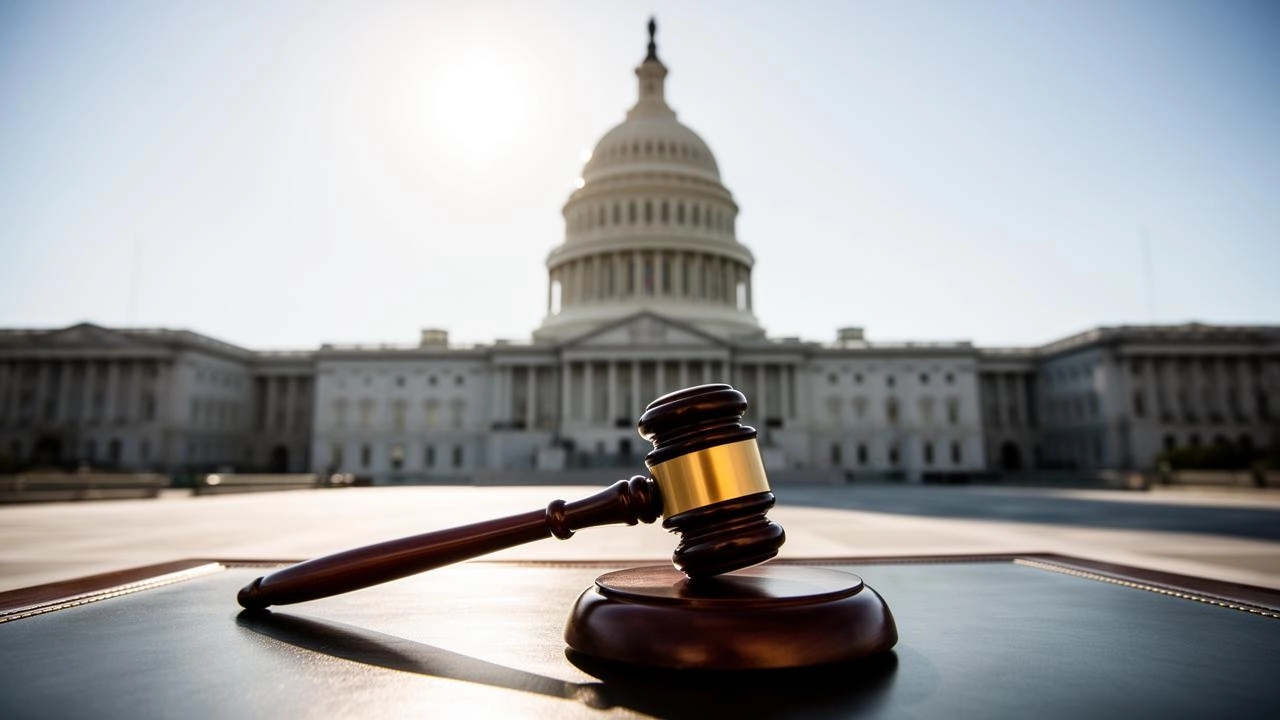
The head of the U.S. Securities and Exchange Commission is voicing confidence that a sweeping bill to establish federal oversight of digital assets will clear a key Senate hurdle this month, potentially ending years of regulatory ambiguity that has hung over the crypto industry.
SEC Chairman Paul Atkins said during a Fox Business interview on Tuesday that he expects the CLARITY Act to advance when the Senate convenes for a procedural vote on September 15. The measure, formally known as the Digital Asset Market Clarity Act, would divide regulatory authority between the SEC and the Commodity Futures Trading Commission.
“The Clarity Act will be voted on in the Senate on the 15th of September,” Atkins said. “I anticipate and hope that it will be passed by the Senate and sent ultimately to the President’s desk for a signature.”
The September 15 action is a cloture vote on a motion to proceed, not a final vote on passage. Senators will decide whether to formally open debate on the legislation. Supporters need 60 votes to clear that procedural threshold, a bar that requires bipartisan backing in a chamber where Republicans hold 53 seats.
Senate Majority Leader John Thune filed the cloture motion before lawmakers departed Washington for their August recess. The motion is scheduled to ripen at 2:15 p.m. Eastern Time on September 15.
A Framework Years in the Making
The CLARITY Act would create a federal structure for determining when a digital asset falls under SEC jurisdiction as a security or under CFTC oversight as a commodity. It would also establish registration requirements for crypto companies and apply anti-money laundering obligations to covered businesses.
The House passed its version of the bill in July 2025 by a 294-134 vote, with 78 Democrats joining Republicans. The Senate Banking Committee advanced its own version in May 2026 by a 15-9 margin, but a full chamber vote before the August recess never materialized.
Two disputes have complicated negotiations. Banking groups have pushed for tighter restrictions on stablecoin rewards, arguing that platforms like Coinbase (COIN) should not be able to offer yield tied to stablecoin balances because it could draw deposits away from traditional lenders. Crypto companies counter that they should be allowed to share revenue with users who hold stablecoins.
Ethics provisions tied to President Donald Trump’s family crypto interests have also created friction. A July draft included language meant to restrict government officials from promoting digital assets for profit, but some Democratic lawmakers said the wording did not go far enough. Republicans have accused Democratic negotiators of shifting their demands, with Senate Banking Committee Chairman Tim Scott making that argument publicly in August.
Regulators Move on Their Own Track
While Congress has stalled, federal agencies have continued developing rules under their existing authority.
The SEC sent a crypto custody proposal to the White House Office of Management and Budget on August 25. That proposal would clarify how investment advisers and investment companies can hold crypto assets for clients, potentially removing requirements the agency now considers outdated.
Atkins has framed the agency’s broader push — including the Regulation Crypto Assets proposal released in August — as part of an effort to “reshore” innovators who left the United States during what he described as the previous administration’s hostile approach.
“I think this is an important step to try to reshore, to bring back to the United States innovators that we have over the past administration’s four-year term chased offshore,” he said.
Still, the SEC chairman acknowledged that agency rulemaking has limits. A future commission could reverse course through the same process, which is why he has emphasized the importance of congressional action.
“What we really do need though, is statutory grounding of this to make sure that it is sustainable, lasting into the future,” Atkins said.
The CFTC is preparing its own response if the legislation stalls. Chairman Michael Selig said in August that the commodities regulator would “move swiftly” to propose new rules for the industry, adding that “crypto will get market structure regardless of bill.” The CFTC already oversees crypto derivatives and can pursue fraud cases involving spot commodity transactions, but broader routine supervision of digital commodity spot markets would require new authority from Congress.
The Path Forward
Even if the Senate clears the September 15 procedural vote, significant hurdles remain. Senators would still need to debate amendments on stablecoin yield, ethics language, and other unresolved provisions before a final passage vote. Any Senate changes would have to be reconciled with the House version before the measure could reach Trump’s desk.
Prediction markets offer a mixed read on the bill’s prospects. Kalshi traders placed the probability of enactment in 2026 at 49%, while Polymarket’s contract was priced at roughly 16% as of early September. Neither figure represents an independent assessment of the legislation’s legal or political outlook.
SALT CEO John Darsie said he remains doubtful lawmakers will finish the measure this year, citing the political calendar ahead of the midterm elections.
“Personally, I’m somewhat bearish on the CLARITY Act passing,” Darsie said.
Former New York Governor Andrew Cuomo offered a sharper warning, saying that failure to pass the bill would cost the United States internationally because Europe and Asia are moving ahead on digital asset regulation.
| Legislative Milestone | Date | Outcome |
|---|---|---|
| House passage of H.R. 3633 | July 2025 | Passed 294-134 |
| Senate Banking Committee vote | May 2026 | Advanced 15-9 |
| Senate cloture vote | Sept. 15, 2026 | Pending (60 votes needed) |
Note: The cloture vote determines whether the Senate can begin formal debate, not whether the bill passes.
Failure to secure 60 votes would likely leave the legislation dormant through the remainder of this Congress, preserving the SEC-CFTC jurisdictional split that industry participants have long identified as a barrier to institutional adoption. Success, by contrast, would open a path toward the most significant overhaul of U.S. crypto regulation since digital assets emerged as a mainstream financial category.
Atkins has aligned the legislative push with the administration’s broader goal of positioning the United States as what Trump has called the “crypto capital of the world.” A White House cryptocurrency summit last month brought together Atkins, Selig, and the president, who urged Congress to pass the bill and described it as “powerful, structured legislation” that would keep the country ahead of China.
For now, the September 15 vote stands as the clearest test of whether that vision can survive the Senate’s procedural gauntlet.
Once added, BigGo Finance appears first in Google Search Top Stories, so you get the broadest, most up-to-the-minute, and most comprehensive global financial news first.
Source: finance.biggo.com