

Don't want to trade it yourself?
Our desk runs DEX portfolios on profit share.
AI translated#Business#CoinShares#Cryptocurrency Mining#Reports
Public Bitcoin Miners Operate at a Loss as Production Costs Exceed Bitcoin Price by 29%
Public Bitcoin miners operate at a loss as costs exceed price by 29%.
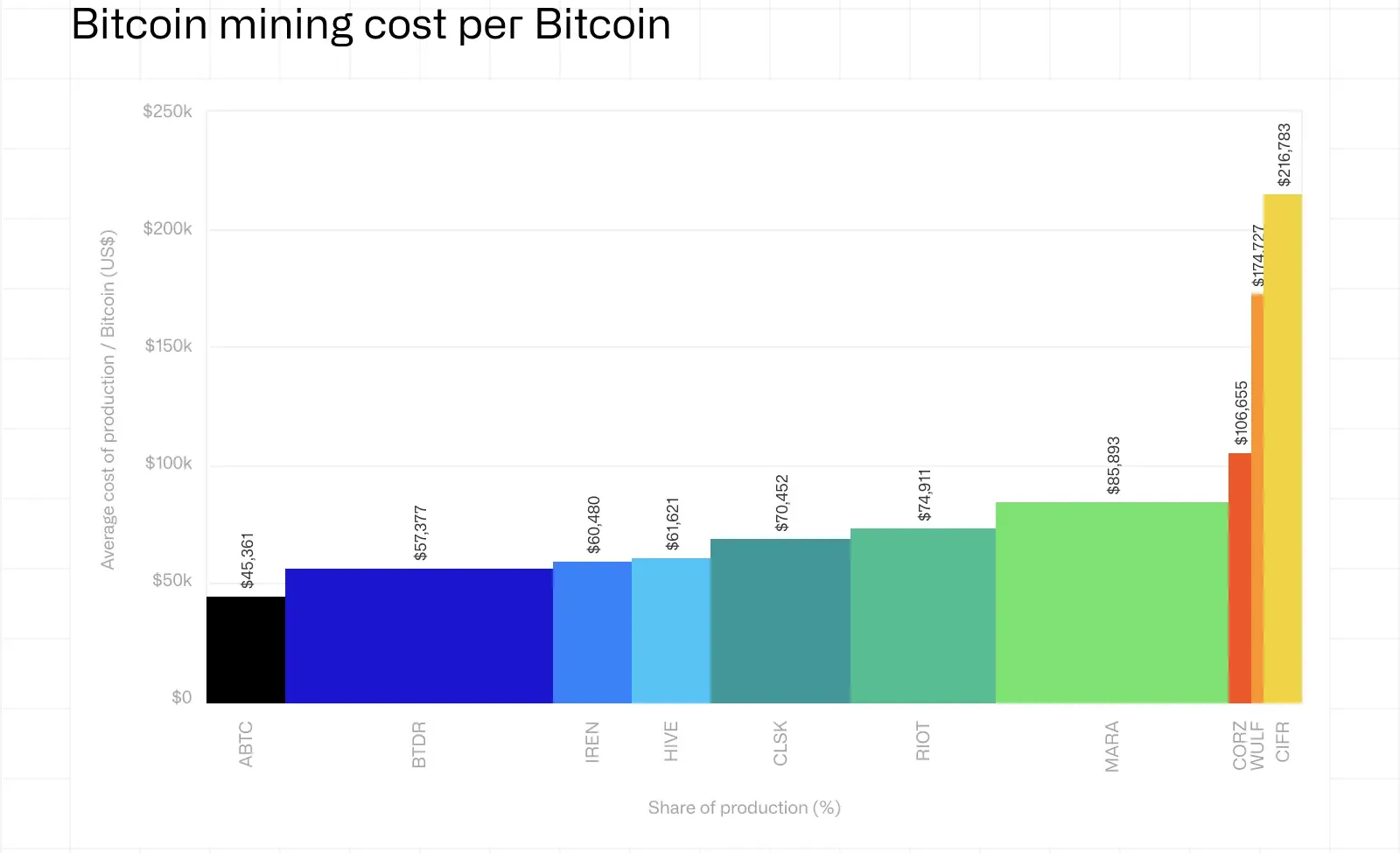
For the first time in history, the public Bitcoin mining sector collectively fell below the breakeven point in the second quarter of 2026, according to a report by CoinShares.
The average cost of mining 1 BTC was approximately $75,500, while the quarter ended with Bitcoin priced at $58,400 per coin—a gap of nearly $17,000 or 29%.
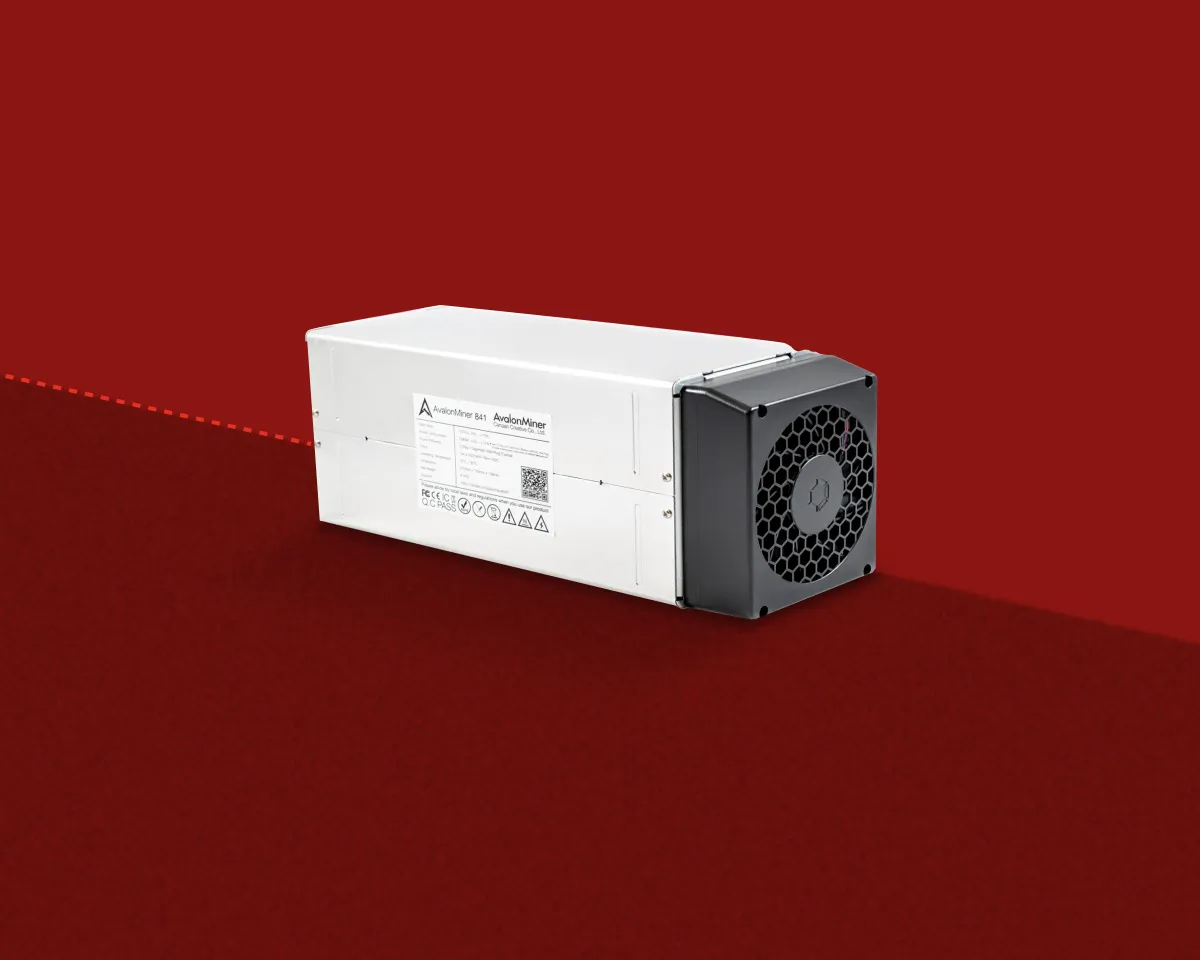
Moreover, at least 35 EH/s of computational power is planned to be withdrawn from public miners, equivalent to about 4.7% of the current network hash rate of 750 EH/s.
Hash Price at Historic Low, Revenues Shrink
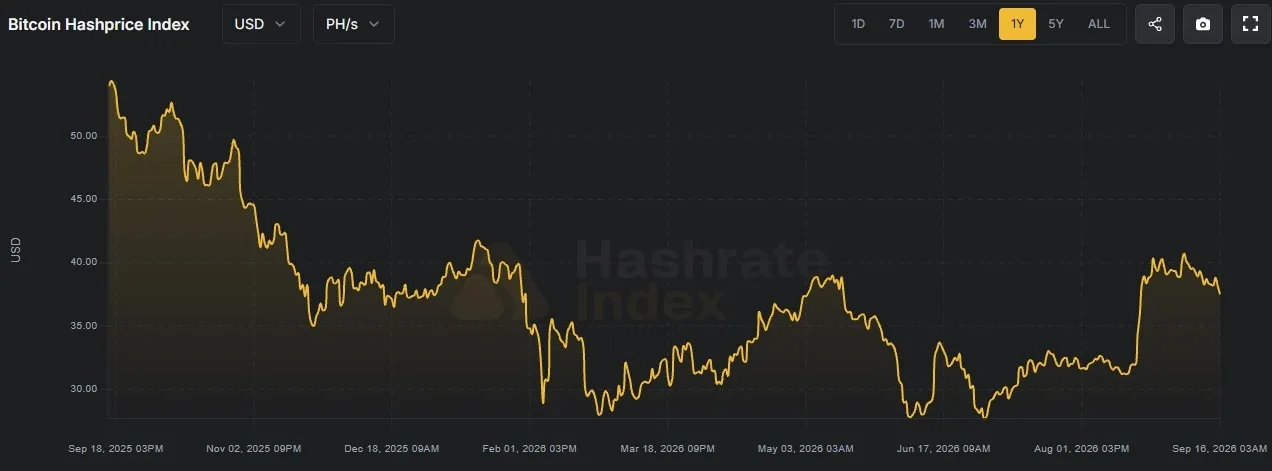
The key profitability metric for miners, the hash price, hit a historic low in June 2026, dropping to $27.7 per PH/s per day. At its peak in July 2025, the metric was around $63 per PH/s.
In addition to the price, the hash price was pressured by a low share of fees in miners’ revenues, near 1%, and the relatively high difficulty of Bitcoin. By September, cryptocurrency prices had recovered to around $77,000, allowing a significant portion of operators to return to profitability, CoinShares noted.
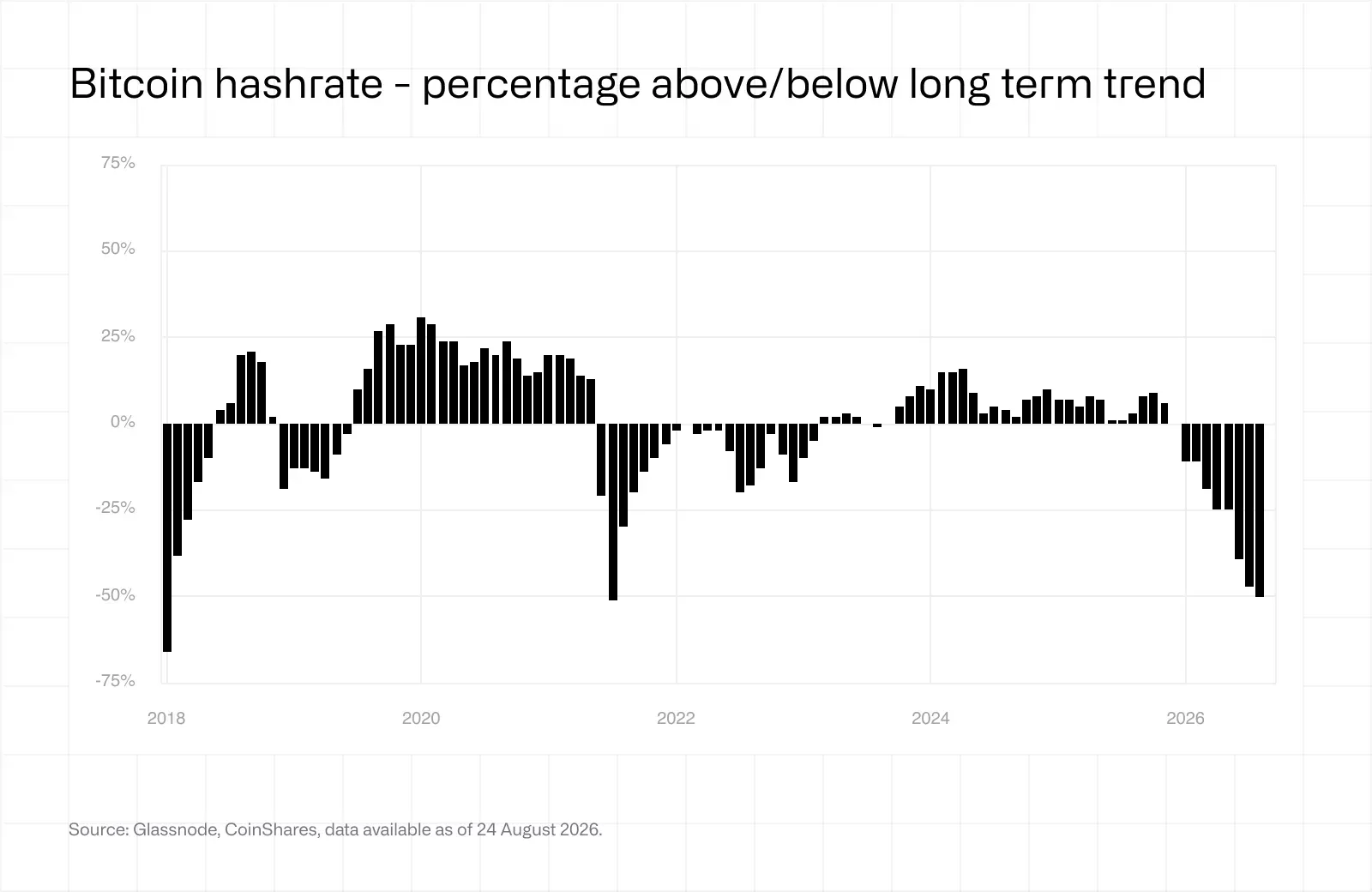
The network hash rate decreased by about 27% from its peak in October 2025, above 1 ZH/s, maintaining Bitcoin’s relatively high difficulty. The industry’s economy could not withstand the dual pressure: the price of digital gold at the end of the second quarter was less than half of the ATH of $126,080.
<blockquote>
“As alarming as these movements may seem, the deds of historical experience,” analysts concluded
According to CoinShares’ piecewise-exponential methodology, the hash rate generally follows historical cycles related to halvings. The current decline in value within the model does not exceed the historically maximum six-month drawdown of about 50% in 2021 amid the mining ban in China. Currently, the additional catalyst for the collapse was not regulatory measures but electricity prices in Texas, experts believe.
Miners Pay to Stop Mining
CoinShares noted that the trend of miners diversifying into AI is not only persisting but gaining momentum. A notable event of the quarter was Core Scientific’s decision to pay Block $41.9 million for the early termination of a contract for mining equipment supply with a capacity of 15 EH/s. The company also confirmed that it is ceasing its own mining operations, fully redirecting its infrastructure to colocation for AI clients.
- Keel (formerly Bitfarms) — halted mining in the U.S. on June 29;
- IREN — plans to complete its exit by the end of 2026;
- Cipher Digital — will leave the sector by the end of 2027.
Transition to AI Economically Inevitable
The income gap between the two directions explains the tectonic shift. According to CoinShares, AI infrastructure brings these companies about $1.5 million in profit per 1 MW, while Bitcoin mining yields only about $500,000. The threefold difference in margins makes the choice obvious.
Moreover, miners are not returning to cryptocurrency mining even as prices recover, as they have already signed long-term contracts with AI clients for up to 15 years.
Light at the End of the Tunnel?
Since the end of the second quarter, conditions have somewhat improved. The price recovery allowed most companies to return to breakeven mining operations.
Analysts estimate that Bitcoin prices will remain the main factor influencing mining economics, with much of the hash rate shifting “from hand to hand.” The U.S., China, and Russia control about 68% of the network’s power, with the U.S. increasing its lead. The top ten countries include emerging markets such as Paraguay (with HIVE’s 300 MW project), Ethiopia (Bitdeer with 40 MW), and Oman.
However, the structural shift is already irreversible: those public miners who have redirected their energy capacities and infrastructure to AI loads will remain in this business. CoinShares expects investments in expanding cryptocurrency mining only from “flexible” players like Riot, MARA, HIVE, and Bitdeer, who have remained open to both directions.
In March, Hut 8 introduced a modular infrastructure model allowing flexible switching of computing power between AI tasks and Bitcoin mining.
Found a mistake in the text? Select it and press CTRL+ENTER
Circle Acquires Singapore’s Tazapay for $400M to Boost USDC in Emerging Markets
Sam Altman Rules Out OpenAI IPO in 2026
Novo Holdings Highlights Investment Gap in Quantum Applications
BIS Warns of Financial Crisis Risk from AI Investment Boom
Mexico Uncovers Illegal Crypto Mining Farm Linked to Hydroelectric Plant
Harmony, Router Protocol, and Orionx Announce Closure Plans
Public Bitcoin Miners Reduce Hash Rate by 15% in Six Months
Nvidia Agrees to Acquire Hugging Face for $12.93 Billion
UBS: Chinese Platforms to Profit from AI in Two to Three Years
Source: forklog.com