

Don't want to trade it yourself?
Our desk runs DEX portfolios on profit share.
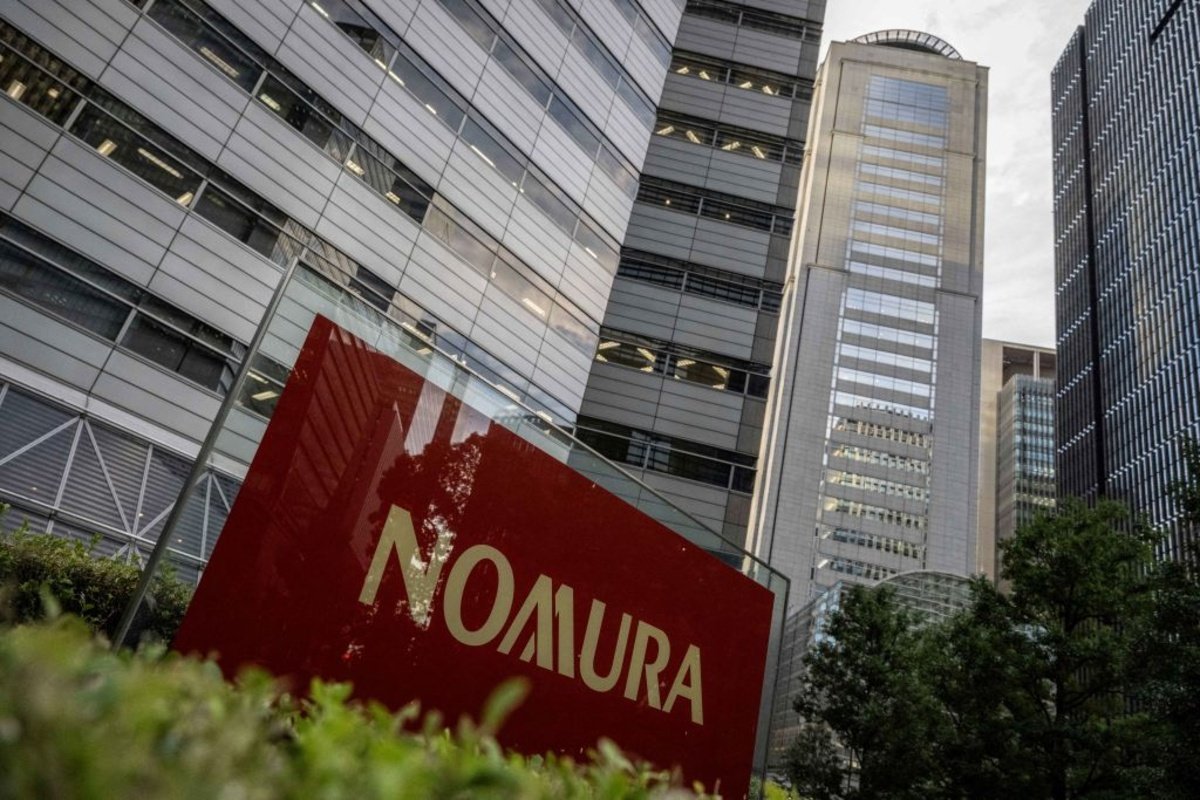
Japan’s tightly controlled digital asset market gained its first new licensed entrant in four years today. Laser Digital Japan — the local arm of Nomura Group’s digital asset subsidiary — <a href="https://www.laserdigital.com/japan/en/information" rel="nofollow noopener" target=”_blank”>completed registration as a CAESP with Japan’s Financial Services Agency, receiving registration number 00032 from the Kanto Local Finance Bureau confirmed on Japan’s official FSA registry. The last firm to clear Japan’s demanding vetting process was <a href="https://cointelegraph.com/news/nomuras-laser-digital-japans-first-crypto-exchange-4-years” rel=”nofollow noopener” target=”_blank”>Binance Japan in October 2022. The gap — nearly four years — is not an accident of timing. It is the direct result of a regulatory regime so stringent that no newcomer could clear it until today.
The registration matters not just as a milestone, but as a signal: the next phase of Japan’s crypto market will be defined not by crypto-native exchanges but by the major securities firms that already dominate the country’s financial system. Laser Digital holds over $250 million under management. Its parent, Nomura Holdings, is Japan’s largest investment banking and brokerage group. When Japan’s FSA clears a Nomura subsidiary as the entity that breaks a four-year registration drought, it is choosing a different kind of market participant than the ones it cleared in the years before the drought began.
What Registration Number 00032 Actually Allows — and What It Does Not
Laser Digital Japan will not launch a consumer-facing trading platform today, or next week. The firm’s initial mandate is narrower and more structural: supplying wholesale liquidity to the existing twenty-six registered CAESP operators in Japan, helping them execute large institutional and retail orders without moving the market. Direct institutional digital asset trading services are planned for a later stage, with no start date disclosed.
This wholesale-first approach is not a limitation — it is a deliberate market-structure choice. Japanese institutional investors have repeatedly cited counterparty risk as a primary obstacle to crypto allocation. An FSA-registered Nomura subsidiary, operating under the same regulatory standards as Japan’s securities firms, removes that obstacle in a way that no crypto-native exchange can. Before an institutional fund can point to a digital asset allocation in its mandate, it needs a counterparty whose risk profile the fund’s investment committee will approve. Laser Digital’s CAESP registration is the specific credential that makes that approval possible.
The registration also carries a technical obligation that every CAESP must meet and that defines the safety architecture of Japan’s crypto market. Under Japan’s Payment Services Act, CAESP operators must hold a minimum 95% of all user-deposited crypto assets in offline cold storage at all times, according to FSA custody requirements for registered exchanges. The remaining balance — up to 5% held in hot wallets for operational liquidity — must be matched dollar-for-dollar by the operator’s own assets held in a separate cold wallet. In practice, this means Laser Digital bears 100% of any hot-wallet security risk; none of that exposure sits with clients. User funds must be legally segregated from the firm’s own assets, confirmed annually by a certified public accountant.
One constraint the press release does not foreground: Laser Digital’s CAESP registration is under the current Payment Services Act framework, which governs spot exchange services. Japan’s Financial Instruments and Exchange Act (FIEA) — the sweeping reform enacted by the National Diet on July 15, 2026, that reclassified 105 crypto assets as financial products — takes effect in fiscal 2027. When it does, institutional trading products and the counterparty infrastructure supporting Japan’s eventual crypto ETFs will require a separate additional registration under the FIEA. Laser Digital has established the PSA foundation; the FIEA layer will need to follow.
Why the Drought Lasted Four Years
The gap since Binance Japan’s October 2022 registration reflects the FSA’s deliberate posture. Japan’s crypto regulatory history has been shaped by three major exchange failures: the 2014 collapse of Mt. Gox, which at its peak handled more than 70% of global Bitcoin trading; the 2018 Coincheck breach, which lost $530 million in NEM tokens through hot-wallet exposure; and the May 2024 DMM Bitcoin hack, in which 48.2 billion yen (approximately $308 million USD) in Bitcoin was stolen and attributed to North Korean hackers via Lazarus Group.
Each failure tightened the registration standards. The FSA published a discussion paper in April 2025 signaling further hardening of governance, cybersecurity, and custody requirements. The typical application timeline runs five to nine months for straightforward cases, extending to twelve months or longer for complex applicants. Laser Digital entered pre-consultation talks with the FSA in October 2025; its formal approval on August 21, 2026 represents roughly ten months of active regulatory dialogue.
The listed tokens on the new registration — Bitcoin (BTC), Ethereum (ETH), XRP, Bitcoin Cash (BCH), Litecoin (LTC), and Shiba Inu (SHIB) — are all on the Japan Virtual and Crypto Assets Exchange Association (JVCEA) Green List, the roster of pre-approved assets that registered CAESPs can list without seeking individual FSA approval on each token.
The Demand Side Already Exists
Laser Digital’s timing is not speculative. A 2026 Nomura Laser Digital survey, conducted between December 2025 and January 2026 and published in April 2026, polled 518 investment professionals, family offices, and public-interest organizations across Japan. The headline findings: 65% of respondents viewed crypto assets as a viable tool for portfolio diversification, and of that group, approximately 79% indicated plans to allocate capital to digital assets within the next three years — meaning roughly half of all survey respondents plan near-term allocations. The most common target was a conservative portfolio weight of between 2% and 5%.
The survey also documented the friction that had kept institutional capital on the sidelines: counterparty risk, price volatility, and regulatory uncertainty. The CAESP registration addresses the first and third directly. The second is not something a regulatory filing can solve — but it is, in the institutional framing, a known and manageable risk once the other two are resolved.
Japan’s household financial assets total approximately ¥2,000 trillion (roughly $12.6 trillion USD). Even a marginal shift of institutional allocation toward crypto — at the survey’s stated 2% to 5% target weight — represents an inflow opportunity that dwarfs what the country’s crypto exchanges have processed to date.
The Competitive Field Forming Around Laser Digital
Laser Digital is almost certainly the first of several traditional financial institution registrations, not a one-off event. Daiwa Securities Group and SMBC Nikko Securities — the second- and third-largest securities firms in Japan — have been reported as actively exploring CAESP registration. If both register, Japan’s three largest securities firms will all hold CAESP status by the time the FIEA transition takes effect — a structural shift that would have been implausible a decade ago.
SBI Holdings, separately, signed a ¥46.7 billion Bitbank acquisition agreement (approximately $289 million USD) in June 2026, pending regulatory clearance from the Japan Fair Trade Commission, with the transaction expected to close around October 2026. Rakuten Securities has been developing crypto investment trust products in parallel. And for Laser Digital itself, the Japan registration is one leg of a three-jurisdiction regulatory stack: the firm holds existing licenses in the UAE (through the Abu Dhabi Global Market and the Dubai Virtual Assets Regulatory Authority) and received a preliminary conditional approval from the US Office of the Comptroller of the Currency in May 2026 for a national trust bank charter that would authorize multi-asset fiduciary custody, stablecoin-to-fiat intermediation, and cross-border collateral management in the United States. That US charter, when finalized, would tie all three jurisdictions under a single federally supervised structure.
Can Japan’s Crypto Market Absorb What’s Coming?
Japan had approximately 14 million domestic crypto accounts as of the FSA’s most recent data, with roughly 70% of holders keeping less than ¥7 million (approximately $44,025 USD) in crypto assets — a heavily retail-skewed base. The CAESP ecosystem that exists today serves that retail population primarily through consumer-facing spot exchanges.
What is now beginning to form on top of it is a wholesale and institutional layer: market makers supplying depth to retail exchanges, institutional counterparties capable of absorbing block trades, and eventually, ETF product wrappers that route institutional capital through the regulated exchange infrastructure. Laser Digital’s registration is the first plank of that layer.
Whether it arrives in time to be commercially relevant depends on how quickly the FSA can complete the secondary rulemaking that makes the FIEA’s institutional-trading provisions operational in fiscal 2027, and on how many of the traditional financial firms currently exploring registration complete theirs before that window opens. What today’s announcement confirms is that the institutional entry race has begun. Japan’s four-year registration drought is over.
Exchange rate as of August 21, 2026; conversions are approximate.
Frequently Asked Questions
What does Laser Digital Japan’s CAESP registration actually permit the firm to do?
Registration under Japan’s Payment Services Act authorizes Laser Digital Japan to provide spot exchange services for the six listed crypto assets (BTC, ETH, XRP, BCH, LTC, SHIB) to other registered exchanges and, eventually, to institutional counterparties. It requires the firm to hold at least 95% of user assets in offline cold storage and to segregate client funds from its own, with annual CPA audits confirming compliance. It does not authorize futures trading, crypto derivatives, or serving as a counterparty for regulated ETF products — those activities require a separate registration under the Financial Instruments and Exchange Act, which takes effect in fiscal 2027.
What is the difference between Japan’s current PSA crypto framework and the incoming FIEA framework — and why does it matter for institutional investors?
Japan’s Payment Services Act, under which all current CAESP registrations including Laser Digital’s exist, treats crypto assets primarily as payment instruments and governs spot exchange services, custody, and consumer protection. The Financial Instruments and Exchange Act — enacted July 15, 2026, effective in fiscal 2027 — reclassifies 105 specified crypto assets as financial products governed by the same rules as stocks and bonds, introducing insider-trading prohibitions, market-manipulation enforcement, and annual disclosure obligations for token issuers. For institutional investors, the FIEA transition matters because it is the legal foundation for regulated crypto ETFs and for the conduct standards (counterparty checks, market-surveillance obligations) that institutional investment committees require before approving digital asset allocations. A CAESP registration under the current PSA framework is necessary but not sufficient for full FIEA-era institutional participation.
When will Japan’s flat 20% crypto capital gains tax take effect, and does Laser Digital’s registration change anything about that timeline?
The 20% flat rate on qualifying crypto capital gains is scheduled to take effect on January 1, 2028, under a separate 2026 Tax Reform Outline — roughly a year after the FIEA itself becomes operative in fiscal 2027. Laser Digital’s registration has no effect on this timeline; the tax reform is a legislative schedule independent of any individual firm’s regulatory status. Current crypto gains in Japan are taxed as miscellaneous income at progressive rates reaching a maximum effective rate of approximately 55%. The 2028 rate change is what institutional investors have been waiting for: at 55%, the cost of realizing gains creates tax-driven inertia that discourages both buyers and sellers from participating actively in Japan’s market.
What should Japanese crypto investors understand about the security protections that FSA-registered exchanges provide?
Every CAESP registered with Japan’s FSA is required to hold a minimum 95% of user crypto assets in offline cold storage at all times, with any hot-wallet balance matched by the operator’s own assets. User funds must be legally segregated from the exchange’s operating capital, confirmed annually by an independent auditor. This cold-wallet architecture directly addresses the vulnerabilities that produced Japan’s three major exchange failures: the 2014 Mt. Gox collapse, the 2018 Coincheck breach ($530 million in NEM stolen from hot wallets), and the 2024 DMM Bitcoin hack (¥48.2 billion / approximately $308 million USD, traced to North Korean hackers via a compromised third-party software vendor). Unregistered offshore exchanges operating without these requirements have no obligation to meet these standards — and Japan’s FSA has made clear through its enforcement actions against Bitget and Bybit that it intends to push unregistered operators out of the market.
ⓒ 2026 TECHTIMES.com All rights reserved. Do not reproduce without permission.
Source: www.techtimes.com