

Don't want to trade it yourself?
Our desk runs DEX portfolios on profit share.
- C
- DX-Y.NYB
- XRP-USD
-
DBS and Citi completed a live Singapore-to-US dollar payment on a Saturday using tokenized bank deposits and SWIFT’s blockchain-based Digital Ledger.
-
The development places SWIFT more directly in the territory targeted by blockchain payment networks such as XRP Ledger and Stellar, although the systems use fundamentally different settlement models.
-
At the same time, BRICS countries are exploring links between national payment systems and CBDCs, but claims of an imminent gold-backed BRICS currency remain ahead of official evidence.
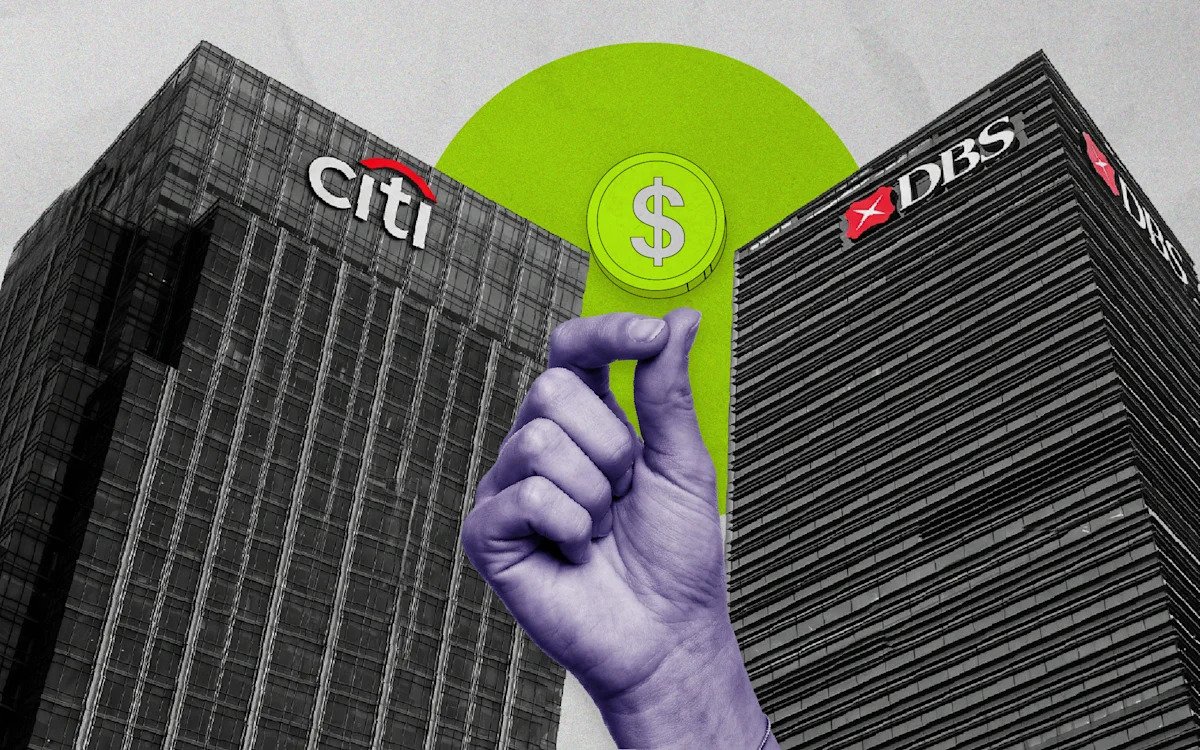
DBS and Citi have completed a cross-border US dollar payment in minutes on a Saturday, giving SWIFT its latest proof that the decades-old banking network can adapt to a financial system increasingly expected to operate 24/7.
The transaction between DBS in Singapore and Citi’s New York office took place on Sept. 5 using tokenized deposits through SWIFT’s Digital Ledger.
DBS said that conventional cross-border transfers, affected by time zones and weekends, can take up to two business days.
The significance is bigger than a one-weekend payment.
SWIFT has spent years facing comparisons with blockchain-based alternatives that promise near-instant settlement without banking-hour restrictions. Its answer is increasingly becoming blockchain itself, but without abandoning the regulated banking system already sitting behind SWIFT.
SWIFT Is Building Blockchain Around Banks, Not Replacing Them
SWIFT declared its blockchain ledger ready for initial use in July, with 17 banks across six continents preparing live pilots. Participants include Citi, DBS, HSBC, Standard Chartered, UBS, BNY, Wells Fargo, BNP Paribas, and MUFG.
The model differs from simply transferring a stablecoin on a public blockchain.
Banks issue tokenized representations of deposits on their own ledgers, while SWIFT’s shared ledger coordinates payment commitments. Final settlement can still occur through existing infrastructure such as real-time gross settlement systems.
That means banks gain some of blockchain’s biggest advantages, including programmability, round-the-clock availability and faster movement of value, without abandoning existing compliance, credit and settlement frameworks.
Citi has already processed live transactions with First Abu Dhabi Bank and OCBC. Its Token Services platform separately processes around $1 billion in transactions, while more than 300 bank clients use Citi’s 24/7 USD Clearing service.
For SWIFT, the stakes are enormous. Its infrastructure connects institutions across more than 200 markets and moves the equivalent of world GDP every two to three days.
Source: finance.yahoo.com