

Don't want to trade it yourself?
Our desk runs DEX portfolios on profit share.
Add to Google Preferred Sources
Digital asset companies have spent $638 million (approximately NT$20 billion) this year buying back their own cryptocurrencies, setting an all-time high as they emulate the stock buyback strategies of publicly traded companies in an effort to prop up token prices. The buyback wave is led by perpetual futures exchange Hyperliquid and meme coin platform pump.fun, which together account for nearly 90% of the total. Hyperliquid has repurchased and burned $1.3 billion worth of HYPE tokens since December 2024, with the token rising 70% against the trend. However, results have been mixed: Jupiter bought back nearly $14 million but its token still fell 55%, while Chainlink’s LINK token also halved in value. Analysts note that buybacks alone are insufficient to support prices, as investors have shifted toward evaluating token fundamentals and actual economic returns.
Key Elements
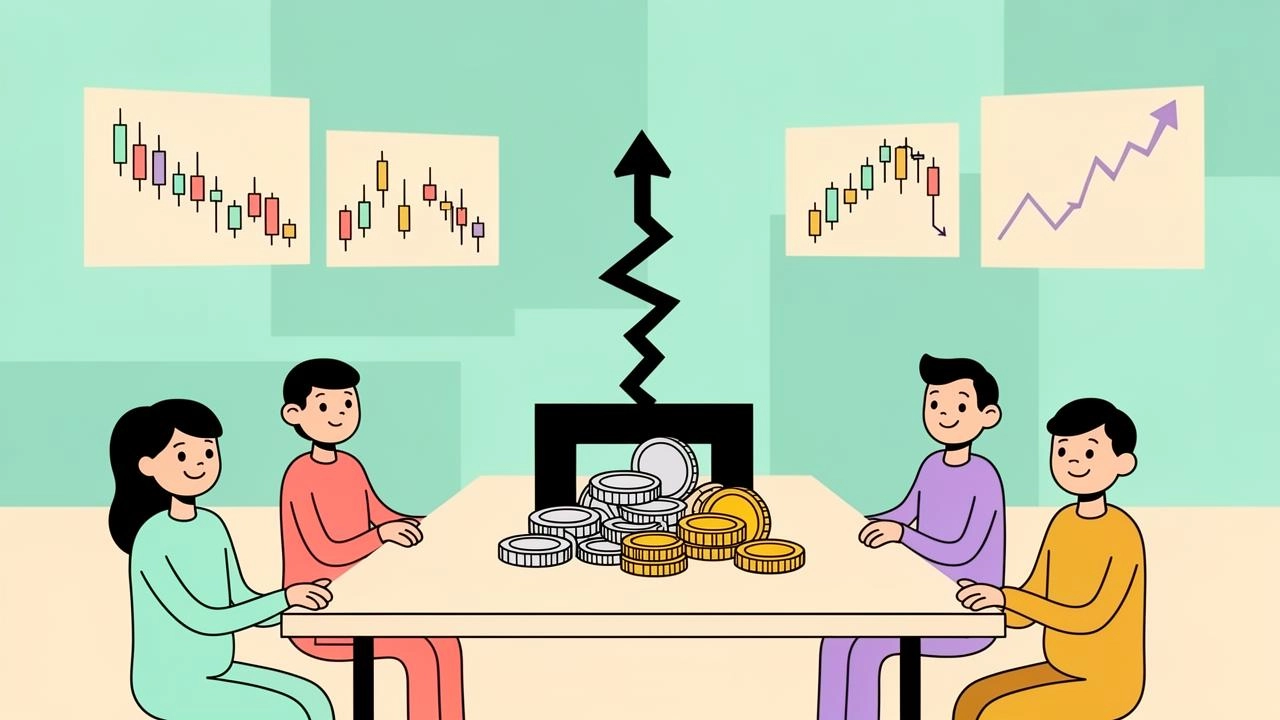
Digital asset companies are aggressively emulating the stock buyback strategies of traditional publicly traded companies, having spent $638 million (approximately NT$20 billion) this year repurchasing their own issued cryptocurrencies—a record high—in an attempt to support token prices by reducing circulating supply amid a market downturn.
According to the Financial Times, data from blockchain analytics firm Allium Labs shows that buyback spending this year has already surpassed the $545 million (approximately NT$17 billion) recorded in the same period last year, and far exceeds the $366,000 (approximately NT$12 million) for all of 2024. This buyback wave is primarily driven by perpetual futures exchange Hyperliquid and meme coin launch platform pump.fun, which together account for nearly 90% of total buybacks.
Hyperliquid stands out as the frontrunner of this buyback wave. The exchange allocates 99% of its trading fee revenue to repurchasing its native HYPE token. Since its launch in December 2024, it has cumulatively repurchased and burned $1.3 billion (approximately NT$41 billion) worth of tokens. HYPE has risen 70% over the past year against the trend, making it one of the few crypto assets to perform strongly amid the market slump.
Matt Hougan, Chief Investment Officer at crypto asset manager Bitwise, believes aggressive buybacks are the primary reason for HYPE’s strength, giving investors confidence that the benefits of increased blockchain activity will ultimately be reflected in token prices.
Decentralized finance platform Sky Protocol is another active buyer, having repurchased $26 million (approximately NT$820 million) worth of SKY tokens to date, with the token up 5% over the past year. Staking protocol Lido announced in August that it will initiate a regular buyback program once conditions—including reaching $40 million (approximately NT$1.3 billion) in annualized revenue—are met, aiming to more directly tie token prices to protocol operating performance.
Mixed Results: Buybacks Are No Silver Bullet
However, the actual effectiveness of buyback strategies shows clear divergence. Decentralized exchange Jupiter has invested nearly $14 million (approximately NT$440 million) this year repurchasing its own token, yet its price has still fallen 55% over the past year. Chainlink, a platform connecting different blockchains, has similarly executed buyback programs, but its LINK token has halved in dollar-denominated value over the past year.
The case of network connectivity platform Helium further highlights the limitations of buybacks. The platform decided to terminate its buyback program in February, with co-founder Amir Haleem stating bluntly at the time: “The market doesn’t seem to care about projects buying back tokens. We’re no longer wasting money.”
Elton Shehdula, head of research at Allium Labs, noted that digital asset companies implement buyback programs to demonstrate confidence in their own cryptocurrencies. “Once they buy back these cryptocurrencies, they are essentially reducing supply, which is another lever to support cryptocurrency prices,” he said.
But he also acknowledged: “A buyback program alone doesn’t necessarily mean it’s a good program.” He remains skeptical about whether buybacks can significantly boost cryptocurrency prices.
Market Environment and Regulatory Shifts
This buyback wave comes against a backdrop of overall pressure on the cryptocurrency market. Some investors are selling digital assets and rotating into recently surging AI-related stocks. Bitcoin remains approximately 38% below its all-time high, while other popular cryptocurrencies such as XRP and Solana have fallen roughly 60%.
Notably, the shift in the regulatory environment is also a factor encouraging companies to launch buyback programs. Compared to the tenure of former SEC Chair Gary Gensler, when companies acted cautiously out of concern that tokens might be classified as securities, the friendlier stance toward cryptocurrencies from regulators during the Trump administration has reduced corporate hesitation about implementing buybacks.
Although cryptocurrency prices have rebounded after the U.S. Treasury’s unexpected intervention in the bond market shook market confidence in the dollar, overall market conditions remain far below historical highs.
Investors Pivot to Fundamentals
Amir Hajian, a researcher at crypto market maker Keyrock, noted that the era of cryptocurrencies surging on market hype has come to an end, with investors now watching whether cryptocurrencies can deliver any actual economic benefits. Some companies have begun treating tokens like traditional stocks, distributing value to holders through dividend-like mechanisms, but results remain underwhelming.
Sky Protocol co-founder Rune Christensen said buybacks ensure that token holders’ interests align with the protocol’s long-term goals, noting that SKY holders on the platform can vote on blockchain governance matters.
Overall, the token buyback wave reflects digital asset companies’ efforts to find new price support tools in a sluggish market. However, judging from the performance across various cases, whether buybacks can effectively boost token prices ultimately depends on the market’s fundamental assessment of the project, rather than supply-side operations alone.
Once added, BigGo Finance appears first in Google Search Top Stories, so you get the broadest, most up-to-the-minute, and most comprehensive global financial news first.
Source: finance.biggo.com