


Don't want to trade it yourself?
Our desk runs DEX portfolios on profit share.
AI translated#Industry Digests#Weekly Summary
Week in review: Bitcoin tops $79,000; Ethereum Foundation warns of wallet issues
Bitcoin tops $79,000; Ethereum Foundation warns of wallet issues.
Bitcoin tested $79,500, the Ethereum Foundation warned of possible wallet disruptions, U.S. regulators unveiled new rules for crypto assets, and more from the week.
Market rally
As of August 17, Bitcoin outpaced the stock market in performance — over the past three months, the asset had beaten the S&P 500 on only one out of three trading days. Glassnode highlighted the positive signal.
CryptoQuant analysts noted signs of a recovery in spot demand, potentially indicating the bear phase is nearing its end.
On August 20, Bitcoin gained almost 8% in 24 hours and approached $70,000 for the first time in 11 weeks. Bitcoin continued higher, crossing $79,000. On Binance, the price reached $79,500 — levels last seen in mid-May.
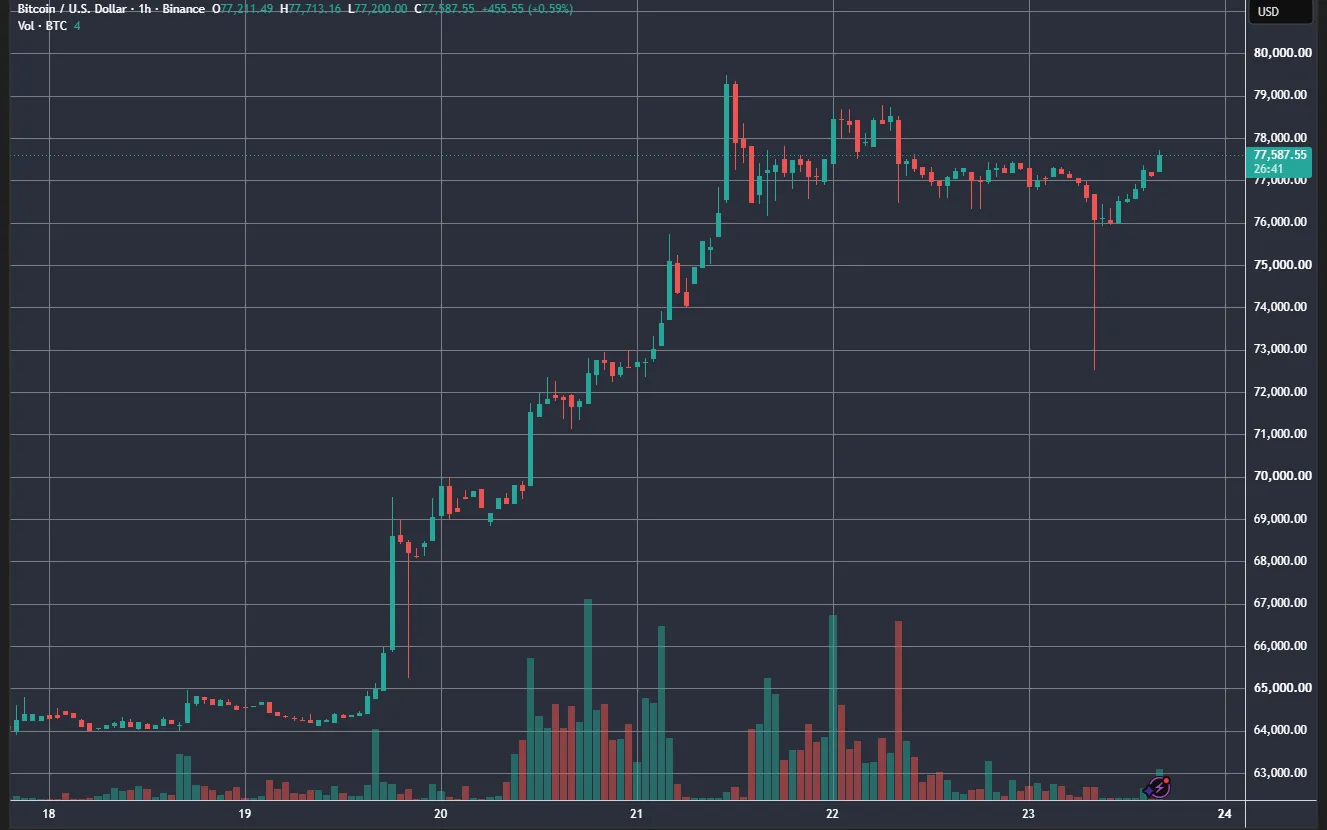
The rally was accompanied by record short liquidations in the available data. In the first 24 hours, forced liquidations approached $3 billion, including $2.7 billion in shorts. The next day, the figures were $1.25 billion and $1 billion, respectively.
According to some analysts, a classic short squeeze was the driver of the rally. A potential trigger was a U.S. Treasury statement about plans to at least double buyback operations for Treasurys under its liquidity support program.
After a pullback, Bitcoin traded sideways above $77,000.
For the week, Bitcoin rose more than 22.5%. Many large-cap altcoins outperformed. Ethereum failed to hold $2500 but added 29.3%, XRP gained about 50%, and HYPE and Dogecoin rose 41.3% and 32%, respectively.
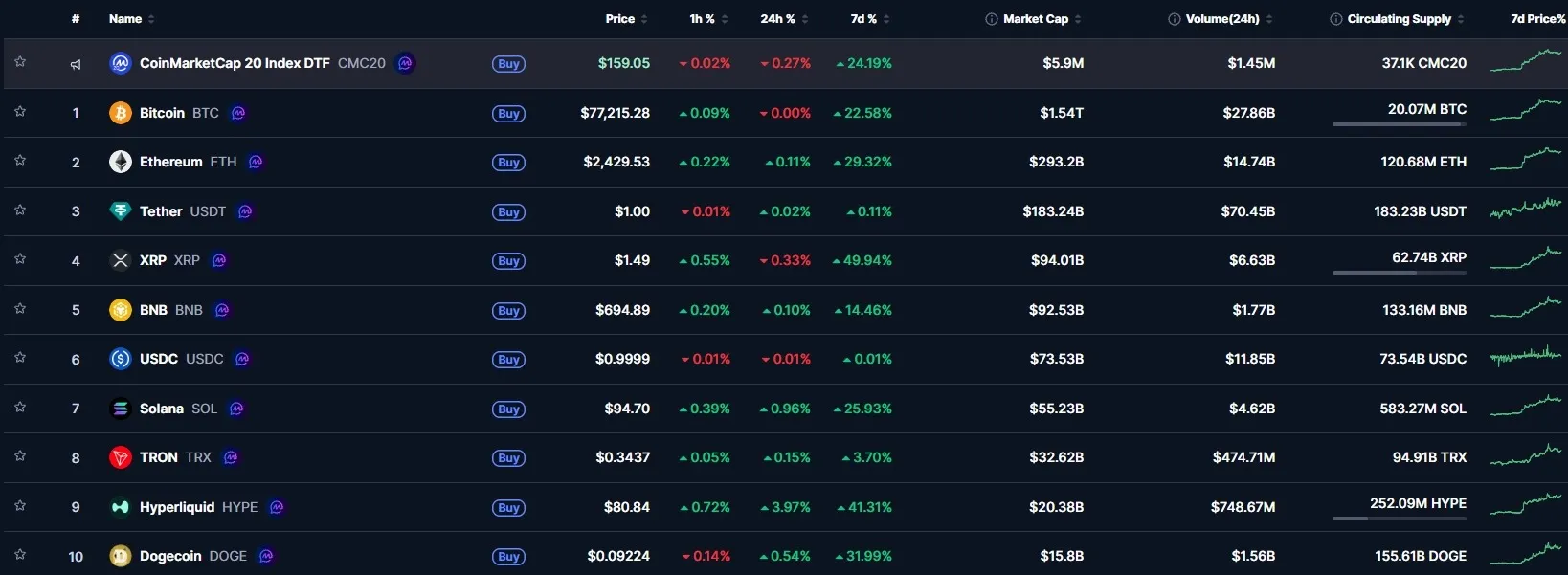
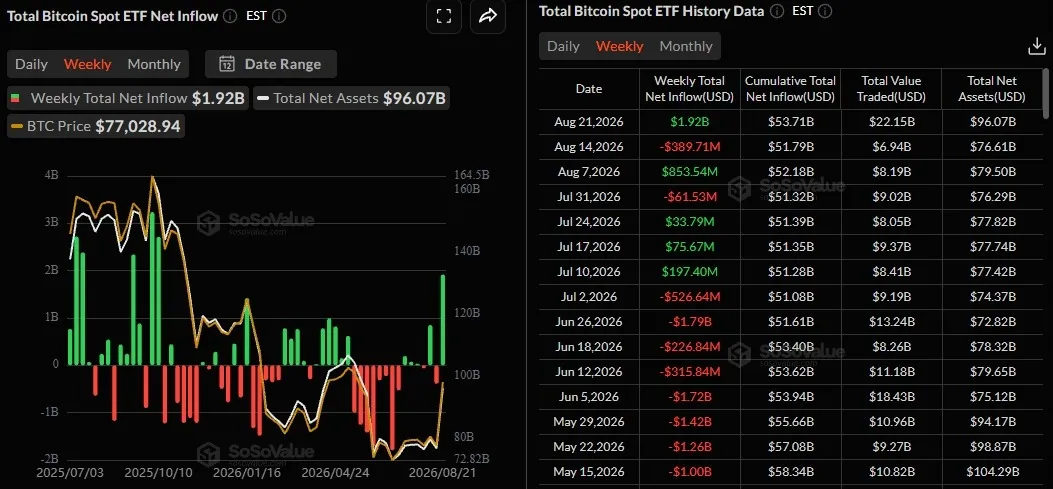
Spot bitcoin ETFs recorded the largest weekly inflow since October 2025 at $1.92 billion.
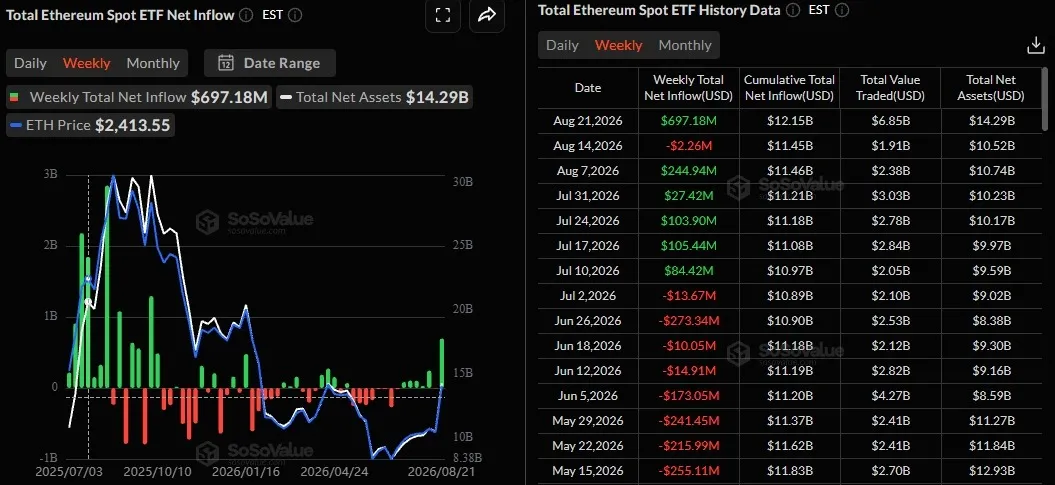
Ethereum-based exchange-traded funds attracted $697 million — also a record since the fall.
The crypto fear and greed index jumped from 34 to 71 before pulling back to 66. The metric last saw comparable “greed” levels in early October.
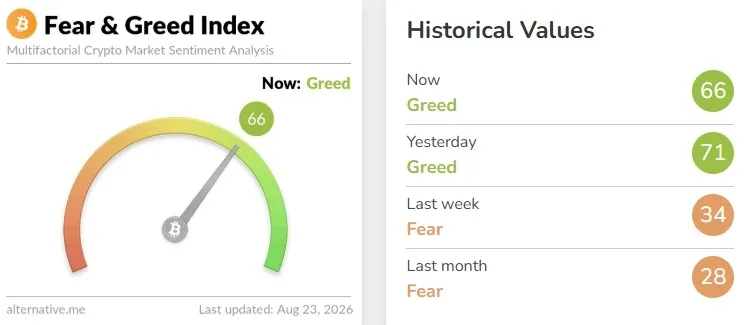
The digital asset market capitalization rose from $2.17 trillion to $2.62 trillion. Bitcoin’s dominance is 59.2% (58.8% a week earlier); Ethereum’s share is 11.2% (10.5%).
Ethereum Foundation warns of possible wallet disruptions
The upcoming Glamsterdam upgrade will change the gas model, and some software may fail. The Ethereum Foundation (EF) team warned about this on August 17.
Developers said wallets, indexers, and fee estimation tools could be affected. They suggested testing systems on the public Plataberget testnet.
EF emphasized tools with a “hard-coded maximum gas limit”: such solutions, they said, will stop working and require updates.
The issue is tied to EIP-8037. The proposal adds a separate state-gas dimension for operations that create new state. A regular ETH transfer to an existing address will keep its 21,000-unit cost, but sending coins to a new address will incur an additional charge.
Developers urged a review of smart contracts that assume 21,000 units cover any ETH transfer, as well as code that calculates fees solely by gas amount.
What to discuss with friends?
- Investigation: Amazon scanned and destroyed rare books to train AI.
- An AI agent fired an Andon Market employee.
- Media revealed a link between Trump’s crypto project and Chinese AI developers.
- Flock taught AI to find drivers without license plate data.
U.S. Treasury proposes stablecoin rules under the GENIUS Act
The U.S. Department of the Treasury unveiled draft rules to implement the GENIUS Act, the first federal law on payment stablecoins. The document sets requirements for issuers, reserves, and oversight of digital dollar issuance.
The Notice of Proposed Rulemaking published by the department concerns implementation of Section 3 of the GENIUS Act. It is intended to define how the law’s regime for “stable coins” — digital tokens primarily for payments and settlements — will work in practice.
The GENIUS Act mandates strict reserve requirements for payment stablecoins. They must be backed one-to-one, with eligible assets limited to highly liquid instruments — including dollars, bank deposits, and short-term Treasury securities.
The law also requires regular reserve disclosures and independent verification. The key aim is to ensure users can redeem stablecoins at par and to reduce risks to the financial system.
Solana cuts slot time to 350 ms
The Solana team enabled on mainnet the first phase of reducing average slot time (from 400 to 350 ms) as part of implementing improvement proposal SIMD-0525.
Solana validators on the Agave v4.2 client activated the first of four phases to shorten slot time. This is the first reduction in slot length since the network launched.
A slot is a fixed window in which a leader validator produces a block. Shorter slots should speed up transaction confirmations. The plan then targets 300, 250, and 200 ms.
Each subsequent phase has its own activation mechanism and is enabled sequentially in a later epoch. One such period in Solana lasts 432,000 slots, or about two to three days. The approved schedule allows halting the upgrade if the share of missed blocks increases.
- China gained access to Nvidia chips via overseas data centers.
- OpenAI slowed AI model development due to cyber risks.
- A Mac vulnerability allowed stealth Monero miners to be installed.
- Anthropic’s head named the main criticism of AI companies.
SEC presents new rules for the U.S. crypto market
The U.S. Securities and Exchange Commission (SEC) presented new rules for the crypto market. The project, called Regulation Crypto Assets, simplifies raising capitalts
The regulator’s initiative provides two exemptions from standard registration requirements under the Securities Act of 1933.
The first will allow crypto companies to raise up to $5 million over four years; the second — up to $75 million in each 12-month period.
In both cases, issuers must disclose information to investors. Offerings under the second mechanism will also require financial statements and regular filings with the SEC.
Separately, the Commission proposed a “safe harbor” for investment contracts. If certain conditions are met, a crypto asset could exit the scope of requirements that apply to securities.
A 60-day public comment period will begin after the project is published in the Federal Register.
SEC Chair Paul Atkins emphasized that the rules will not replace a law passed by Congress. According to him, legislation would give the market more durable rules that are harder to change under future Commission leadership.
What else to read?
Compiled five stories about AI systems cheating, copying on tests, inventing non-existent rules, and slipping beyond their creators’ control.
Examined what leverage traders really pay, the strengths and weaknesses of spot, and what historical data shows for both groups.
Explored why some of the tech elite are preparing for a scenario where familiar civilization stops functioning, how the “survival strategy” works, and where rational risk preparation ends.
Explained why labeling AI content will hurt human authors and complicate life for legitimate businesses, but won’t affect spammers.
Collected the week’s most notable security events in our regular digest.
Found a mistake in the text? Select it and press CTRL+ENTER
Phishing campaign targets 885,000 crypto investors, Rust developer package compromise, and other cybersecurity news
Week in Review: Miners Sell Bitcoin to Fund AI, Hackers Turn to AI Tools
DeadLock ransomware leverages Polygon; Ukraine shuts down Money 24/7 fake crypto exchange network and more cybersecurity news
Week in Review: Bitcoin network split; Bybit sues North Korea
macOS crypto stealer, hotel Wi-Fi spying, and other cybersecurity news
Week in review: Russia charges Durov with aiding terrorism; $89M in bitcoin stolen from Coldcard wallets
Ukraine ‘Crypto Academy’ Scheme Exposed, Seed Phrases Stolen from Phone Galleries, and More Cybersecurity News
Week in review: BitMEX to close, OpenAI models breach Hugging Face in test
Ostium DEX hack, Kratos takedown, and other cybersecurity developments
Source: forklog.com