


Don't want to trade it yourself?
Our desk runs DEX portfolios on profit share.
Add preferred source
The UK’s Financial Conduct Authority, working with HMRC and the Metropolitan Police, issued cease-and-desist orders at three London premises on September 10 suspected of hosting unregistered peer-to-peer crypto trading businesses. No arrests were made. The regulator said no P2P crypto businesses are currently registered in the UK, meaning all such commercial operations sit outside anti-money laundering controls. The action is the second London sweep this year, following an April operation that targeted eight sites. The FCA has already secured a four-year prison sentence for an unregistered crypto ATM operator who processed £2.6 million in transactions. The enforcement push comes ahead of the UK’s full cryptoasset regime, which takes effect on October 25, 2027, with the authorization gateway opening September 30.
Key Elements
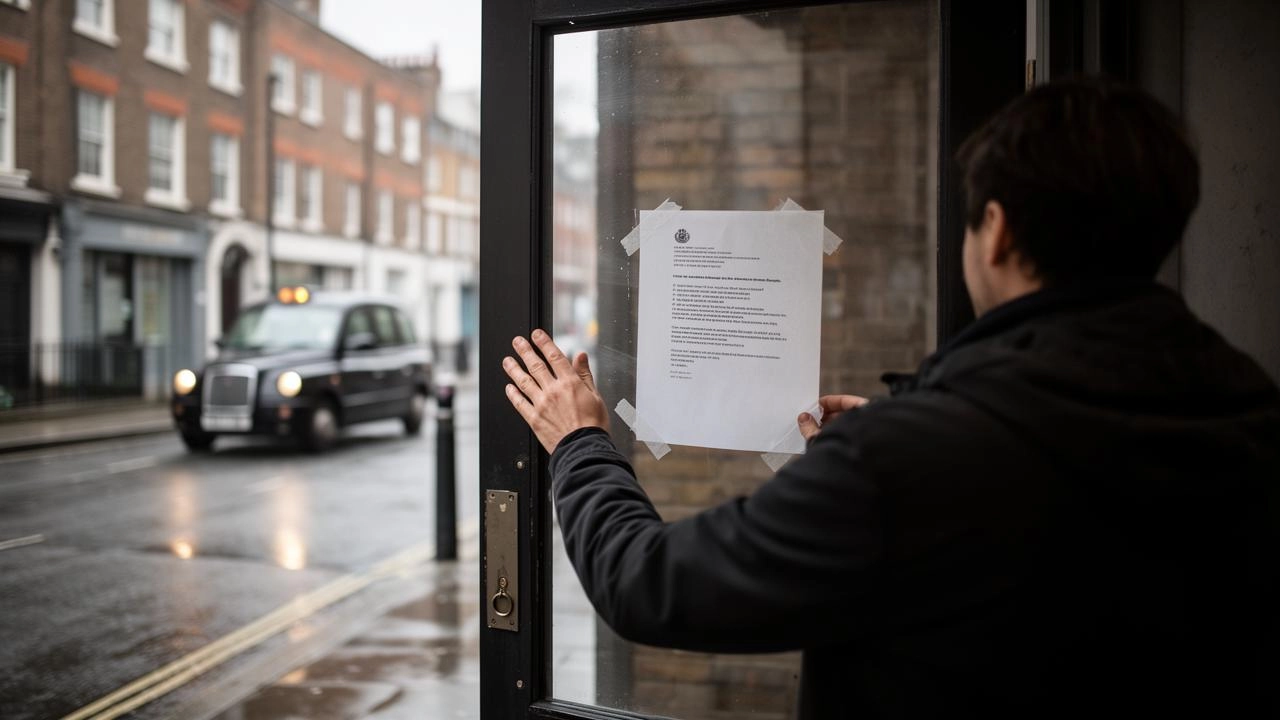
Britain’s financial watchdog has issued cease-and-desist orders at three London locations suspected of hosting illegal peer-to-peer cryptocurrency trading operations, marking the second coordinated enforcement sweep in the capital this year and underscoring the regulator’s escalating campaign against unregistered digital asset businesses.
The Financial Conduct Authority (FCA) carried out the September 10 operation alongside HM Revenue & Customs (HMRC) and the Metropolitan Police, invoking powers under the Money Laundering, Terrorist Financing and Transfer of Funds (Information on the Payer) Regulations 2017. No arrests were announced.
Peer-to-peer trading, where individuals buy and sell crypto directly with one another, requires FCA authorization when conducted as a business in the UK. The regulator said none of the targeted premises appeared on its official register, placing them outside anti-money laundering controls designed to detect and prevent illicit fund flows.
“There are currently no FCA-registered peer-to-peer crypto businesses operating in the U.K.,” the agency said. “By operating outside the FCA’s registration regime, they avoid controls designed to detect and prevent money laundering.”
The enforcement action does not affect ordinary individuals making occasional personal crypto transactions. The registration requirement applies specifically to those providing crypto exchange services by way of business.
Steve Smart, the FCA’s executive director of enforcement and market oversight, issued a direct warning to operators. “Working with partners, we continue to track and disrupt illegal crypto activity,” he said. “Anyone running an unregistered peer-to-peer crypto business should assume we are looking at them.”
Detective Sergeant Sathish Alalasundaram of the Metropolitan Police highlighted the challenges law enforcement faces in this space. The complexity of crypto and “the speed at which funds can be moved across jurisdictions presents ongoing challenges for those investigating,” he said, adding that the force is adapting its disruption tactics as criminals evolve theirs.
The September operation follows an April sweep in which the FCA, HMRC and the South West Regional Organised Crime Unit inspected eight London sites. Evidence gathered during those inspections is now supporting ongoing criminal investigations and further regulatory actions, according to the regulator.
Escalating Enforcement
The FCA has already secured convictions in the crypto space. Olumide Osunkoya received a four-year prison sentence after being found guilty of operating an unregistered crypto ATM network between December 2021 and September 2023, which processed £2.6 million (approximately $3.5 million) in transactions. Authorities have also detained two individuals allegedly involved in running a separate illegal crypto exchange.
Caroline Black, a consultant at Gherson Solicitors LLP, said the latest operation signals a definitive shift in the regulator’s posture. “This second coordinated enforcement operation in six months confirms the FCA’s shift from warnings to active disruption of unregistered P2P crypto businesses, with criminal liability a live risk for any operator trading by way of business without the proper registration,” she said.
The FCA has supervised UK crypto businesses for anti-money laundering purposes since January 2020, and registration has proved difficult for many applicants. As of September 1, the regulator had received 417 registration applications since taking over supervision. Only 68 had resulted in registration, while 46 were rejected and 263 were withdrawn.
| FCA Crypto Registration Statistics (as of September 1) |
|---|
| Applications received |
| Registrations granted |
| Applications rejected |
| Applications withdrawn |
Note: Figures cover the wider crypto sector rather than peer-to-peer businesses specifically.
Consumers can verify whether a crypto firm is properly registered by consulting the FCA’s Firm Checker tool.
Preparing for the 2027 Regime
The enforcement push comes as the UK prepares to implement a comprehensive cryptoasset regulatory framework. The full regime takes effect on October 25, 2027, bringing additional crypto activities within the financial services perimeter. The FCA opened its authorization gateway for firms on September 30, 2026, with the application window running through February 28, 2027.
On September 16, one day before announcing the latest P2P crackdown, the regulator published final guidance clarifying when cryptoasset activities will require authorization under the incoming rules. The guidance covers issuing qualifying stablecoins, operating crypto exchanges, dealing and coordinating deals, safeguarding digital assets, and staking.
Aditya Mittal, managing principal at Capco, a global management and technology consultancy, said that “following the guidance from the FCA earlier this week, which clarified how the regulatory perimeter of the U.K.’s incoming cryptoasset regime will apply, firms should prioritize understanding which parts of their business fall within scope.”
For peer-to-peer operators, however, the message is immediate. Commercial crypto exchange activity already falling within current money laundering rules requires registration today, not when the broader regime arrives. With three premises targeted in September after eight were visited in April, the FCA is demonstrating that unregistered P2P trading has become an active enforcement priority rather than an issue being deferred to the 2027 overhaul.
Cryptoassets themselves remain only partly covered by Britain’s existing financial regulatory framework. Anti-money laundering requirements apply to qualifying crypto businesses, while separate financial promotion rules govern how cryptoassets can be marketed to UK consumers. That framework is due to expand substantially under the incoming regime.
Once added, BigGo Finance appears first in Google Search Top Stories, so you get the broadest, most up-to-the-minute, and most comprehensive global financial news first.
Source: finance.biggo.com