

Don't want to trade it yourself?
Our desk runs DEX portfolios on profit share.
Industries that barely existed a generation ago are taking over the space held for decades by Wall Street, oil companies, and pharmaceutical companies.
383 views0 comment(s)
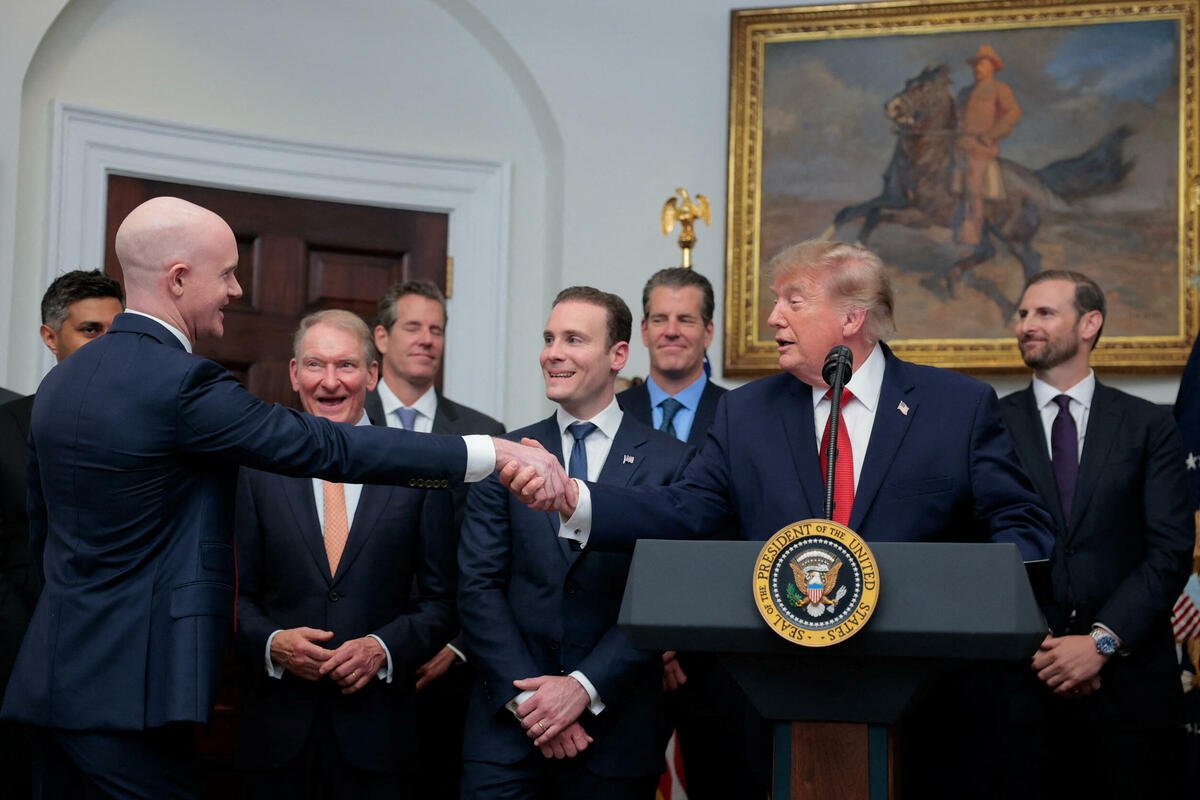
Trump with Brian Armstrong, co-founder and CEO of Coinbase, during a meeting with crypto industry representatives at the White House, Photo: Reuters
Disclaimer: The translations are mostly done through AI translator and might not be 100% accurate.Reuters
30.08.2026. 07:10h
A handful of billionaires and companies are leading the wave of corporate spending in this year’s US congressional elections, but these are no longer the traditional centers of power that have dominated political Washington for decades.
Crypto companies, artificial intelligence firms and online gambling have become the biggest industries shaping the 2026 midterm elections, fueling record business spending on congressional races, according to data from campaign finance trackers and Reuters interviews with more than a dozen political strategists from both parties.
The new money pouring into American politics is coming from a new class of billionaires from industries that barely existed a generation ago, taking over the space traditionally occupied by Wall Street, as well as the pharmaceutical, oil and media industries, strategists from both parties say.
As lawmakers across the country seek tighter oversight and regulation of these industries, their founders are using their newfound wealth to gain allies, influence rules, and oppose these efforts.
US companies spent a record $517 million on the 2026 House and Senate elections in the 15 months ending in the first quarter, surpassing the previous record of $461 million in corporate spending over two years for the 2024 elections, according to data compiled by the nonprofit corporate accountability organization Public Citizen.
And all of that is before the expected surge in political spending in the run-up to the November 3rd elections, in which Democrats hope to take control of both the House of Representatives and the Senate.
“The volume of corporate spending this election cycle is unlike anything we’ve seen before,” said Rick Claypool, director of research at Public Citizen.
Critics argue that such spending threatens to further amplify the influence of a small group of vested interests, allowing issues like regulating cryptocurrencies and artificial intelligence, the energy needs of data centers, and the oversight of online gambling to crowd out issues that affect households more directly, such as high fuel prices and health care. Supporters, however, say it gives emerging sectors a voice that other corporate interests have long had.
“When corporate money can flood the political debate, there’s less room to talk about what people really care about,” Claypool said. “Instead, we now have a situation in Congress where a disproportionate amount of time is spent debating narrow regulatory issues related to cryptocurrencies, when what people really want is cheaper groceries.”
Yet there are limits to what money can accomplish. Polls show that a majority of Americans believe there is too much money in politics, while progressive Democratic Senate candidates like James Talarico in Texas and Abdul El-Sayed in Michigan have successfully built campaigns on the argument that wealthy donors and companies have too much influence in Washington.
No restrictions
Donations from the crypto, tech and online gaming industries combined accounted for at least $294 million in corporate spending in the midterm elections from January 1, 2025, through the end of the first quarter, Public Citizen found.
Following the model that the crypto industry pioneered in the previous election cycle, these industries have organized political donations through a vast network of so-called super PACs, affiliated PACs – which receive money from super PACs – and nonprofits with opaque funding that are not required to disclose who their donors are. Companies and their founders often donate through multiple such networks, as well as directly to individual candidates.
These groups can receive unlimited amounts of money, but they are not allowed to give money directly to candidates or coordinate with them. Instead, they can pay for advertisements, organize voter turnout campaigns, and finance campaign rallies.
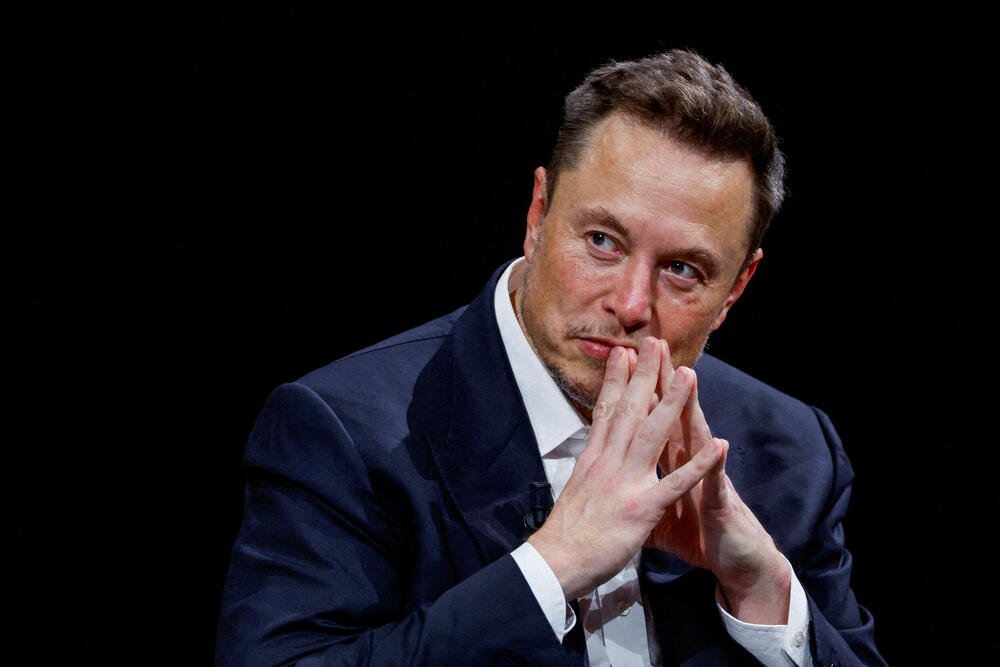
The CEOs of those companies have personally spent millions more. SpaceX founder Elon Musk has already spent more than $90 million on the 2026 federal election, and he plans to spend significantly more by November. Google co-founder Sergey Brin has spent more than $106 million in California fighting, among other things, a proposed wealth tax, federal and state records show. Brin and Musk did not respond to requests for comment.
Meta, which operates Facebook and Instagram, has donated $65 million to four different super PACs to support candidates of both parties in elections in California, Texas, Illinois and other states. The company declined to comment for this article.
When all political spending is factored in, including donations from billionaires like Musk, unions and groups that advocate for various social causes, a record $11,6 billion is expected to be spent on political ads for the midterm elections. That would surpass the previous record of $11,2 billion from the 2023-2024 election cycle, according to data from political advertising research firm AdImpact.
Political disruption factor
Crypto companies Coinbase and Ripple, along with investment firm Andreessen Horowitz, spent large sums in 2024 through their super PAC Fairshake to help longtime Democratic Senator Sherrod Brown lose his Senate seat from Ohio.
The crypto industry’s strategy was so effective that year that the Public Citizen super PAC called Fairshake a corporate “Death Star” that could “destroy individual candidates.” That model — which broke with tradition by not being tied exclusively to one party — is now being copied by big tech companies, the sports betting industry and other sectors, Democratic and Republican strategists say.
Instead, the industry openly supported candidates who espoused its views – regardless of party affiliation – and spent millions to end the political careers of those who did not.
As the then-chairman of the Senate Banking Committee, Brown was one of the most vocal critics of the industry in Congress, but strategists say he is now much more reserved about cryptocurrencies as he tries to return to the Senate, and even more conciliatory. Campaign manager Patrick Eisenhower told Reuters in a statement that Brown “recognizes that cryptocurrencies are part of the American economy” and approaches the issue with an open mind.
Fairshake started the year with a $193 million fund, with about $130 million left to spend, filings show. It was funded almost entirely by Coinbase and Ripple, as well as California venture capital firm Andreessen Horowitz.

The firm’s co-founders, Ben Horowitz and Marc Andreessen, have each donated about $4 million of their own money so far this election cycle, most of it to U.S. President Donald Trump’s MAGA Inc. super PAC, while their investment firm has given more than $81 million, mostly to PACs linked to cryptocurrency and artificial intelligence, according to federal election records reviewed by Reuters. At least $23,8 million of that went to Fairshake. The firm and its co-founders declined to comment through a spokesman.
Ripple declined to comment, while Coinbase did not respond to a request for comment.
AI enters the race
Artificial intelligence played almost no role in the 2024 elections, but this time it has already emerged as a significant factor.
Political groups backed by OpenAI and Antropik — which advocate for various types of regulatory oversight — or their leaders spent more than $23 million in June alone supporting two rival Democratic candidates in a heavily liberal New York City district, campaign finance records show.
“Essentially, two AI groups were fighting each other, while the candidates were in the background,” said Brendan Glavin, director of the non-partisan organization OpenSecrets, which tracks campaign finance.
AI super PAC Leading the Future has raised $140 million for the midterm elections, arge donations from OpenAI co-founder and president Greg Brockman and his wife, Anna, as well as the firm Andreessen Horowitz
OpenAI and the Brockmans declined to comment. The company has previously said it does not fund or direct the activities of Leading the Future and that Brockman, his wife and other employees can donate money in their personal capacities. The couple also separately donated $25 million to the super PAC MAGA Inc., filings show.
“We want to be absolutely clear: no external political group speaks on behalf of OpenAI or represents the views of our company,” the company said in June.
Antropik has donated at least $40 million this election cycle through the non-profit organization Public First Action, which has raised $100 million so far, said a spokesman who declined to identify other donors. About half of that money is being channeled to the election through two affiliated PACs, he said.
The company, which referred questions for this story to the group, is also affiliated with the super PAC Public First, which has raised an additional $3,9 million, including $1 million donated by Anthropic co-founder and CEO Dario Amodei, federal filings show. Anthropic also has a small, traditional PAC called AnthroPAC, which accepts employee donations and can give money directly to election campaigns.

The company defended its donations to the nonprofit, saying the money is used to inform the public about policies, not to support or oppose specific candidates.
“They have largely taken the model that the crypto industry used in 2024,” Glavin said, referring to the AI industry’s efforts to support candidates it sees as sympathetic to its views, regardless of traditional party divisions.
The online sports betting industry is also copying this model at a time when it is exposed to increased oversight and regulatory pressure.
DraftKings, FanDuel, Fanatics and British betting company bet365 have donated more than $72 million to the midterm elections so far, making the industry the third-largest corporate donor this election cycle, Public Citizen estimates. They are channeling most of their money through two affiliated PACs — the American Conservative Fund and American Future — to elections in states where the industry faces the most stringent regulation, filings show.
Prediction market Polymarket separately donated $1 million in June, through its parent company Blockratize Inc., to the Republican super PAC Congressional Leadership Fund, which is backed by House Speaker Mike Johnson, filings show.
Betting platforms did not respond to requests for comment.
Organizations that track campaign finance say the amount of money pouring into this election cycle is staggering.
“A third of all corporate money spent since 2010 has been spent in this election cycle, and it’s not even over yet,” Claypool said. “The amount of corporate money that has poured into this election is unprecedented.”
Prepared by: A.Š.
Download the app and follow the news
News
United Statescrypto companiesartificial intelligenceUS Congresselections to CongressDonald tramponline bettingpublic-citizenRik Klejpul
Source: en.vijesti.me