


Don't want to trade it yourself?
Our desk runs DEX portfolios on profit share.
Currencies38934
Market Cap$ 2.75T+1.21%
24h Spot Volume$ 19.98B+13.3%
DominanceBTC57.55%-0.13%ETH10.99%+1.05%
ETH Gas0.11 Gwei
Business
Aug 30, 2026
3min read
byMaya Bennett
forCoinpaper
See what traders are focused on
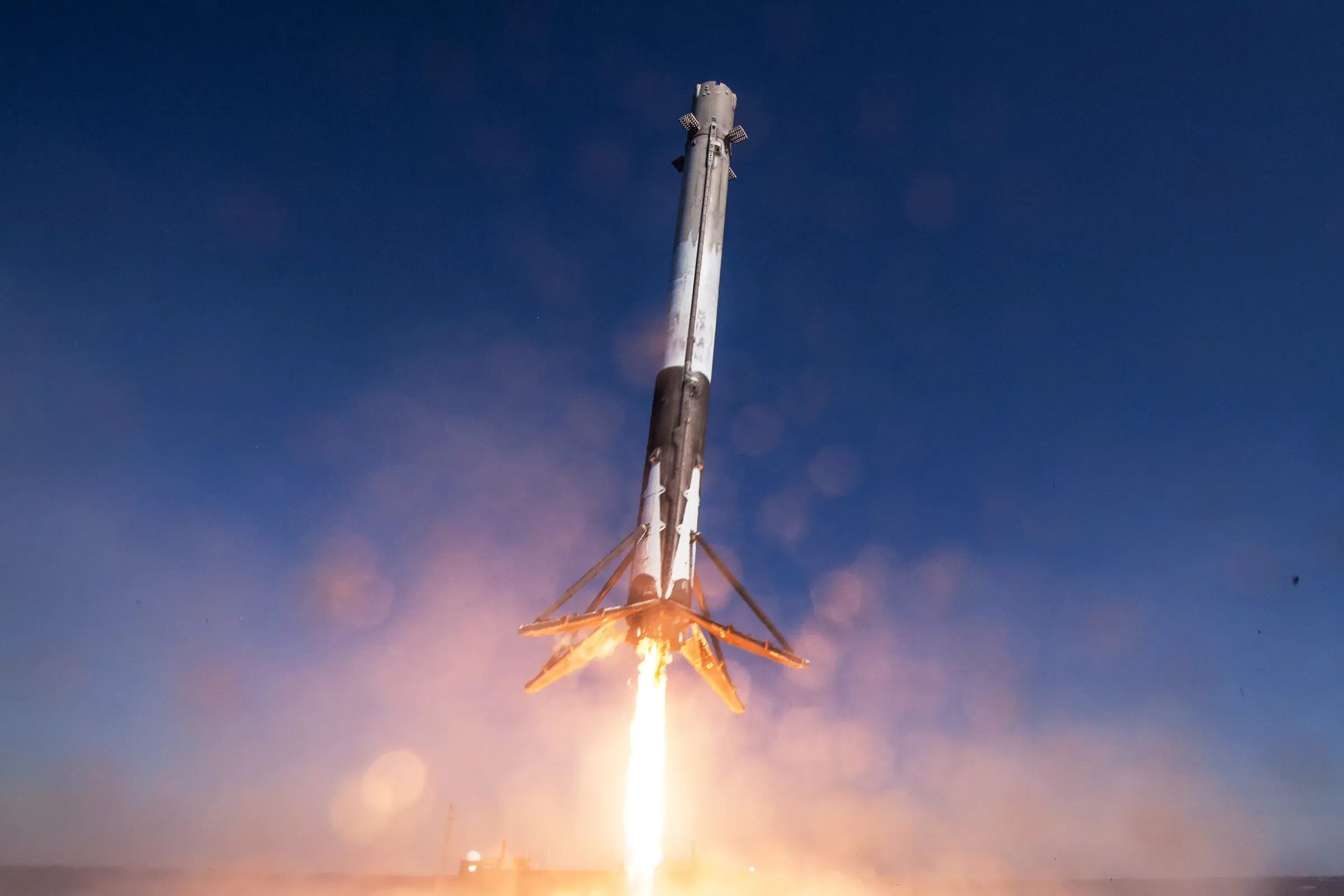
SpaceX successfully launched NASA’s roughly $4 billion Nancy Grace Roman Space Telescope on Sunday, putting one of the agency’s most important new observatories on course for deep space while underscoring the continued role of Falcon Heavy even as Elon Musk prepares for a longer-term shift toward Starship.
The Falcon Heavy lifted off from Launch Complex 39A at NASA’s Kennedy Space Center at 7:26 a.m. EDT on Aug. 30, beginning Roman’s trip toward the second Sun-Earth Lagrange point, or L2, about one million miles from Earth. Reuters confirmed the successful launch Sunday.
NASA had moved Roman to launch roughly nine months ahead of schedule, an unusual milestone for a flagship science program of this scale. The observatory is expected to spend about three months traveling, deploying systems, calibrating instruments and completing commissioning before science operations begin.
Falcon Heavy Remains Critical as SpaceX Looks Beyond Falcon
The mission arrives at an interesting moment for SpaceX’s launch business.
Just days before Roman’s flight, Musk said SpaceX expects eventually to wind down Falcon 9 and Falcon Heavy once Starship can launch reliably several times per week. The company would then redirect engineering and manufacturing re
That planned transition put pressure on SpaceX stock earlier in the week, but Roman demonstrates why Falcon cannot disappear overnight. Falcon Heavy remains a proven option for expensive government payloads requiring substantial performance and mission reliability.
Roman is the sixth NASA primary mission launched on a SpaceX Falcon rocket from Kennedy, following missions including Psyche, Europa Clipper and IMAP. NASA said Falcon Heavy’s three first-stage cores combine 27 Merlin engines capable of producing roughly 5 million pounds of thrust.
| Roman mission | Key figure |
|---|---|
| Mission cost | ~$4B |
| Destination | L2 |
| Distance from Earth | ~1M miles |
| Field of view vs. Hubble | 100×+ |
| Expected new exoplanets | ~100,000 |
Roman Could Survey the Sky Far Faster Than Hubble
Roman’s value comes less from looking deeper than existing observatories and more from seeing vastly larger areas of the sky at once.
NASA says its field of view will be at least 100 times larger than Hubble’s, while preserving comparable sensitivity and resolution for many observations. The telescope is designed to map billions of galaxies, study dark energy and dark matter and conduct a large census of planets beyond the solar system. NASA expects its surveys could identify roughly 100,000 new exoplanets.
Reuters described Roman as complementary to both Hubble and the James Webb Space Telescope, with wide-field surveys capable of creating an unprecedented three-dimensional picture of the universe.
For investors, the launch also lands during a recovery in SPCX shares. SpaceX closed Friday at $141.50, up from $135 on Aug. 24 and about 4.8% higher over the four sessions that followed. The market was closed during Sunday’s mission, meaning any direct stock response will not become visible until the next trading session.
The rebound follows increasingly bullish Wall Street commentary. JPMorgan recently argued SpaceX stock could have nearly 80% upside, while the company is simultaneously committing $100 billion to a new Louisiana Starship complex.
Roman therefore highlights the two sides of the SpaceX investment story: Falcon remains central to high-value government missions today, while much of the company’s future valuation increasingly depends on Starship, Starlink and its expanding AI business.
Cover image idea: A clean 16:9 editorial image of a Falcon Heavy lifting off in the distance with the Roman telescope subtly represented in the foreground or payload silhouette. Dark pre-dawn Florida sky, bright exhaust plume, no text and no extra objects.
Source: <a href="https://cryptorank.io/news/feed/a2504-spacex-falcon-heavy-launches-nasas-4b-roman-telescope-as-spcx-stock-holds-141″ target=”_blank” rel=”nofollow noopener”>cryptorank.io