

Don't want to trade it yourself?
Our desk runs DEX portfolios on profit share.
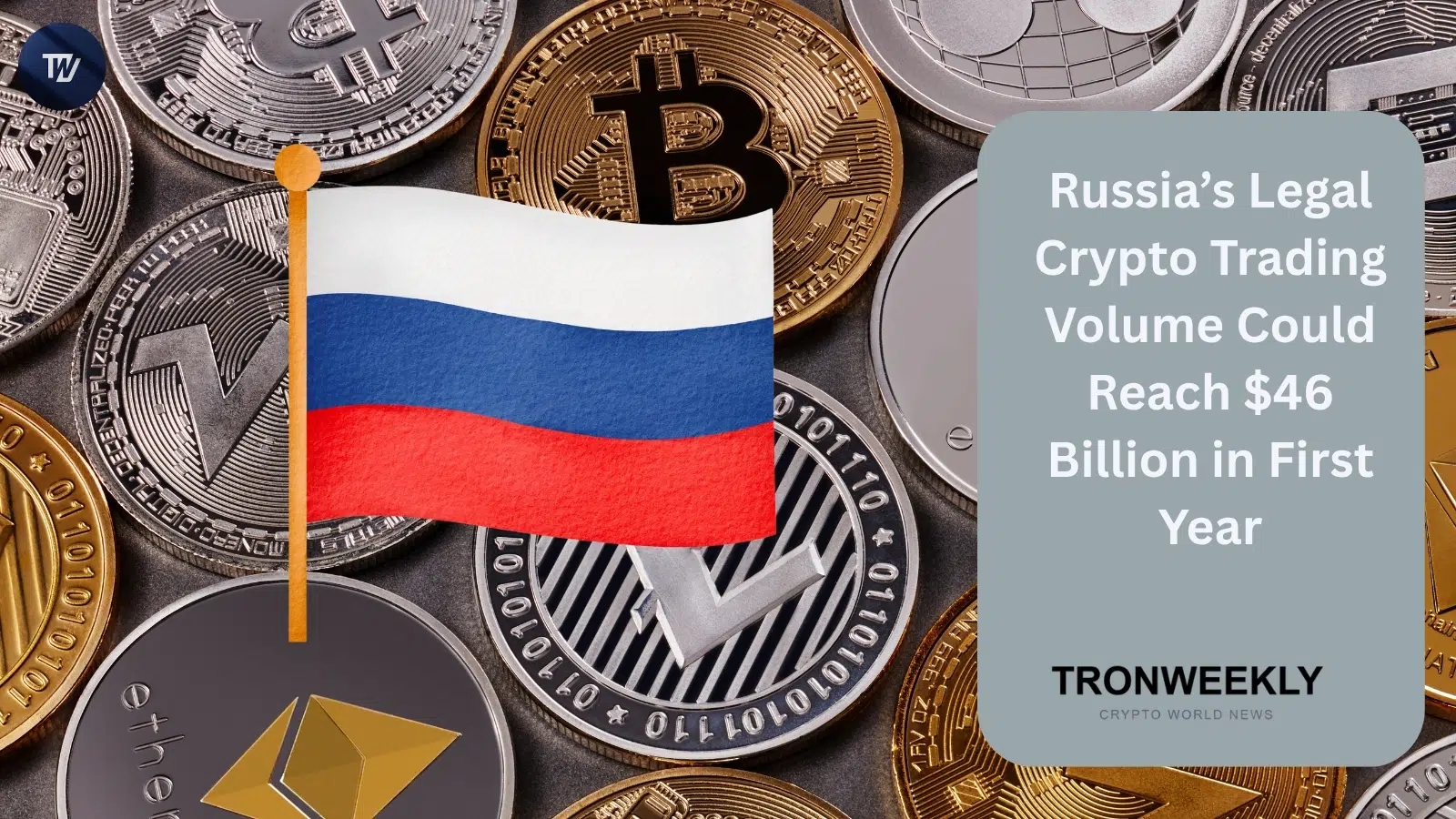
Russia’s regulated crypto trading volume could reach 3.5 trillion to 4 trillion rubles ($46.43 billion) during its first year after legalization
Table of Contents
The estimate highlights the potential scale of Russia’s emerging regulated digital-asset market, although most existing crypto activity is expected to remain outside official exchanges initially.
Popov told TASS ahead of the Eastern Economic Forum that the forecast is deliberately conservative. Finance Ministry data cited by Sberbank show that cryptocurrency transactions in Russia were running at around 50 billion rubles per day, or approximately 18 trillion rubles annually.
SberCIB Investment Research estimates that only about 20% of this activity, equivalent to 3.5–4 trillion rubles, will initially move to regulated exchanges.
Crypto Trading Volume Could Reach $87 Billion by 2029
Sberbank expects the regulated market to expand as Russia’s crypto infrastructure develops. According to Popov, annual regulated trading volume could reach 4.75–5.25 trillion rubles by 2028 before climbing to approximately 7.5 trillion rubles ($87.06 billion) by 2029.
The forecast points to a gradual migration of Russian crypto activity toward licensed financial institutions rather than an immediate transition.
A key reason for the cautious outlook is Russia’s licensing timetable. Although the new legal framework takes effect on September 1, professional market participants have until July 1, 2027, to obtain the necessary licenses.
This transition period means the regulated market will not have reached full operational maturity during its first year.
Retail Limits Could Restrain Market Expansion
Regulations on retail investment in cryptocurrencies may also affect the pace of adoption. According to the available reports, non-qualified investors are permitted to invest no more than 300,000 rubles ($3,800) worth of crypto per yearr risk awareness. Higher limits are available to qualified investors, but both regulations matter
Availability of assets through the official Russian exchanges could be yet another restriction. Officially, only Bitcoin, Ethereum, and USDT of Tether have been approved for trading, with many other cryptocurrencies remaining unofficial.
It could lead the investors looking to invest in different tokens to stick to unofficial cryptocurrency exchanges.
Unregulated Activity May Remain Significant
This is an important difference between the overall level of crypto activities in the country and the crypto trading volumes on the exchanges that will be regulated.
The total volume of annual crypto activities in the country might be about 18 trillion rubles, yet only a small portion of it will find its way to the regulated markets initially
The legalization may create a substantial business opportunity for the banks, brokers, and exchanges while making it easier to have better oversight of the digital asset activity. For investors, the legalization doesn’t equate to freedom of trade.
What Happens Next?
The next step depends on licensing, investor interest, regulation changes, and whether the list of approved assets is going to be expanded. In case of development as expected by Sberbank, the Russian regulated cryptocurrency market might amount to $87 billion per year by 2029.
Source: www.tronweekly.com