

Don't want to trade it yourself?
Our desk runs DEX portfolios on profit share.
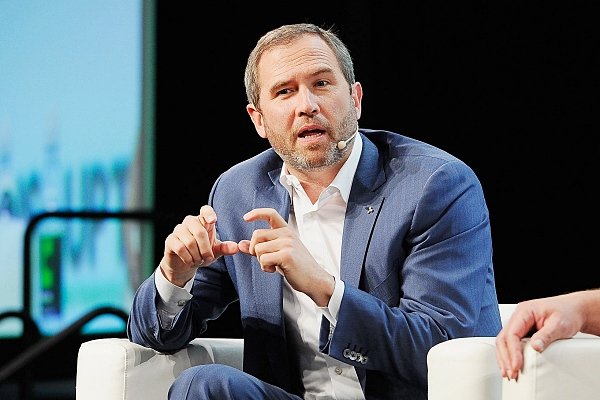
Ripple CEO Brad Garlinghouse (브래드 갈링하우스) said U.S. cryptocurrency regulatory clarity is closer than ever.
On Aug. 23 local time, blockchain media outlet U.Today reported that Garlinghouse said on social media that Washington’s approach to cryptocurrency has changed significantly over the past 10 years.
The remarks came after the first meeting of the U.S. Commodity Futures Trading Commission (CFTC) Innovation Advisory Committee held in Washington on Aug. 20. The committee was chaired by CFTC Chairman Michael Selig (마이클 셀릭) and includes executives from the cryptocurrency industry and traditional finance who advise on technology, legal and policy issues.
Garlinghouse noted that participants shared a common view. He said everyone agreed regulation is not sufficient under rules made in the past. He said they do not fit consumers, businesses or innovation. He highlighted that the U.S. regulatory system is moving away from applying existing financial rules as-is and toward setting standards suited to the characteristics of digital assets.
Ripple has consistently called for regulatory clarity. Garlinghouse again mentioned that Ripple sent an open letter to Congress in July 2019. At the time, Garlinghouse and Ripple co-founder Chris Larsen (크리스 라슨) argued that digital assets should be regulated according to their unique characteristics, and that a lack of clarity could have a negative impact on innovation and job creation.
Recent moves by U.S. regulators also align with that argument. The U.S. Securities and Exchange Commission (SEC) and the CFTC in March jointly clarified how federal securities and commodities laws apply to several crypto assets, and the SEC also established a token classification system. The CFTC separately launched the Innovation Advisory Committee. Garlinghouse is participating alongside executives from Coinbase, Uniswap Labs, BitGo, Nasdaq, CME Group and Cboe.
Garlinghouse rejected the perception that the crypto industry has opposed regulation. He stressed at the SALT event that the industry has not taken an anti-regulation stance and that the market is not a lawless zone. He said Ripple holds 75 licenses worldwide and argued the industry has instead actively called for a clear regulatory framework.
Garlinghouse also revisited Ripple’s long-running legal dispute with the SEC. He said Ripple was in a somewhat special situation in which it had to fight the U.S. government and the SEC for 4 years. He said a federal judge stated in the ruling that XRP itself is not a security, calling that clarity for XRP.
From a market perspective, the core of the remarks is that they again show the industry’s expectation that the U.S. regulatory environment is shifting from enforcement-centered to standards-centered. In particular, the joint participation of crypto companies and traditional financial institutions in the CFTC advisory body, and the SEC and CFTC’s work to lay out asset-by-asset principles for legal application, show the possibility that industry views will be reflected more in future regulatory design.
Ripple has also continued to raise, through its own case, the burden that regulatory uncertainty places on business and the broader industry. As a result, key points to watch are how specifically U.S. regulators will further detail the token classification system and jurisdictional standards, and whether legal judgments on individual cryptocurrencies such as XRP will extend to other projects.
No August doldrums in DC this week! It was great to join the inaugural @CFTC Innovation Advisory Committee (a group I’ve called “the Olympic roster of crypto.”) But for a “crypto” gathering, there were a LOT of TradFi players in the room like @NASDAQ, @CMEGroup, @CBOE,… pic.twitter.com/T6hjrcK2e8
About the Author
Yoonseo Leeyslee@d-today.co.kr
Keyword
#Ripple#CFTC#SEC#XRP#CoinbaseCopyright © DigitalToday. All rights reserved. Unauthorized reproduction and redistribution are prohibited.
Source: www.digitaltoday.co.kr