

Don't want to trade it yourself?
Our desk runs DEX portfolios on profit share.
Currencies38825
Market Cap$ 2.71T-1.43%
24h Spot Volume$ 34.16B-21.7%
DominanceBTC57.79%+0.41%ETH10.90%+1.00%
ETH Gas0.14 Gwei
FeaturedRegulationAIMiningScamsCrime
Aug 26, 2026
2min read
byLiam ‘Akiba’ Wright
for<a href="https://xpertsstudio.com/77-of-americans-say-crypto-in-retirement-plans-is-risky/” title=”77% of Americans Say Crypto in Retirement Plans Is Risky”>CryptoSlate
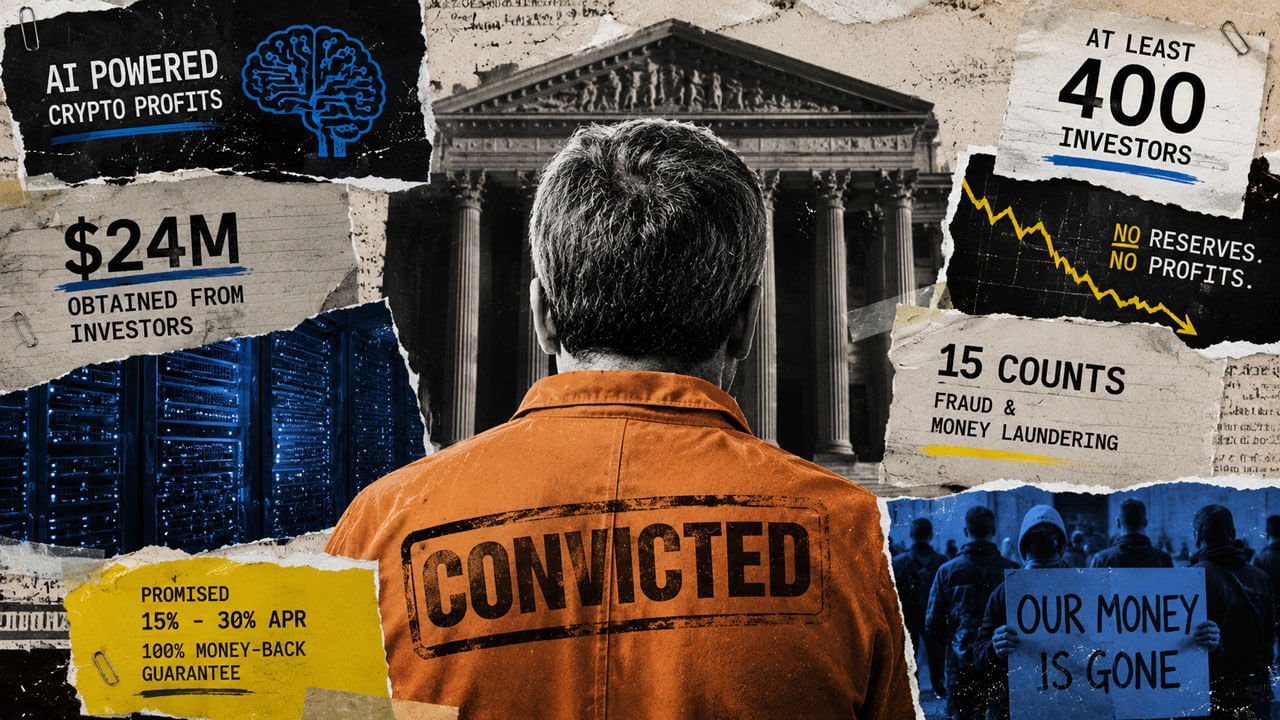
A federal jury convicted Profit Connect owner Brent C. Kovar in August 2026 on 15 counts after prosecutors said he raised $24 million from at least 400 investors by falsely claiming an AI-powered crypto business generated 15%–30% APR and held large crypto reserves. The DOJ says investor funds were diverted to operations, investor repayments and personal purchases, echoing a 2021 SEC civil case that alleged about $12 million from at least 277 investors for conduct between late 2017 and July 2021. Sentencing is set for Nov. 30, 2026 with a statutory maximum of 280 years, underscoring ongoing fraud and regulatory risk in crypto fundraising, AI claims and retail investor protection.
See what traders are focused on
A federal jury convicted Profit Connect owner Brent C. Kovar on 15 fraud and money-laundering counts after prosecutors said he obtained $24 million from at least 400 investors through false claims about an AI-powered crypto business.
The Justice Department said the verdict followed a nine-day trial, with jurors finding Kovar guilty of 11 counts of wire fraud, two counts of mail fraud, and two counts of money laundering.
The Justice Department placed the conduct between late 2017 and July 2021, when Kovar marketed Profit Connect as a profitable technology business capable of generating the promised returns.
Kovar told investors that Profit Connect used AI software on a supercomputer to mine crypto and verify crypto transactions, according to the Justice Department. He represented the company as profitable, promised fixed returns of 15% to 30% APR and offered a 100% money-back guarantee.
He also claimed Profit Connect held hundreds of millions of dollars in crypto reserves. Prosecutors said the company was unprofitable, held no reserves, and lacked a legitimate
The Justice Department said Kovar instead used investor money to operate Profit Connect, buy gifts for employees, purchase a house for himself, and repay investors, with those repayments presented as proceeds from mining and transaction verification.
From civil allegations to a criminal verdict
The SEC’s 2021 civil action alleged that Joy and Brent Kovar had raised more than $12 million from at least 277 retail investors since at least May 2018 through Profit Connect Wealth Services. The regulator said they promoted 20% to 30% annual returns tied to a purported AI supercomputer.
CryptoSlate covered those allegations at the time. The numbers came from the SEC’s civil case against Profit Connect and both Kovars, while the August 2026 jury verdict separately established Brent Kovar’s criminal liability.
The Justice Department’s $24 million figure is about twice the SEC’s earlier figure of more than $12 million. The minimum investor count also increased from at least 277 in the SEC case to at least 400 in the criminal case, although both figures are lower-bound estimates.
The figures come from different cases and cover different periods, so they are not directly comparable. They show that the publicly reported scope of the scheme was larger by the time of Kovar’s criminal conviction, while separate court or receivership records would be needed to determine investor losses and recoveries.
The verdict now moves the case to sentencing on Nov. 30, with prosecutors saying the convictions carry an aggregate statutory maximum of 280 years in prison, representing the legal ceiling across the counts. A federal judge will determine Kovar’s sentence after considering the US Sentencing Guidelines and other statutory factors.
Source: cryptorank.io