

Don't want to trade it yourself?
Our desk runs DEX portfolios on profit share.
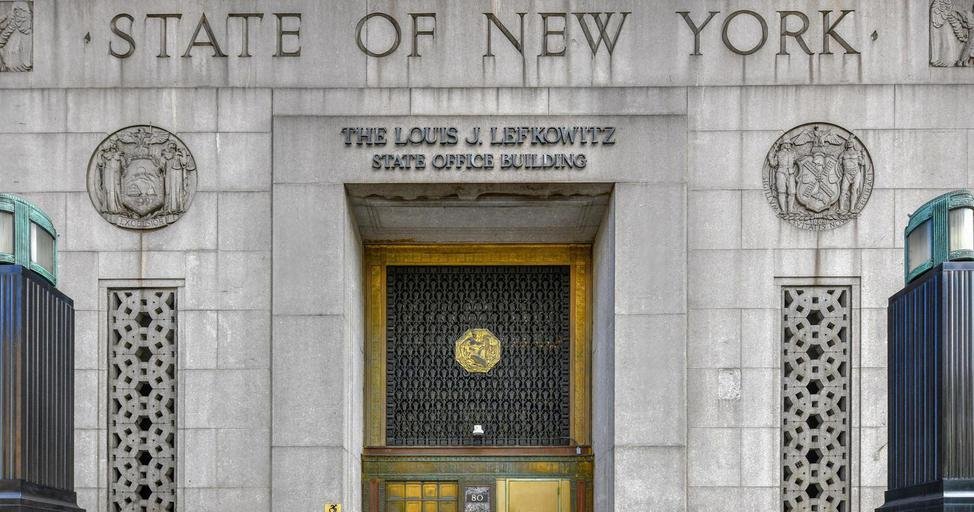
The U.S. Attorney’s Office for the Southern District of New York announced a civil forfeiture complaint seeking approximately $61 million in cryptocurrency, which American officials claim stems from illicit sales of sanctioned Iranian crude oil and petroleum products.
According to a U.S. Department of Justice (DOJ) <a href="https://www.justice.gov/usao-sdny/pr/us-attorney-seeks-forfeiture-61-million-cryptocurrency-iranian-militarys-black-market” rel=”nofollow noopener” target=”_blank”>statement released on Monday, September 14, 2026, the assets represent black-market oil revenues intended for the Iranian government and military entities, including the Islamic Revolutionary Guard Corps (IRGC).
Shawn S. Buckley, Deputy U.S. Attorney for the Southern District of New York, alongside James C. Barnacle Jr., Special Agent in Charge at the FBI New York Field Office, announced the filing.
Prosecution filings allege that Tehran used a network of front companies and cryptocurrency actors across China and other jurisdictions to launder over $1.5 billion in oil proceeds, funneling portions directly to financial service providers and crypto addresses linked to the IRGC.
The case targets two Chinese firms: “Blessed Trust” and “Hexa Whale.” Prosecutors contend that both entities utilized business accounts on the Binance crypto exchange in the UAE to receive, convert, and transfer funds derived from Iranian oil sales.
Blessed Trust passed itself off as a wealth management and digital asset custody provider while actively converting fiat currency from Iranian oil transactions into cryptocurrency. Hexa Whale operated nominally as a commodity trading brokerage while colluding with Blessed Trust to route Iranian capital.
U.S. officials state that a cluster of associated crypto wallets, designated in court records as “Entity A,” received and distributed over $1.5 billion in Iranian oil revenues, transferring funds to IRGC-linked wallets, financial services, and an Iranian crypto exchange.
The complaint asserts that the Chinese firms deployed layered transactions and multi-address routing to disguise the origin and true ownership of the funds, circulating tens of millions of dollars through the U.S. financial system.
Buckley stated that the action aims to sever access to capital used by Tehran and its proxies to fund military operations, armed groups, and nuclear and missile development.
The DOJ emphasized that the claims in the civil complaint must be proven in court and that the final transfer of ownership to the U.S. government requires a judicial ruling.
The forfeiture suit follows broader enforcement against Iran’s crypto-enabled oil networks. On June 2, 2026, the U.S. Treasury Department sanctioned Iranian exchanges Nobitex, Wallex, Bitpin, and Ramzinex, alleging that Nobitex processed over half of Iran’s digital asset inflows in 2025 and facilitated IRGC-linked transactions.
Source: iranwire.com