

Don't want to trade it yourself?
Our desk runs DEX portfolios on profit share.
August 20, 2026 by Our Reporter
Nigeria’s new digital economy rules leave gaps in crypto regulation
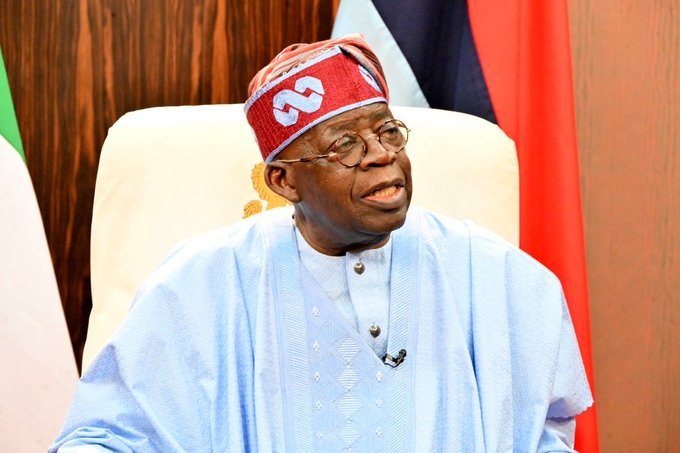
Nigerian president Bola Tinubu signed an executive order in mid-2026 aimed at harmonising the country’s oversight of the digital economy. The press statement said the order was responding “to a regulatory environment that has become fragmented as virtual assets increasingly blur the traditional boundaries between currencies, money, commodities and securities”
What are virtual assets and why are they important?
Virtual assets are digital representations of value that can be transferred, stored or traded electronically using distributed ledger technology or blockchain.
They include crypto-assets such as Bitcoin and Ether, stablecoins, tokenised securities and other digital tokens. Crypto-assets, especially stablecoins, are increasingly used for payments, remittances and settlement.
They are easy to access relative to cash, foreign currency and bank services. You can buy them directly from a crypto-asset exchange by signing up, verifying your identity and depositing fiat (national) currency. For example stablecoins move value across African borders faster and more cheaply than conventional methods.
What are the risks? What’s behind the executive order?
Nigeria’s approach to regulating crypto-asset transactions has been unclear and inconsistent. The Central Bank and the Securities and Exchange Commission have given opposing signals.
The two regulators have different objectives. The Central Bank’s focus is on monetary stability: ensuring the naira retains its value, inflation stays under control, and the exchange rate doesn’t fluctuate wildly. This is to help businesses and households plan with confidence.
The Securities and Exchange Commission’s role is to develop the market, allowing new financial products to grow in a safe and orderly way. Such products include digital assets.
They don’t use the same definitions to classify crypto-assets – for example, what counts as a currency, a security, or a stablecoin – so that it’s clear which rules apply and who enforces them. Without this, each can treat the same asset differently, creating confusion and gaps in oversight.
The EU has one framework and set of definitions across all member states. Singapore and the UK also have clearly defined asset categories to avoid overlapping or conflicting rules.
Other gaps in regulating this asset class include:
• Partial regulation. As I’ve pointed out before, the Financial Action Task Force Recommendation 16 (an international standard) requires service providers at each end of a virtual asset transaction above a certain value to collect and share information about the sender and the recipient. But decentralised exchanges like Uniswap allow users to trade directly with one another. So some crypto trading falls outside the rule, which was designed to counter money laundering.
• Stablecoins are largely unaddressed in Nigerian rules although use is growing fast.
• The cross-border dimension. International standards already give regulators the power to request information from foreign crypto exchanges serving their citizens. Nigeria is not using this tool well.
• Confusion over what’s classified as a digital asset.
What impact is this having?
The lack of clarity is having negative consequences.
I have argued previously that restrictions without a clear alternative don’t stop the activity, they just push it elsewhere. So, if Nigerians are prevented from trading the naira on crypto exchanges as they were in May 2024), they might simply turn to dollar-denominated assets. This would be worse for the naira.
Crypto trading that moves to places regulators can’t see, such as informal peer-to-peer trades or offshore platforms, makes the money laundering and terrorism financing problem worse. Scammers and unlicensed operators move in to fill the gap. The Nigerian government admitted that fraudulent operators exploited these gaps in the rules to prey on Nigerians. This likely cost families their savings, while honest, licensed crypto businesses faced unpredictable risk. That same uncertainty likely discouraged institutional investment and resulted in lost tax revenue.
So what’s changed?
• Establishes a Virtual Asset Council and creates a Virtual Asset Office at the Central Bank of Nigeria
• Mandates information-sharing and reporting through an integrated supervisory technology platform
• Authorises the creation of an implementation framework within 30 days.
To harmonise the approach by regulators, this framework will need:
• Shared definitions so it’s clear which agency regulates what
• Separate treatment for centralised and decentralised exchanges
• Active cross-border cooperation
• Rules for activities, not for each entity
• Rules offering licensed pathways rather than bans, to close the space fraudulent operators have exploited.
At the same time, a white paper on virtual assets is being finalised. It will set out the country’s longer-term policy direction and priorities for the whole virtual assets sector.
The Central Bank is also creating a safe, supervised space where companies can trial new products on a small scale before they are allowed out into the real market. Its scope isn’t limited to crypto-assets; it also covers tokenised assets and stablecoins. The same testing ground could be used to trial tokenised settlement systems (using blockchain technology to settle trades of things like bonds or shares) before opening that up more broadly.
What’s missing?
The Virtual Asset Council can indeed play a useful role in coordinating how Nigeria’s different regulators oversee virtual assets with consistent rules. It does this without creating a new regulator or taking power away from any existing one. But it won’t fill all the gaps in crypto-asset regulation.
First, it’s not a statute. An executive order can be reversed by a future administration.
Second, coordination cannot create rules where none exist. (Decentralised exchanges are currently unregulated.)
Third, it doesn’t stop dollarisation – saving and transacting in US dollars rather than naira. That’s because 99% of stablecoins are denominated in US dollars.
Fourth, the cross-border and regional dimension to regulating crypto assets is absent. I have previously argued for integration of crypto-asset standards across developing regions.
Fifth, it is silent on “agentic commerce” – a near future where AI agents, not people, do the shopping and paying, using crypto and stablecoins because they settle instantly and can be programmed with rules.
To be forward-looking, the council’s framework should cover three things:
• Agent-authorisation standards – clear rules on how much an AI agent can spend, and on what
• Liability allocation – who pays when an agent overspends, is hacked, or errs
• Sandbox scope – the regulatory sandbox (testing area) should test agentic and programmable-money use cases, not just today’s tokens and exchanges.
If each regulator retains its mandate, why establish a new asset council?
The government’s own reasoning is that virtual assets blur the traditional boundaries between currencies, money, commodities and securities. This has left agencies operating in silos, overlapping in some areas and leaving gaps in others. Reallocating statutory powers requires legislation and takes years but this achieves coordination immediately.
The council’s real functions are classification (deciding which agency owns which product) and a single front door.
However, there may be a big governance risk. What happens when the chair (Central Bank) and vice-chair (Securities and Exchange Commission) disagree?
There are other gaps too.
In my book, Financial Technology Law and Regulation in Africa, I set out an approach to regulating virtual asset transactions on both centralised and decentralised platforms. It highlights the need for close coordination between global and regional bodies, and genuine cooperation among all domestic financial regulatory authorities. This remains, in my view, the most credible path forward for Nigeria: a regulatory framework capable of matching the borderless, evolving nature of virtual assets with an equally joined-up system of oversight, at home and abroad.
•Salami is professor of Law, University of East London. This article is republished from https://theconversation.com The Conversation under a Creative Commons license. Read the https://theconversation.com/nigerias-new-digital-economy-rules-leave-gaps-in-crypto-regulation-financial-law-expert-explains-288413
TAGS:
📢 ADVERTISEMENT DISCLAIMER: Links above are sponsored posts. The Nation assumes no liability or responsibility for the claims, products, or services offered by third-party advertisers. Proceed with discretion.
Stay informed and ahead of the curve! Follow The Nation Newspaper on WhatsApp for real-time updates, breaking news, and exclusive content. Don’t miss a headline — join now!
Get instant breaking news and exclusive updates right on your feed! Subscribe to The Nation Newspaper Telegram channel and never miss a headline.
Accion MfB’s N5b commercial paper fully subscribed13 minutes ago
Delta targets 1,000 youths in push to diversify economy beyond oil13 minutes ago
PENGASSAN seeks stable regulations, protection for workers13 minutes ago
FEC okays double taxation treaties with Ghana, Tanzania, Switzerland14 minutes ago
Lagos urges youth action on environment14 minutes ago
Source: thenationonlineng.net