

Don't want to trade it yourself?
Our desk runs DEX portfolios on profit share.
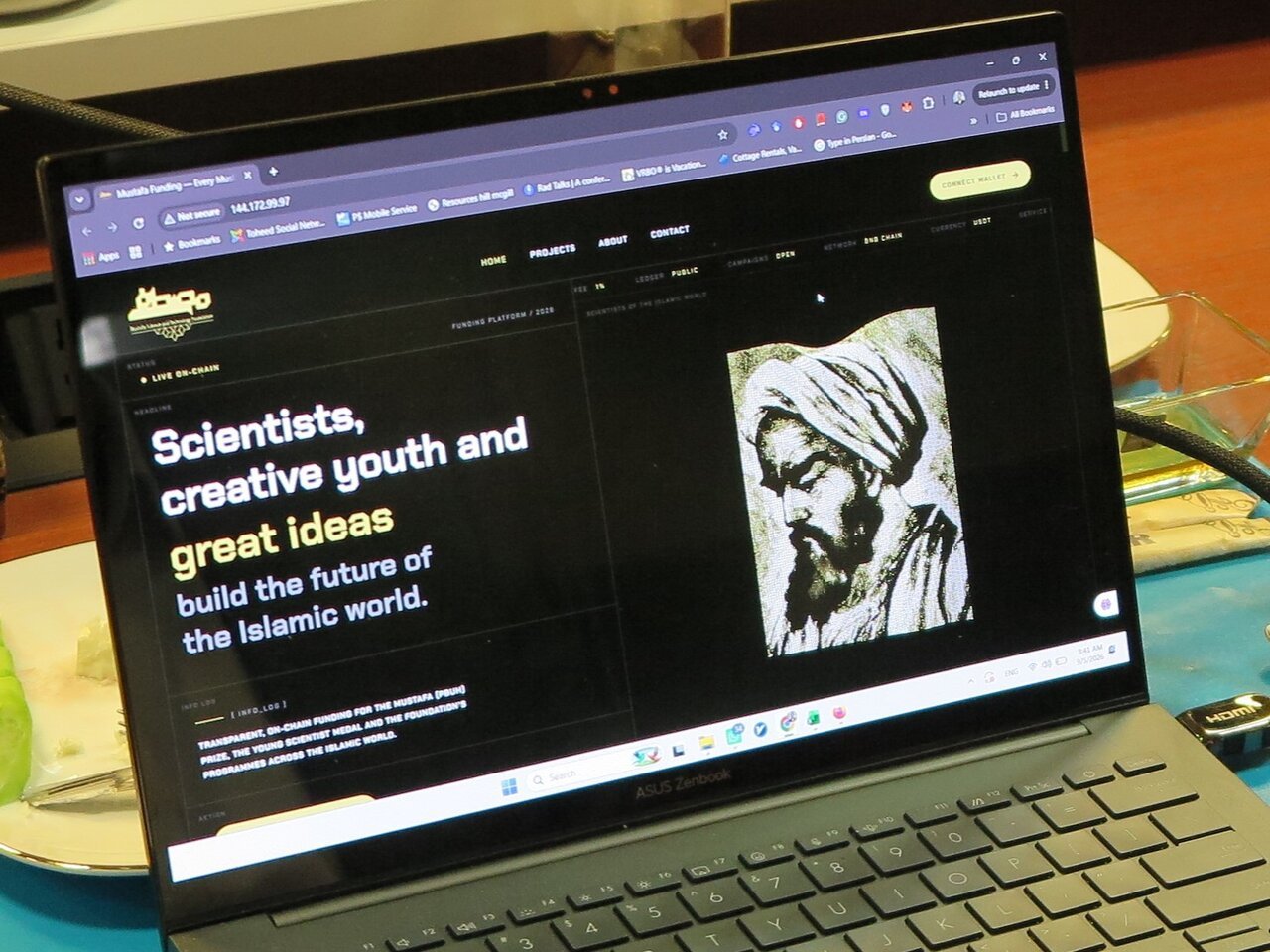
Mustafa Science and Technology Foundation unveiled a new platform powered by blockchain technology on Saturday to enable Muslims around the world to participate more easily in programs and projects of the Foundation
The platform uses cryptocurrencies, smart contracts and innovative financing mechanisms to enable transparent, rapid and international participation in supporting the Mustafa Prize and other scientific and technological initiatives.
“Many Muslims and businesspeople who, as a result of technological developments in recent years, have converted part of their assets into cryptocurrencies have faced the question of how to put those assets to work in real, clearly defined projects,” Ali-Akbar Salehi, the chairman of the board of trustees of the Mustafa Science and Technology Foundation, said.
“This is where the idea of creating a platform to connect crypto assets with real investment opportunities and tangible projects emerged.”
He highlighted the ability to set precise conditions governing the use of funds as one of the technology’s most important features.
“For example, a patron can specify that their contribution or financial participation should only be released after a particular event or outcome has been achieved. A smart contract then automatically executes the process according to the rules defined in advance,” he explained.
“This reduces the possibility of intervention outside the agreed framework and increases transparency throughout the process.”
Global <a href="https://xpertsstudio.com/liquid-network-320m-hack-halts-transactions/” title=”Liquid Network $320M Hack Halts Transactions”>network for supporting science and innovation
Salehi has proposed the establishment of a “Global Network of Patrons of Science” alongside the network of scientists that the foundation has worked to build over the years.
“Just as the Foundation has spent years working to build a network of scientists across the Muslim world, we should now establish a global network of patrons of science alongside it,” Salehi said.
“I have said many times that knowledge and ideas cannot be confined to a particular geography, and scientific progress cannot take place without interaction and exchange among scientists. The Mustafa Prize was established from the outset with precisely this vision in mind: to connect the scientific capacities of the Muslim world with the international scientific community.”
“If the production and exchange of knowledge can be global, why shouldn’t support for science be global as well?” he added. “Alongside a network of scientists, we can create a network of people who want to contribute to scientific progress.”
The key question, Salehi said, is how to make it easier for an individual anywhere in the world to support science by contributing to a young scientist or a specific research project.
New financial technologies and digital assets, he noted, can help reduce some of the geographical barriers to international participation. “We want to put these capabilities at the service of science,” he said.
“Imagine a credible project in areas such as cancer treatment, water, energy, artificial intelligence, or other cutting-edge technologies that needs funding. Instead of simply making a payment to an institution, an individual could know exactly what problem they are supporting, which research team is working on it, and what the intended objective is.”
Salehi described the initial motivation behind the initiative as supporting defined scientific projects involving Muslim countries through financial contributions from individuals around the world.
“If this happens, the financing of science itself could become a tool for building networks and advancing scientific diplomacy,” he said.
Source: www.tehrantimes.com
1 Comment
Pingback: Ethereum may have a simpler way to ease the computing burden of its growing rollup ecosystem | featured Ethereum – xpertsstudio