

Don't want to trade it yourself?
Our desk runs DEX portfolios on profit share.
Michael Saylor’s Strategy Seeks to Revive Crypto-Funding Engine
- MSTR
- BTC-USD
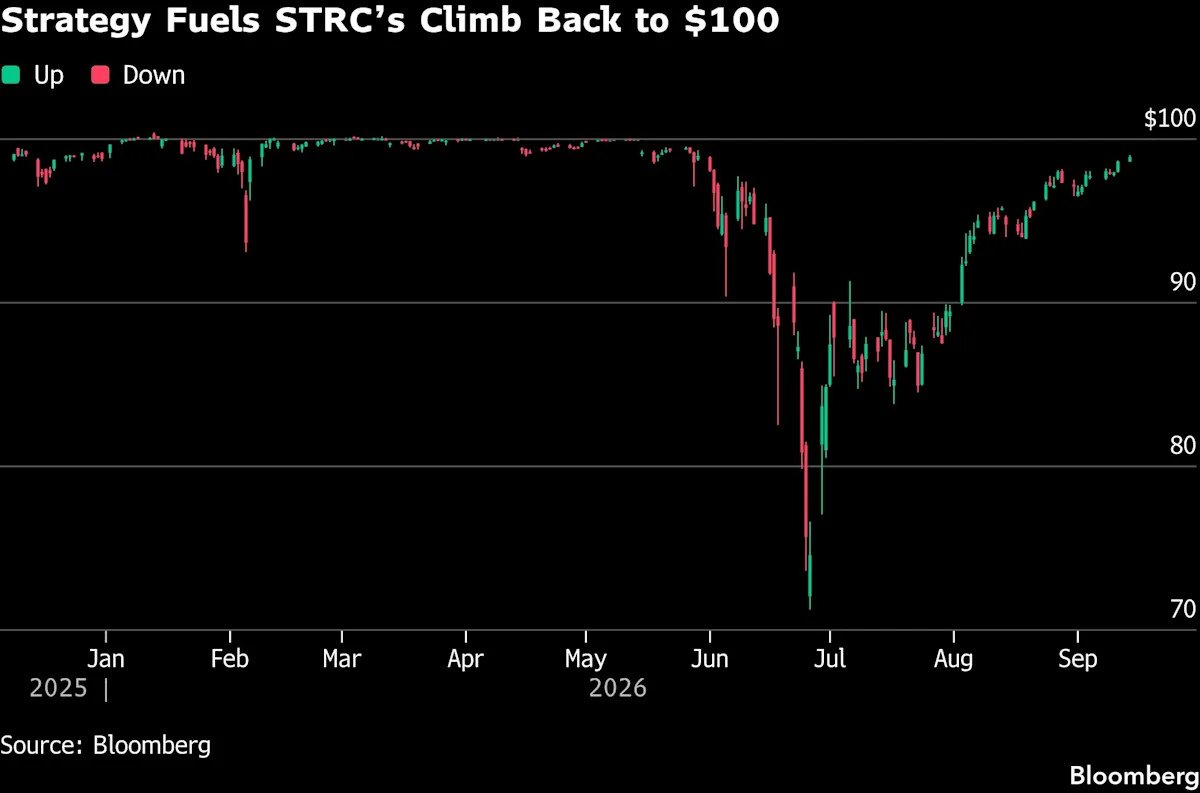
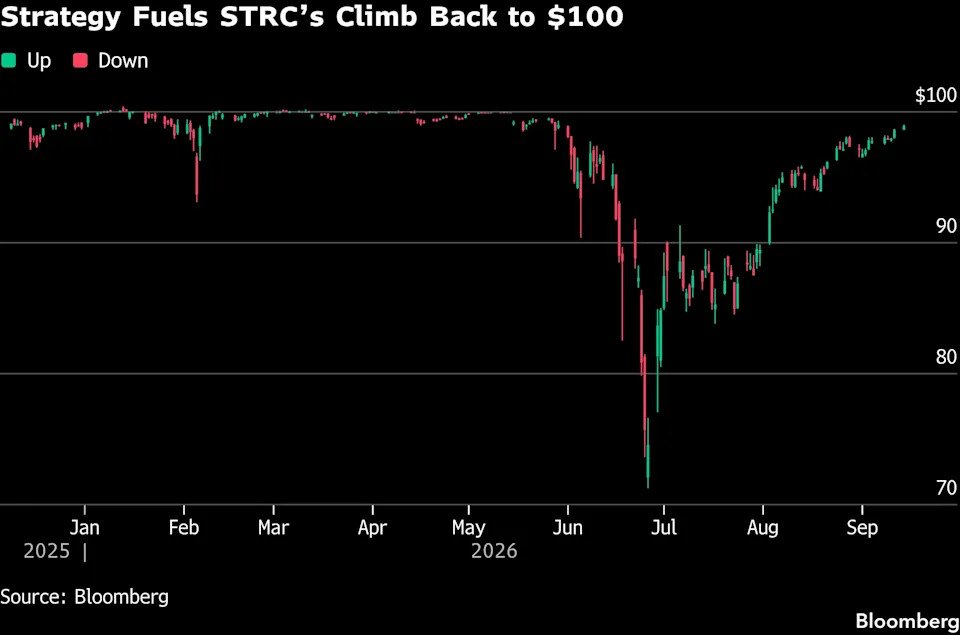
(Bloomberg) — Strategy Inc.’s flagship preferred security is a whisker away from its original offering price after a bruising selloff, helped by one committed buyer: the company itself.
-
MBS and Saudi Arabia Face Crisis With Escalating Houthi Attacks, Oil Pipeline Shut
-
Trump Jr.’s Wife Says Russian Paid for Parties But Not Wedding
-
Apple Just Launched Its New iPhones. Here Are 16 More Products Coming Soon
STRC, also known as Stretch, was meant to broaden Strategy’s Bitcoin financing model beyond its volatile common stock. Getting it back to the $100 face value is central to Chairman Michael Saylor’s attempt to prove that “digital credit” can become a durableiasm for Strategy and Bitcoin is running high
That premise was tested when Strategy sold a handful of Bitcoin in June, breaking with Saylor’s long-held recommendation to never part with the digital currency. The selloff that ensued sank the perpetual securities to almost $70, undermining the pitch that STRC is a steadier way to gain exposure to the leveraged Bitcoin accumulation strategy pioneered by Saylor. Stretch has rebounded to as high as $99 after weeks of large buybacks.
Strategy didn’t respond to a request for comment.
From July 20 through Sept. 13, Strategy repurchased about 9.96 million STRC shares for roughly $950 million. That was equal to around 18% of all STRC shares traded over the corresponding sessions, based on data compiled by Bloomberg. In the latest reported week, Strategy bought the equivalent of almost 28% of total trading volume.
“There’s no significant institutional, incremental institutional buyers,” said Jay Hatfield, chief executive officer of Infrastructure Capital Advisors. He said firm purchased STRC near the June lows and sold most of the securities “in the high nineties.”
The self-purchases at this scale muddies the story of STRC’s recovery. Strategy created its preferred-stock complex in part to reduce its reliance on issuing common shares. But after the market turned against the securities, it wound up selling common stock to help shore up the preferred. The common has tumbled around 60% in the past year.
Roughly $765 million of the STRC repurchases since July 20 — about 80% of the total — can be traced to MSTR common-stock sales either directly or through a cash pool built largely with proceeds from those sales. Bitcoin sales funded another roughly $161 million.
Source: finance.yahoo.com