

Don't want to trade it yourself?
Our desk runs DEX portfolios on profit share.
Kyrgyzstan intends to become a regional hub for virtual assets and blockchain technologies. President Sadyr Japarovmade the statementat the third meeting of the National Council for the Development of Virtual Assets and Blockchain Technologies. Participants discussed the launch of the digital som, the development of the KGST stablecoin and improvements to industry regulation.
In recent months, Kyrgyzstan has taken several steps to develop its virtual asset market: it has established a regulatory framework, begun building cooperation between banks and crypto exchanges, and started developing its own digital financial instruments.
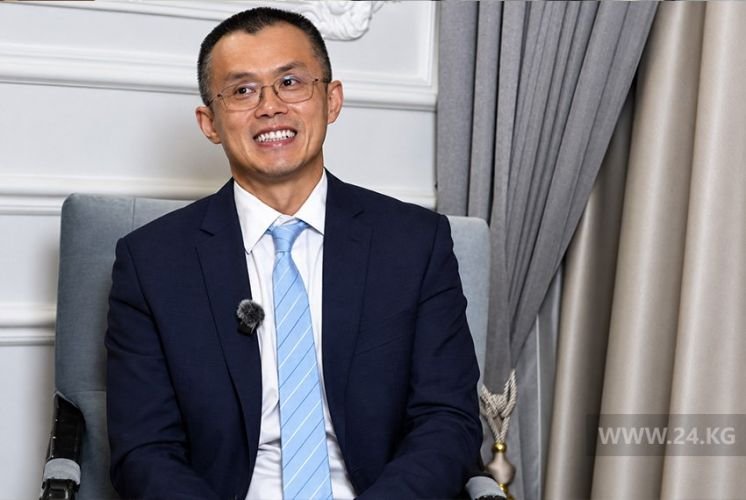
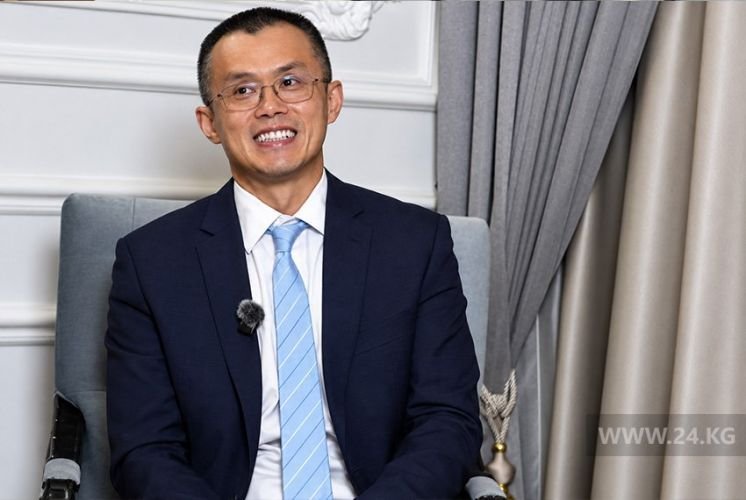
In an exclusive interview with<strong>24.kg news agency, Binance founder and public adviser to President Sadyr Japarov Changpeng Zhao spoke about the steps Kyrgyzstan is taking to become a regional crypto hub, the importance of government support and what is needed to further develop the industry.
— You have said that Kyrgyzstan is moving from plans to become a virtual asset hub toward a functioning ecosystem. What does this look like in practice already?
— A year ago, Kyrgyzstan had no cryptocurrency regulation at all. There were discussions about creating one. Normally, moving from that stage to having actual regulations in place takes several years — five, eight or perhaps even nine.
In Kyrgyzstan, however, not only does such a framework now exist, but it is also being implemented in practice. Banks are working with cryptocurrency exchanges, and stablecoins are already being issued. This has already been accomplished.
In other words, real work is already underway. This is not just talk, nor is it an empty regulatory framework with no industry players creating real products. There are already tangible results, and I think that is quite significant progress.
— How important is political support for the development of the crypto sector in Kyrgyzstan?
— Yes, political support is very important. Today, we need clear regulatory rules, and they need to be supported at the highest level.
I think the president (Sadyr Japarov — Note of 24.kg news agency) is providing very strong support. That is extremely important for encouraging all the other government agencies to do their work.
Cryptocurrency regulation requires several institutions to work together. It is not just one regulator, but also law enforcement agencies, the national security service and central banks. Monetary policy, the economy — all of these areas need to come together for the industry to function.
To coordinate all of this, support at a very high level is necessary.
— What does Kyrgyzstan need to do to become the leading cryptocurrency hub in Central Asia, and how long could it take?
— Since the industry is still relatively new, and there are really only a few countries in Central Asia that were among the first to establish cryptocurrency regulations, it is very likely that Kyrgyzstan will become a regional hub.
And that will bring enormous economic benefits to the country. Potentially, many financial flows related to cryptocurrencies could pass through Kyrgyzstan.
The largest exchanges, platforms, wallets and stablecoins could be based here. This would help bring a large volume of transactions through the country.
Related news
Binance founder urges Kyrgyzstan not to tighten crypto market regulation
This means Kyrgyzstan would not only collect more taxes, but also gain greater influence.
For example, Kyrgyzstan’s natural re on the global market. Any state capable of setting global commodity prices gains substantial influence in those sectors—both domestically and regionally
So there are many secondary benefits.
I think Kyrgyzstan is moving toward becoming a regional hub and a leader. We need to make sure that we continue moving in the same direction. At the moment, I think progress is happening quite quickly. We simply need to maintain that pace.
— Is there any other Central Asian country that could compete with Kyrgyzstan for the status of a regional hub?
— Kazakhstan is a very strong competitor, but in a friendly sense. I think that if several countries are advancing the industry, that is a very good thing. Kazakhstan has a somewhat larger population and a bigger economy. The country is moving forward quite quickly.
So a little competition between the two countries actually helps develop the industry faster. This is not a situation where one side wins and the other necessarily loses. Both countries can win together, and in my view, that is a very healthy situation.
Right now, both countries are moving quite quickly, and both have very strong leadership.
— What kind of specialists are currently in short supply in the crypto asset market?
— I think there is always a shortage of talented professionals in every market, especially in new industries such as cryptocurrencies, blockchain, artificial intelligence and so on.
That is why we need to focus more on education.
The industry is relatively new — it is only about 15 or 16 years old. And it has only become truly large in recent years. So there are no experts who have 20 years of experience in the field, simply because the industry did not exist 20 years ago.
That is why it is very important to train these specialists and build up a talent pool.


Anyone can learn this field and become an expert, and eventually one of the leading specialists in the world. There is a shortage of skilled professionals everywhere, not just in one particular country. That is why it is very important for governments and industry players to develop educational platforms and launch more educational initiatives.
— Do you plan to support educational projects in Kyrgyzstan? If so, in what way?
— Absolutely. There are several educational initiatives that we need to support.
Binance has Binance Academy, a free educational portal that provides all the information you need. Ninety-nine percent of what you will ever need to know about cryptocurrencies is available there. You just need to go there and start learning.
There are also various programs involving cooperation with universities. Discussions are underway about introducing educational programs in schools.
There are other initiatives as well. For example, our investment arm, YZi Labs, runs incubation programs in different parts of the world, teaching entrepreneurs how to introduce innovation in this industry.
All of these efforts need to come together. Personally, I am very happy to work with any educational initiatives that can help further develop education in this field. It is important for people to understand finance; otherwise, it is difficult to build wealth.
Therefore, teaching these skills to the next generation is crucial.
Source: 24.kg
1 Comment
Pingback: Bitcoin Volatility Is Near Historic Lows With 71% of Supply in Profit. What That Actually Describes – xpertsstudio