

Don't want to trade it yourself?
Our desk runs DEX portfolios on profit share.
Add to Google Preferred Sources
Harmony is preparing to shut down its Layer-1 blockchain and migrate its ONE token to Ethereum as an ERC-20 asset. The project published two non-binding proposals citing threats from state-level attackers and AI agents, but the move follows an August exploit that forged roughly 3.01 trillion ONE tokens through a cross-shard receipt flaw and a rollback that erased more than 109,000 legitimate transactions. Validators may stop running nodes on Sept. 10, with a $1.37 million compensation pool for those who transition to governance roles. Snapshot-covered wallets would receive new tokens on Ethereum, but liquidity pools, multisig safes and DeFi positions would not migrate. The project plans to pivot toward an AI video remix platform funded by future token emissions, though the product remains unbuilt.
Key Elements
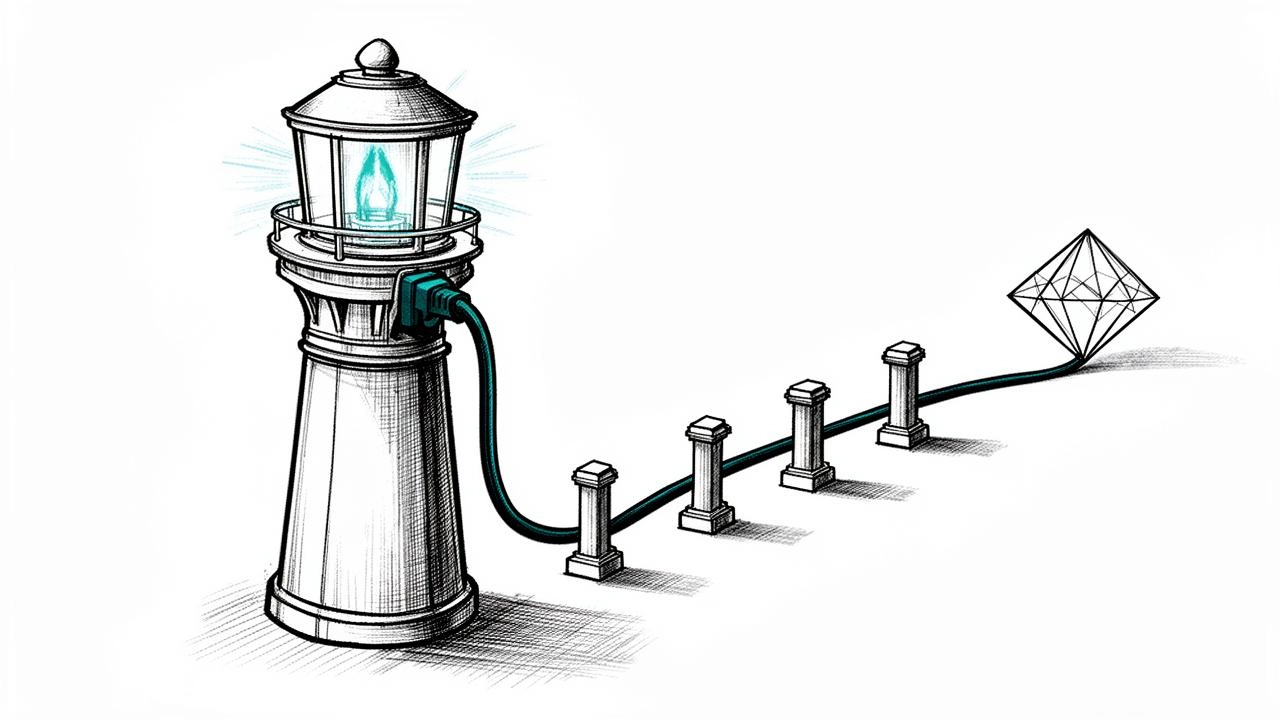
Harmony, the sharded proof-of-stake network that launched its mainnet in 2019, is preparing to retire its Layer-1 blockchain entirely and reissue its native ONE token as an ERC-20 asset on Ethereum, marking one of the most drastic pivots in the project’s seven-year history.
The team published two non-binding proposals outlining the shutdown, citing what it described as escalating threats from state-level attackers and AI agents. Validators may begin powering down their nodes as early as Sept. 10, and the project has set a $1.37 million compensation pool for those who stop on schedule, retain their stakes and agree to transition into governance roles for the new initiative.
The announcement, made public Sept. 7, comes less than a month after an exploit allowed an attacker to forge trillions of ONE tokens by exploiting a cross-shard receipt verification flaw. The breach and the subsequent decision to roll back the chain, which erased more than 109,000 legitimate transactions, appear to have pushed the project from attempting repairs to abandoning the independent network altogether.
How the migration would work
Under the proposal, Harmony would take a snapshot of all ONE balances at the network’s final block. New ERC-20 tokens would then be airdropped to the same wallet addresses on Ethereum, with no claim process required. The snapshot would cover personal wallets, staking delegations, validator rewards, smart contracts and holdings on centralized exchanges.
The total token supply and emission schedule would remain unchanged. However, not everything moves automatically. Multisig safes, liquidity pools and onchain applications cannot be migrated, and Harmony has urged users to withdraw assets from all smart contracts before Sept. 10. Delegated stakes and unclaimed rewards would be routed into governance treasuries rather than returned to individual wallets.
The key migration parameters are summarized below.
| Item | Treatment under proposal |
|---|---|
| Snapshot timing | Taken at the final block |
| Airdrop mechanism | Same wallet address on Ethereum, no claim needed |
| Token supply and emissions | Unchanged from current levels |
| Stakes and unclaimed rewards | Routed to governance treasuries |
| Liquidity pools and DeFi positions | Not migratable; lost after final block |
| Validator compensation | $1.37 million over four quarters |
Note: The proposal is non-binding and the timing of the final block has not been specified.
The proposal also leaves unresolved questions for holders on centralized exchanges. While the snapshot claims to cover exchange balances, no exchange is obligated to credit an Ethereum-based airdrop, and custodial users face a separate layer of uncertainty.
A history of security failures
The decision did not emerge in a vacuum. Harmony has contended with repeated security incidents, the most damaging of which was the June 2022 attack on its Horizon cross-chain bridge. Hackers drained roughly $100 million in digital assets, and the FBI later attributed the breach to North Korea-linked groups Lazarus Group and APT38.
The project never fully recovered from that episode. The more recent exploit, detected Aug. 12, involved a cross-shard receipt verification vulnerability that let a valid receipt be processed twice, effectively minting ONE tokens with no matching debit anywhere on the ledger. A researcher initially flagged about 4 billion forged tokens, roughly a quarter of circulating supply. Harmony’s own reconstruction later put the full total near 3.01 trillion ONE, spread across six transactions and four wallets, one of which moved close to 2.4 trillion tokens in under two minutes.
Validators rolled the chain back to an Aug. 11 checkpoint to wipe the forged supply, resetting both shards. But the fix came at a cost: 109,441 regular transactions and 315 staking transactions were erased, wiping out legitimate swaps, trades and staking actions inside that window. What began as a technical recovery quickly became a crisis of confidence.
Harmony’s public framing points to adversaries too powerful for an independent chain to resist. Many developers read the move differently, seeing it as an exit ramp following architectural weaknesses that predate the latest incident. A counterargument exists as well: Ethereum now offers cheap execution and deep liquidity, making it rational for a team that can neither defend nor cost-justify its own network to fold back into a larger settlement layer.
The pivot to AI video
The second proposal repurposes ONE around a new business model Harmony calls the “remix economy.” The pitch centers on a platform where users prompt, remix and extend video stories, with AI agents branching them into fresh content. Future emissions would subsidize GPU demand, and former validators would run generation and review nodes, staking the ERC-20 ONE for uptime-based rewards.
Harmony has claimed a compliant operator could earn up to $1 million in first-year ecosystem revenue, and that early promoters could take 30% of the $10 monthly subscriptions they refer. None of these figures are binding, and the product itself remains unbuilt.
The governance mechanics for approving the shutdown also remain unclear. Under Harmony’s published rules, elected validators can create proposals while unelected validators may vote, with passage requiring 51% of total stake weight to participate and 66.7% support after a seven-day introduction period and a 14-day vote. Harmony has not confirmed whether the sunset plan will be submitted through that process.
Token price and market position
ONE trades near $0.0012, with a market capitalization around $18 million and a rank outside the top 800 tokens. Against its all-time high of $0.38, that represents a decline of about 99.7%. The token bottomed near $0.0007 immediately after the August exploit before recovering part of the drop.
The thin float compounds the problem. Liquidity is shallow enough that modest orders can swing the price sharply, keeping volatility elevated regardless of news flow. For the migration, a base this low means the airdrop would hand holders a token whose value now rests almost entirely on a product that does not yet exist.
Harmony has promised to publish the token contract, the snapshot calculation and the airdrop scripts for public audit. That verification will be the next real test, showing whether balances map cleanly or strand edge cases. The project is not alone in confronting the immutability question: Ravencoin weighed its own rollback the same month, a sign that the tension between security fixes and blockchain permanence is spreading to other networks.
Once added, BigGo Finance appears first in Google Search Top Stories, so you get the broadest, most up-to-the-minute, and most comprehensive global financial news first.
Source: finance.biggo.com
1 Comment
Pingback: Chainlink whale sends $7.6m in LINK to Coinbase – xpertsstudio