

Don't want to trade it yourself?
Our desk runs DEX portfolios on profit share.
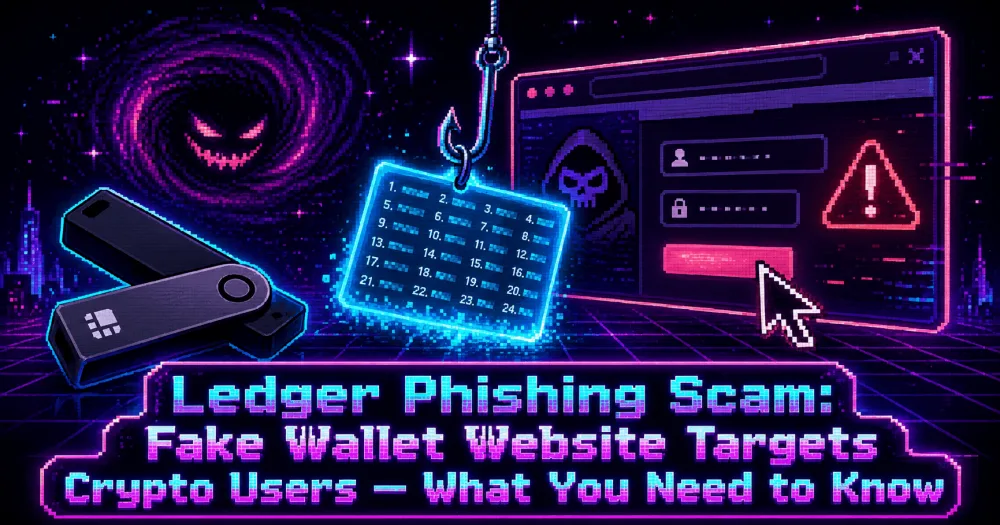
A Ledger phishing scam is targeting users through fake wallet websites, with some fraudulent pages appearing as sponsored Google search results. The goal is to convince wallet owners to provide their 24-word recovery phrase.
Here is how the scam works, what makes it unusually convincing, and what Ledger wallet users should do to protect their funds.
What Is the Latest Ledger Phishing Scam?
The latest Ledger phishing scam is based on sites that impersonate Ledger’s real wallet and download pages.
In August 2026, cryptocurrency users reported seeing sponsored Google results for searches such as “Ledger Wallet.” One fraudulent page was labeled as “Ledger Official.” The site impersonated Ledger’s branding but used a Google Sites page, which could make the visible URL appear to belong to Google itself.
The scam was notable for neutralizing one of the main warning signs that a phishing page is not official: a suspicious domain.
A sponsored result that appears to belong to Google is far more difficult to identify as fraudulent, even though Google Sites enables third-party companies to create their own pages and sites. Fake Ledger pages have also been appearing in lookalike domains.
How Does the Fake Ledger Website Work?
Phishing pages appear almost identical to the real Ledger website, copying the company’s logo, interface, colors, download buttons, and security language.
Alongside that, a Ledger phishing scam page creates an impetus to act urgently, claiming that the wallet needs to be verified, restored, synchronized, secured, or updated. It could display a fake error message, suggesting that there is a problem with the Ledger device or software.
Ledger repeatedly warns that users should not type their recovery phrase into any website, application, support chat, or online form. It should only be entered directly into a Ledger device when legitimate recovery is necessary.
Anyone who obtains those 24 words can recreate the wallet elsewhere. The physical Ledger device is no longer necessary.
Why Is This Ledger Phishing Scam So Convincing?
Crypto phishing is not new, but this campaign exploits multiple factors that can raise the chances of success.
First, a sponsored Google result can appear above the genuine organic result, and many users assume that an advertisement that carries the correct company name has passed some meaningful verification.
Secondly, attackers can copy the appearance of Ledger’s site with remarkable accuracy – a polished page is no guarantee that the operator behind it is legitimate.
Thirdly, the attack targets users at the moment when they are already looking for Ledger software or support. This makes search advertising an effective way to deliver phishing.
Can a Ledger Hardware Wallet Protect You From Phishing?
Only up to a point. A hardware wallet cannot stop the owner from voluntarily exposing the recovery phrase. This is why the Ledger phishing scam attacks the user, and not the hardware itself.
If the recovery phrase remains secret, a fake website cannot simply log in to a Ledger wallet and take control – there is no normal web login that provides access to the assets stored by a Ledger device.
Once the 24 words have been compromised, the attacker can recreate the private keys and move the funds. Hardware protection becomes irrelevant if that backup falls into the hands of a scammer.
How to Spot a Fake Ledger Website
The safest approach is not to try and become better judges of whether a page appears real. Modern phishing pages can appear real enough.
Instead, take steps to remove as many opportunities for deception as possible.
Go directly to the Ledger website, rather than using sponsored search results to reach wallet software. A bookmarked page could be helpful for regular users of the company’s services.
Never enter a recovery phrase into a browser or computer. There is no legitimate reason to type your 24 words into a website.
Treat urgent claims about account suspension, wallet deactivation, security verification, mandatory KYC, or emergency recovery with caution. It is not possible to remotely deactivate a self-custody device.
What Should You Do If You Entered Your Recovery Phrase?
If the user has entered the 24 words into a fake site, the wallet is considered compromised immediately.
Do not simply change the password. The recovery phrase provides direct access to the wallet. There is no password reset that can make an exposed phrase secret again.
Create a new wallet with a new recovery phrase. Move your assets from the compromised accounts into this new wallet as soon as possible.
Do not reuse the old recovery phrase, even if no funds have moved yet: an attacker can retain the phrase indefinitely and wait.
For users who connected a wallet and granted suspicious smart-contract permissions but did not expose their seed phrase, the problem could instead be malicious token approvals. Identify and revoke those permissions.
Does the Scam Mean Ledger Was Hacked?
No. A Ledger phishing scam is not the same thing as a compromise of Ledger hardware.
Some users believe that owning a hardware wallet renders online behavior irrelevant. It does not. Self-custody removes some risks, but it also means there is no bank or exchange in between an attacker and your wallet.
The strongest defense is to protect your recovery phrase. No amount of hardware protection can prevent an attacker from obtaining the phrase directly from an unwary user.
The Bottom Line
The latest Ledger phishing scam demonstrates how sophisticated crypto theft has become: attackers can buy search ads and clone professional websites to create a trap that appears legitimate.
For Ledger users, the rule of thumb is to not enter the 24-word recovery phrase into a website or app. The recovery phrase is the final line of defense. Always keep it offline and private.
What is the Ledger phishing scam?
The Ledger phishing scam is an impersonation attack in which criminals create fake Ledger websites, apps, emails, ads, or support messages to steal recovery phrases or trick users into approving malicious actions.
Will Ledger ever ask for my 24-word recovery phrase?
No. Ledger states that it will never ask users to provide their recovery phrase. The phrase should not be entered into a website, computer, phone, or support conversation.
Can someone steal my crypto with only my recovery phrase?
Yes. Anyone with the complete recovery phrase can recreate the wallet’s private keys and access the accounts derived from it, even without possessing the original Ledger device.
Is it safe to download Ledger Wallet from Google search results?
The safer method is to navigate directly to Ledger’s official website rather than relying on sponsored search results. Fraudulent Ledger ads and cloned download pages have been reported.
What should I do if I gave a fake Ledger site my recovery phrase?
Treat the wallet as compromised. Create a new wallet with a completely new recovery phrase and move remaining assets to addresses controlled by the new wallet as quickly as possible.
Source: <a href="https://<a href="https://xpertsstudio.com/strategys-2-8b-bitcoin-profit-can-btc-break-80k-this-week/” title=”Strategy's $2.8B Bitcoin Profit: Can BTC Break $80K This Week?”>bitcoinfoundation.org/news/crypto-companies-news/ledger-phishing-scam/” target=”_blank” rel=”nofollow noopener”>bitcoinfoundation.org
2 Comments
Pingback: Sberbank plans to add ether and USDT as collateral for crypto – xpertsstudio
Pingback: Vietnam to Launch Pilot Crypto Asset Market – xpertsstudio