


Don't want to trade it yourself?
Our desk runs DEX portfolios on profit share.
Add to Google Preferred Sources
Corporate spending on the 2026 U.S. midterm elections has reached a record $517 million in the 15 months through the first quarter, surpassing the $461 million spent during the entire 2024 cycle, according to Public Citizen. Crypto, AI, and online betting companies account for at least $294 million of that total, deploying a political playbook pioneered by the crypto industry’s Fairshake super PAC that backs candidates from either party who support industry-friendly policies. Billionaires including Elon Musk and Sergey Brin have personally contributed over $196 million combined. AI firms OpenAI and Anthropic have emerged as major new forces, spending tens of millions through super PACs and dark money nonprofits. Online sports betting companies have donated more than $72 million. Watchdogs warn the spending risks crowding out pocketbook issues like healthcare and grocery prices from the political agenda.
Key Elements
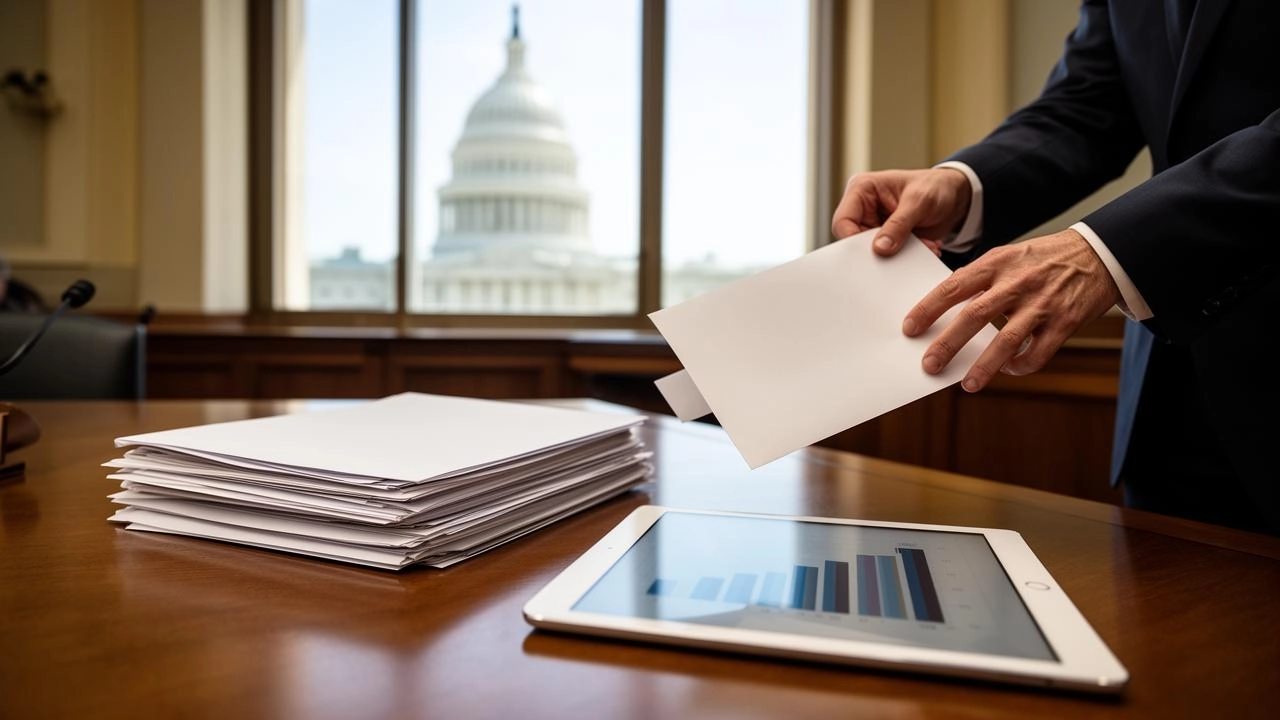
A new class of political kingmakers has emerged in Washington, as cryptocurrency companies, artificial intelligence firms, and online betting platforms pour unprecedented sums into the 2026 midterm elections, eclipsing the traditional corporate power brokers that dominated political spending for decades.
U.S. companies have spent a record $517 million on House and Senate races during the 15 months through the end of the first quarter, according to data compiled by corporate accountability nonprofit Public Citizen. That figure already exceeds the $461 million corporations spent across the entire two-year 2024 election cycle, and it does not include the blitz of advertising and campaign spending expected in the closing stretch before voters head to the polls on November 3.
Democrats are fighting to wrest control of both chambers from Republicans, making this midterm cycle one of the most fiercely contested in recent memory.
“The scale of corporate spending in this election cycle is unlike anything we’ve seen previously,” said Rick Claypool, research director at Public Citizen. “One-third of the corporate money that’s been spent since 2010 has been spent in this election cycle and it’s not even over yet.”
Crypto, tech, and online gaming industry donations accounted for at least $294 million of the corporate spending on midterm races from January 1, 2025 through the first quarter, Public Citizen found. These industries have structured their campaign giving through a vast network of super PACs, affiliate PACs, and dark money nonprofits that are not required to disclose their donors.
Super PACs can raise unlimited sums but cannot give directly to or coordinate with candidates. Instead, they pay for political advertising, organize voter turnout efforts, and sponsor campaign rallies.
Billionaires Write Their Own Checks
Beyond corporate treasuries, individual tech billionaires are deploying personal fortunes at a scale never before seen. SpaceX founder Elon Musk has already committed more than $90 million to federal races for the 2026 cycle, with plans to spend considerably more before November. Alphabet (GOOGL) co-founder Sergey Brin has spent over $106 million in California alone, much of it aimed at defeating a proposed wealth tax and other state-level policies.
Meta Platforms (META) has donated $65 million to four separate super PACs supporting candidates from both parties in state races across California, Texas, Illinois, and elsewhere. The company declined to comment on its political spending.
When all political spending is counted, including contributions from billionaires, labor unions, and social advocacy groups, political advertising research firm AdImpact projects that 2026 midterm ad spending will reach a record $11.6 billion, surpassing the $11.2 billion record set during the 2023-2024 cycle.
The Fairshake Playbook
The crypto industry pioneered this new political model during the 2024 elections, and its success has made it a template for other emerging sectors. Coinbase (COIN), Ripple, and venture capital firm Andreessen Horowitz funneled major funding through Fairshake, the industry’s flagship super PAC, which helped unseat longtime Democratic Senator Sherrod Brown in Ohio.
Brown, then chair of the Senate Banking Committee, was one of the most vocal crypto critics in Congress. Public Citizen later compared Fairshake to a corporate “Death Star” that could “annihilate individual candidates.”
Unlike traditional corporate political giving, the crypto industry refused to align with a single party, instead backing any candidate who supported its policy positions and spending millions to defeat those who did not. As Brown seeks a return to the Senate, his campaign manager Patrick Eisenhauer said the former senator “recognizes that cryptocurrency is part of America’s economy” and is keeping an open mind on the issue.
Fairshake began 2026 with a $193 million war chest and still has approximately $130 million available for spending, according to regulatory filings. The organization is financed almost entirely by Coinbase, Ripple, and Andreessen Horowitz.
Andreessen Horowitz has given more than $81 million to PACs focused primarily on crypto and AI, with at least $23.8 million of that amount directed to Fairshake. The firm’s co-founders, Ben Horowitz and Marc Andreessen, have each donated about $4 million in personal funds this cycle, most of it flowing to MAGA Inc., the super PAC supporting President Donald Trump.
AI Enters the Arena
AI barely registered as a political force in 2024, but the industry has already made its presence felt in dramatic fashion this cycle. In June alone, political groups backed by OpenAI and Anthropic, or their executives, spent more than $23 million on two competing Democratic candidates in a staunchly liberal New York City district.
“It was basically two AI groups having it out with each other and the candidates were secondary,” said Brendan Glavin, research director at nonpartisan campaign finance watchdog OpenSecrets.
Leading the Future, an AI-focused super PAC, has raised $140 million for the midterms, with substantial donations from OpenAI co-founder and president Greg Brockman and his wife Anna, along with Andreessen Horowitz. The Brockmans have separately donated $25 million to MAGA Inc., according to campaign finance filings.
OpenAI has stated that it does not finance or direct Leading the Future’s activities and that employees are free to donate in a personal capacity. “No outside political group speaks for OpenAI or represents our company’s views,” the company said in June.
Anthropic has donated at least $40 million this cycle through Public First Action, a dark money nonprofit that has raised $100 million so far. About half of those funds flow toward elections through two aligned PACs. The company is also linked to a super PAC called Public First, which has raised an additional $3.9 million, including $1 million from Anthropic co-founder and CEO Dario Amodei.
Anthropic has defended its donations, saying the money funds public education on policy rather than support for specific candidates. But campaign finance watchdogs see a familiar pattern. “They’ve emulated a lot of what crypto did in 2024,” Glavin said.
Betting Industry Follows Suit
Online sports betting companies are adopting the same strategy as regulatory scrutiny intensifies. DraftKings (DKNG), FanDuel, Fanatics, and UK-based bet365 have collectively donated more than $72 million to the midterms, making the industry the third-largest corporate donor this cycle
The bulk of that money is being directed through two affiliate PACs, American Conservative Fund and American Future, to state races where the industry faces the heaviest regulation. Separately, prediction market platform Polymarket donated $1 million in June through its corporate parent Blockratize Inc. to the Congressional Leadership Fund, a Republican super PAC backed by House Speaker Mike Johnson.
The surge in corporate political spending is reshaping the policy agenda in Washington. Claypool warned that the influx risks crowding out pocketbook issues that matter most to everyday voters.
“When corporate money can inundate the political discourse, there’s less room for talk about what people really care about,” Claypool said. “Instead, you have the situation that we have in Congress now where they are spending an inordinate amount of time discussing the niche regulatory policy problems related to crypto while people really just want cheaper groceries.”
Still, money has its limits. Polls show a majority of Americans believe there is too much money in politics, and progressive Democratic Senate candidates like James Talarico in Texas and Abdul El-Sayed in Michigan have built successful campaigns around the argument that wealthy donors and corporations wield excessive influence in Washington.
| Industry | Estimated Midterm Spending | Key Vehicles |
|---|---|---|
| Crypto | $193M war chest (Fairshake) | Fairshake super PAC, Coinbase, Ripple, Andreessen Horowitz |
| AI | $140M (Leading the Future) + $40M (Anthropic) | Leading the Future, Public First Action, Public First |
| Online Betting | $72M+ | American Conservative Fund, American Future |
| Tech Billionaires | $90M+ (Musk), $106M+ (Brin) | Personal contributions, MAGA Inc. |
Note: Figures reflect spending reported through the first quarter of 2026 or the most recent available filings. Totals exclude expected pre-election spending surges.
Once added, BigGo Finance appears first in Google Search Top Stories, so you get the broadest, most up-to-the-minute, and most comprehensive global financial news first.
Source: finance.biggo.com