


Don't want to trade it yourself?
Our desk runs DEX portfolios on profit share.
Currencies39037
Market Cap$ 2.78T-0.05%
24h Spot Volume$ 30.69B+18.3%
DominanceBTC57.53%+0.01%ETH10.88%+0.97%
ETH Gas0.07 Gwei
Sep 6, 2026
2min read
byMarcus Hale
forCoinpaper
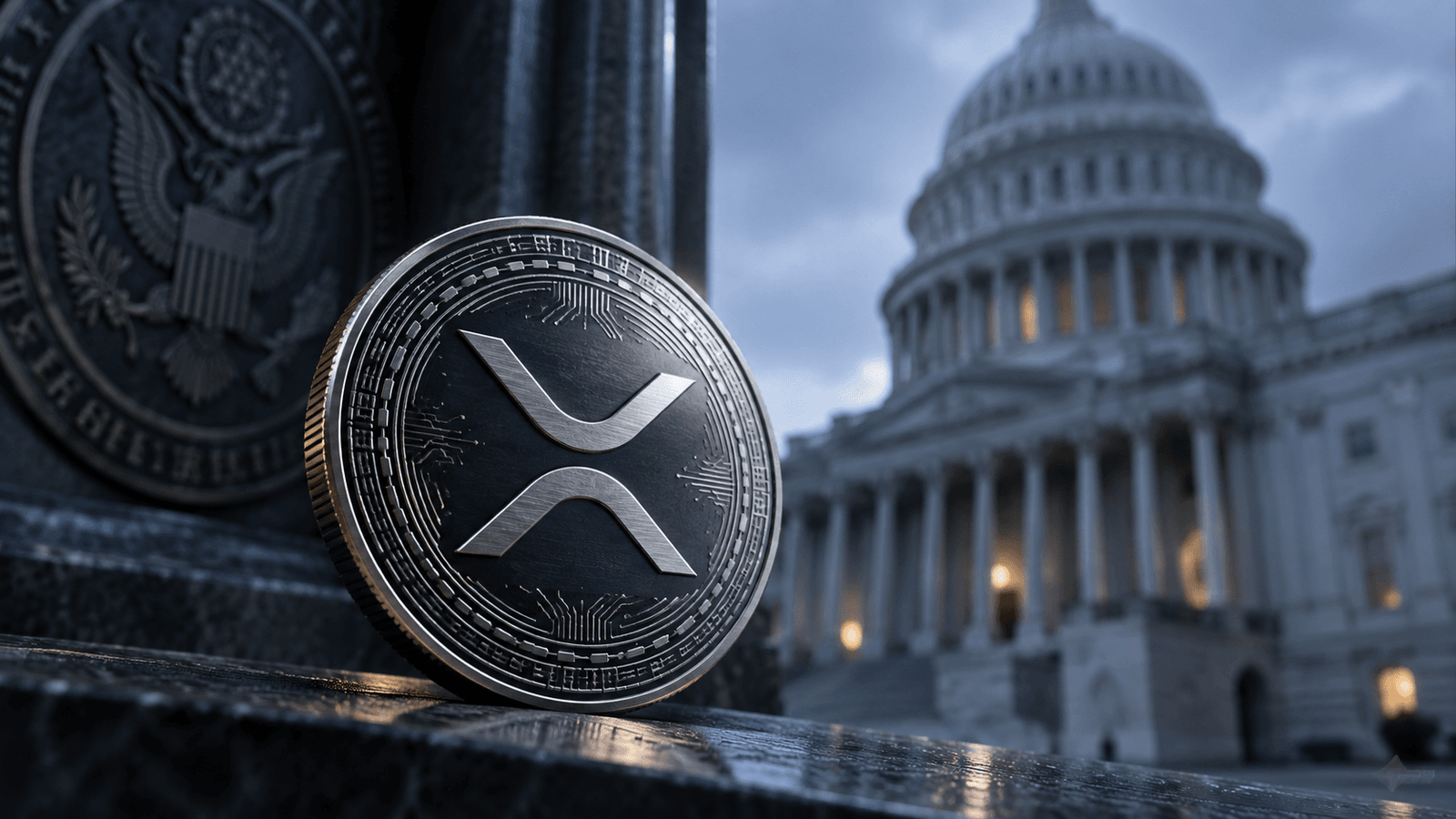
Alex Jones warned governments could seize cryptocurrencies like XRP during an extreme systemic crisis, but FDIC guidance and EU bank-resolution rules distinguish self-custodied crypto from insured deposits so the claim remains hypothetical rather than a confirmed confiscation policy. Meanwhile, XRP traded around $1.42 on Sept 6 after a 3.65% drop on Sept 4 and a ~1% rebound; US spot XRP ETFs logged a $110.49 million weekly inflow (the strongest of 2026) taking cumulative net inflows to ~$1.66 billion, and the XRPL 3.3.0 upgrade introduces tokenized assets, confidential transfers and programmable features, underscoring institutional adoption, DeFi and custody/security considerations for crypto investors.
See what traders are focused on
Alex Jones has thrust XRP into an unusual political-financial debate after warning that governments could try to seize cryptocurrencies and other private assets during a severe systemic crisis.
In a video circulated on X, Jones questioned whether authorities could eventually target XRP holdings alongside bank accounts and property. He repeatedly qualified the warning, however, saying he was neither predicting XRP’s price nor claiming expertise in the asset.
The distinction matters because Jones’s scenario goes considerably further than current U.S. bank-resolution rules.
FDIC Rules Do Not Amount to an XRP Confiscation Policy
The Federal Deposit Insurance Corporation says crypto assets are not FDIC-insured deposits. When an insured bank fails, the FDIC protects eligible deposits up to applicable insurance limits and, as receiver, sells assets belonging to the failed institution to settle its obligations.
That is different from a blanket government power to take XRP held independently by private investors.
XRP controlled through a self-custody wallet is not a deposit sitting on the balance sheet of an FDIC-insured bank. The regulator’s own guidance explicitly separates crypto assets from insured deposit products.
European bank-resolution rules also contain important limits. Under the EU’s Bank Recovery and Resolution Directive framework, covered deposits are excluded from bail-in write-down or conversion powers.
That makes Jones’s warning better understood as a hypothetical argument about government behavior during an extreme crisis rather than evidence of a newly announced XRP seizure program.
XRP Returns to $1.42 as Institutional Demand Builds
The warning is arriving while XRP itself remains at a closely watched market level.
XRP traded around $1.42 on September 6, after falling 3.65% on September 4 and recovering about 1% the following day. The $1.40 region has repeatedly emerged as an important technical area for the asset, a level examined previously in Coinpaper’s coverage of the $1.40 XRP battleground.
More importantly, regulated institutional exposure continues expanding even as spot XRP struggles to produce a sustained breakout.
Coinpaper reported this week that U.S. spot XRP ETFs attracted approximately $110.49 million in their strongest weekly inflow of 2026, taking cumulative net inflows to roughly $1.66 billion.
The institutional backdrop also coincides with continuing XRP Ledger development. The latest XRPL 3.3.0 upgrade cycle includes proposals covering tokenized assets, confidential transfers and programmable asset features.
For holders concerned specifically about custody, the practical distinction is therefore less about XRP itself and more about where and how an asset is held. Our hardware wallet guide explains the mechanics of keeping private keys offline.
Jones has succeeded in creating a striking XRP headline. The available regulatory evidence, however, does not establish the government confiscation policy his warning implies.
Source: cryptorank.io
1 Comment
Pingback: Connecticut Attorney General Warns Against Unregulated Offshore DeFi Exchanges | Regulation DeFi – xpertsstudio