

Don't want to trade it yourself?
Our desk runs DEX portfolios on profit share.
- BTC-USD
- COIN
-
Treasury Secretary Scott Bessent warned that failure to advance the CLARITY Act would send a “troubling signal” to US allies and adversaries.
-
Coinbase CEO Brian Armstrong believes crypto will gain regulatory clarity regardless of the Sept. 15 vote’s outcome.
-
Bernstein sees Bitcoin reaching $150,000 by mid-2027 and $300,000 by late 2029, while an ultrabullish scenario puts $500,000 in sight.
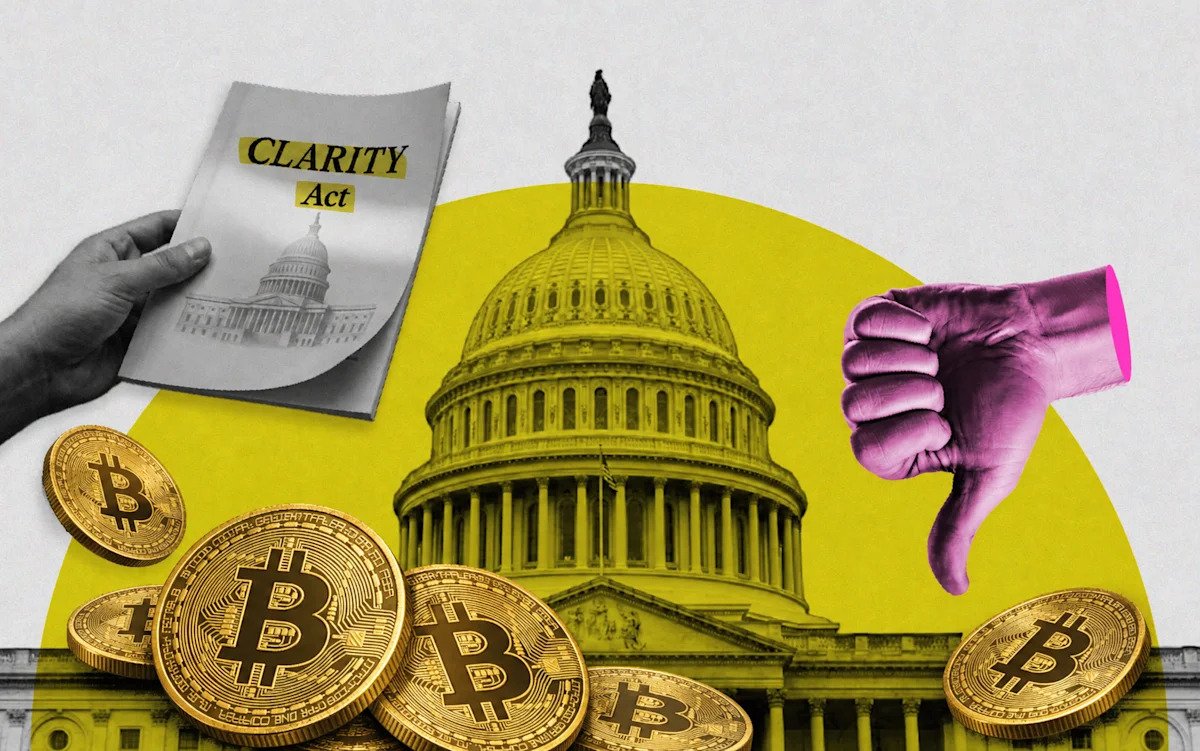
US Treasury Secretary Scott Bessent has issued a stark warning to senators five days before a crucial procedural vote that could determine the CLARITY Act’s future.
Bessent said that failing to advance the landmark crypto bill would signal to US enemies that the country is falling behind in crypto and digital assets.
However, Coinbase CEO Brian Armstrong believes the crypto industry will secure greater regulatory certainty even if the legislation fails.
The showdown comes as bullish Bitcoin forecasts gain traction, including Bernstein’s call for Bitcoin to reach $500,000.
Bessent Issues ‘Troubling’ CLARITY Act Warning
The Senate is scheduled to hold a vote on the motion to proceed with the CLARITY Act on Sept. 15.
The vote will determine whether at least 60 senators support opening debate on the bill.
Five days before the vote, Bessent urged lawmakers to remain at the negotiating table and support the procedural motion.
“In July, I called on the Senate to advance the CLARITY Act,” the Treasury secretary said.
“Failing to do so would send a troubling signal to our allies and adversaries alike that America is unwilling to lead on the future of digital assets,” he added.
The bill aims to establish clearer boundaries between the SEC and CFTC while creating federal rules for crypto exchanges.
Bessent’s intervention adds to the growing pressure from the crypto industry ahead of the vote.
Ripple Chief Legal Officer Stuart Alderoty said the company had asked Senate offices to meet ordinary American crypto holders before deciding the bill’s future.
“They are teachers, plumbers, photographers, and supply chain managers,” Alderoty said.
“One in four US adults — and they live across every state in this country.”
The appeal seeks to shift the debate away from crypto executives and political donors by emphasizing the number of retail holders potentially affected by Washington’s decision.
However, ethical restrictions on elected officials’ crypto holdings remain a significant obstacle.
Some Democrats have pushed for stronger safeguards surrounding President Donald Trump and his family’s crypto interests.
Source: finance.yahoo.com