

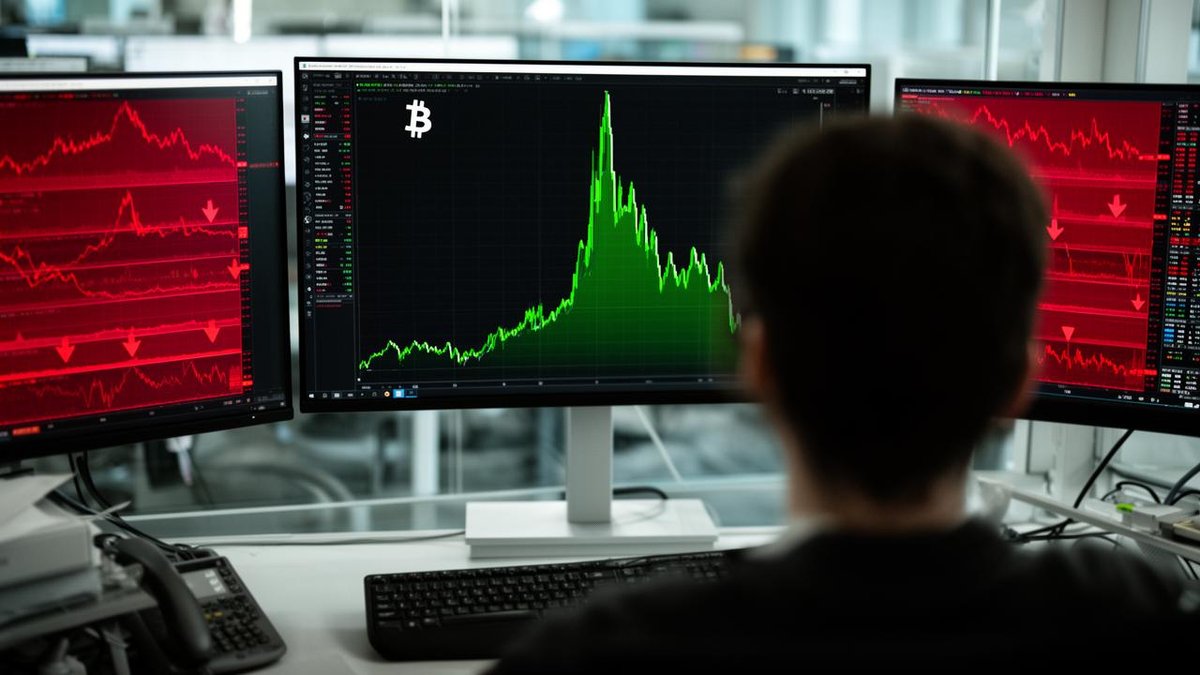
Don't want to trade it yourself?
Our desk runs DEX portfolios on profit share.
Add to Google Preferred Sources
Bitcoin surged more than 22% this week, climbing from roughly $63,000 to nearly $79,000 and erasing almost three months of losses in under five days. The rally snapped the cryptocurrency’s longest stretch of underperformance against the S&P 500 in six years, during which Bitcoin had trailed the benchmark index on approximately two out of every three trading days. The divergence became clear on Wednesday when major US stock indexes posted losses of 1% to 2% while Bitcoin exploded higher. Samson Mow, chief executive of Jan3, argued that Bitcoin’s previous $126,000 all-time high merely reflected inflation rather than a genuine bull run, suggesting the asset has yet to experience its first real bull market. The rally has transformed market sentiment from deeply bearish to renewed optimism, though analysts caution that one spectacular trading session does not confirm a decisive decoupling from equities.
Key Elements
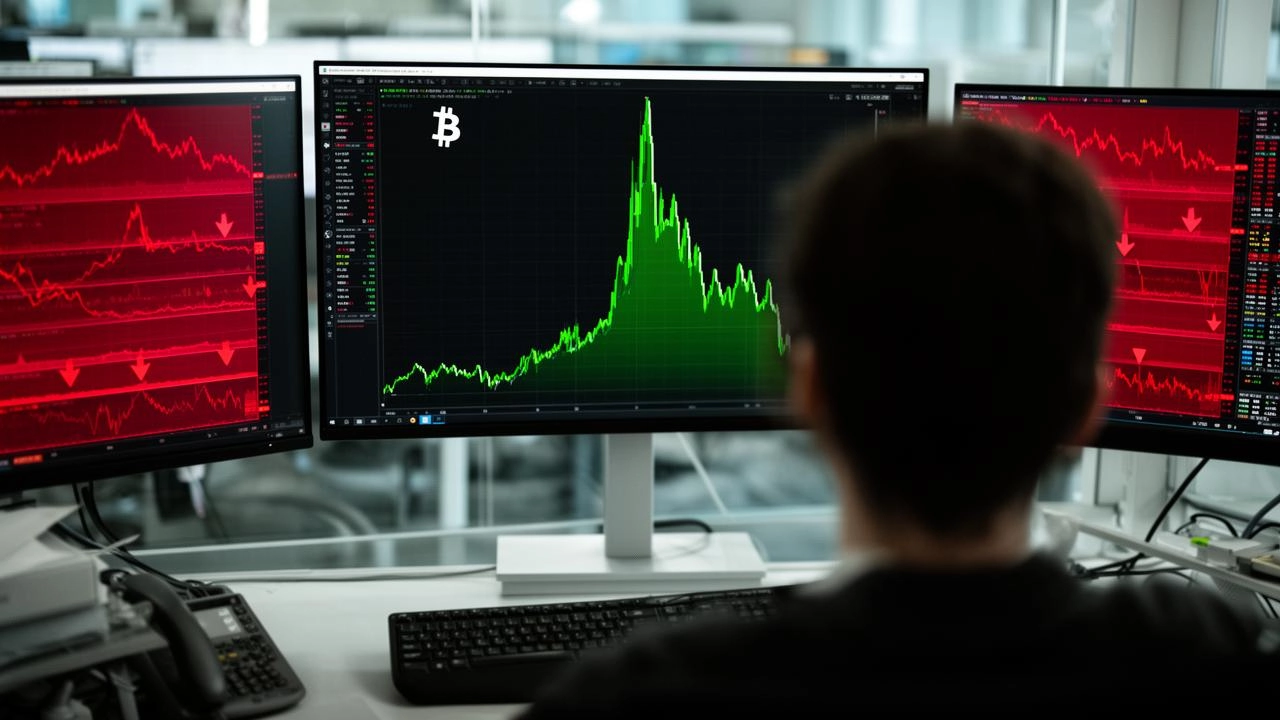
Bitcoin staged one of its most powerful rallies in years this week, surging more than 22% to approach $79,000 and, in the process, snapping its longest stretch of underperformance against the S&P 500 in six years. The move has reignited debate across the crypto community about whether the leading digital asset is finally entering the genuine bull cycle that prominent advocates argue has never actually occurred.
The price action was remarkable on multiple fronts. Bitcoin climbed from roughly $63,000 to nearly $80,000 in less than five days, erasing almost three months of losses and putting the asset on track for its strongest weekly performance since February 2024. The speed of the repricing was so dramatic that one widely circulated comparison framed it as Bitcoin moving approximately 140 times faster than the stock market, based on the S&P 500’s historical average annual return of about 10% versus Bitcoin delivering more than double that in under a week.
Bitcoin’s sudden outperformance of US equities represents a notable reversal. According to Glassnode, the cryptocurrency had underperformed the S&P 500 on roughly two out of every three trading days over the past three months, the longest such streak in six years. During that period, the benchmark index posted consecutive all-time highs while Bitcoin languished after being rejected at the $83,000 level in May.
The divergence became unmistakable on Wednesday, when the S&P 500 and Nasdaq snapped a three-week winning streak with losses of 1% to 2% while Bitcoin exploded higher. On Monday, the index had slipped more than 0.5% while Bitcoin gained 2%, one of the rare sessions in recent months when the cryptocurrency moved decisively in the opposite direction.
Bitcoin vs. S&P 500: Key Metrics
| Metric | Bitcoin | S&P 500 |
|---|---|---|
| Weekly performance | +22% to $79,000 | -1% to -2% (Wednesday) |
| Underperformance days (past 3 months) | ~2 out of 3 trading days | Benchmark |
| Historical average annual return | N/A | ~10% |
| Speed comparison | 140x faster (annualized) | Baseline |
Note: Bitcoin’s weekly gain reflects the move from roughly $63,000 to $79,000. The 140x figure is an annualized time comparison circulated in the crypto community, not a formal performance measure.
While the rally has restored confidence among previously cautious investors, Glassnode cautioned that it would be premature to conclude a decisive decoupling from equities. Bitcoin has repeatedly traded as a high-beta risk asset, particularly during periods when interest-rate expectations, liquidity, or broader risk sentiment dominate financial markets. The analytics firm noted that one spectacular trading session, even if extended over a couple of days, is not enough to convince investors to return to crypto markets en masse.
The Inflation-Adjusted Bull Run Debate
Adding a provocative layer to the market’s renewed optimism, Samson Mow, chief executive of Bitcoin technology company Jan3, argued on X that Bitcoin has never experienced what he considers its first genuine bull market, despite the asset’s substantial historical gains.
Mow challenged the significance of Bitcoin’s previous all-time high of $126,000 reached last year, suggesting it mainly reflected the asset keeping pace with inflation rather than evidence of a true bull phase. His argument presents a fundamentally different framework for evaluating Bitcoin’s long-term price performance: rather than treating every nominal record as evidence of exceptional growth, Mow contends that inflation provides an important benchmark for measuring real gains.
Mow’s assessment suggests even reclaiming $126,000 would not necessarily represent the beginning of Bitcoin’s first genuine bull market. Instead, his interpretation points toward substantially higher valuations that would outperform inflation and previous dollar-denominated records. He cited Bitcoin’s fixed maximum supply of 21 million coins as central to his long-term bullish outlook, noting that limited supply could support higher valuations when demand increases among institutional investors, companies, governments, and individual market participants.
The debate sparked by Mow’s comments has prompted some analysts and investors to reconsider their assessment of recent Bitcoin price history. While many in the ecosystem celebrated previous price surges as milestones, his position challenges conventional wisdom regarding the factors driving such highs.
Sentiment Shift and Market Implications
The transformation in market sentiment has been almost as dramatic as the price move itself. Just days before the rally, Bitcoin was struggling near its lows, altcoins were deeply depressed, and social media was filled with claims that crypto was dead. Traders who had spent weeks waiting for a recovery were becoming increasingly frustrated. Five days later, Bitcoin is above $78,000 and some major altcoins are posting double-digit daily gains.
This rapid sentiment shift underscores a recurring pattern in crypto markets: periods of inactivity and declining prices can persist for weeks or months, only for a significant portion of the recovery to occur in a handful of trading sessions. Investors waiting for the market to look obviously bullish before becoming interested again can easily miss a large part of the initial move.
The rally has also reduced part of Bitcoin’s decline from the $126,000 record reached last year. Nevertheless, the cryptocurrency still requires considerable gains before returning to its previous peak. Its current position around $77,000 to $79,000 leaves a significant gap between the market price and the all-time high, meaning another six-figure valuation would require sustained demand and stronger buying pressure across the market.
Mow’s claim represents his interpretation of Bitcoin’s historical performance rather than confirmation of an approaching price surge. Liquidity, regulation, leverage, investor demand, and economic conditions could still influence Bitcoin’s broader trajectory. The most important question now is whether this divergence from equities lasts beyond a spectacular trading session, or whether it proves to be another brief de
Once added, BigGo Finance appears first in Google Search Top Stories, so you get the broadest, most up-to-the-minute, and most comprehensive global financial news first.
Source: finance.biggo.com