

Don't want to trade it yourself?
Our desk runs DEX portfolios on profit share.
Add to Google Preferred Sources
Bitcoin gained more than 30% in August, but spot trading volume across major exchanges fell to a three-year low, according to CryptoQuant contributor Darkfost. Average daily spot volume on three major exchanges is down roughly 70% from October 2025 levels, with Binance’s monthly volume sliding from $198 billion to $44 billion. August volume held flat with July, which Darkfost called the first sign of stabilization. Separately, Bitcoin’s realized capitalization rose more than $4.6 billion in the week ending August 30, though the 30-day growth rate remains just 0.4%. CryptoQuant CEO Ki Young Ju said the rally could mark the start of a bull run, citing rising institutional demand. Bitcoin traded near $78,025 after retreating from a three-month high above $81,200.
Key Elements
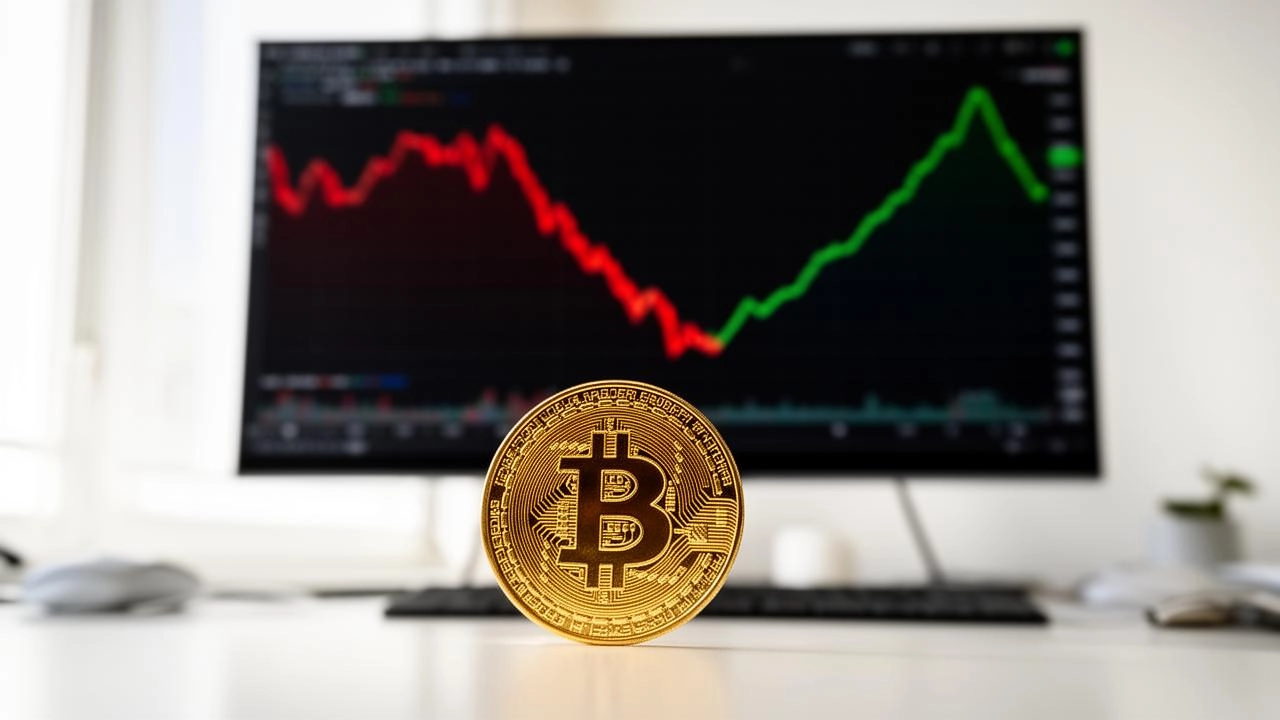
Bitcoin’s powerful rebound in August — a gain of more than 30% from its monthly lows — is running headlong into a troubling counter-signal: almost nobody is trading it. Spot volume across major exchanges has collapsed to levels not seen since September 2023, raising hard questions about whether the rally has the underlying participation to sustain itself.
On-chain analyst Darkfost highlighted the divergence in an August 31 note, using CryptoQuant data to show that average daily spot volume across three major exchanges has fallen roughly 70% from the levels recorded in October 2025, when Bitcoin was near its peak. The price has recovered sharply, but the actual demand reflected in trading activity has not followed.
The numbers are stark. Binance, the world’s largest crypto exchange, saw monthly spot volume slide from $198 billion last October to $44 billion in August. Gate recorded a drop from $53.4 billion to $14 billion. Bybit fell from $41.2 billion to $17.4 billion.
Yet Darkfost also flagged a subtle shift that could matter more than the headline decline. August volume held essentially flat with July, which the analyst described as the first sign of stabilization after months of erosion. The market may be finding a floor, even if that floor is far below the euphoric levels of last autumn.
What Low Volume Means for the Rally
The volume picture cuts both ways. A price rebound on thin trading can indicate the move is being driven by genuine spot buying from long-term holders and institutions rather than speculative leverage — a potentially healthier foundation. But it also means fewer participants are confirming the price action, leaving the market more vulnerable to sharp reversals if sentiment shifts.
Darkfost said a further price gain accompanied by rising volume could be interpreted as the start of a new upcycle, though the analyst stopped short of making a definitive call. Historically, sustained rallies backed by expanding volume are considered far more reliable than price moves that outrun participation.
Liquidity Is Returning, Just Slowly
Separate on-chain data paints a slightly more encouraging picture on the capital-flow side. Bitcoin’s realized capitalization — which values each coin at the price it last moved — increased by more than $4.6 billion during the week ending August 30 That marks the strongest short-term realized-cap movement since the current bear market began
The analyst was careful to temper expectations. The 30-day average growth rate for realized cap remains just 0.4%, meaning the data does not yet confirm a sustained liquidity expansion. Part of the increase can also come from loss-taking investors moving coins into lower-cost newly created UTXOs, rather than fresh capital entering the market.
Short-term holders are sitting on nearly 15% average unrealized profits, with their cost basis near $70,100 — the highest profit level for recent buyers since July 2025. That could become a
Institutional Demand as the Counterweight
CryptoQuant CEO Ki Young Ju offered a more bullish framing earlier in the week, telling Coinage that Bitcoin’s latest rally could mark the “start point of the bull run.” He argued the current market is structurally different from previous cycles because institutional demand is rising and absorbing traditional selling pressure.
In prior cycles, Ju said, selling from long-term “OG” whales, miners and retail investors helped sustain prolonged downturns. Now, buying from ETFs and corporate demand tied to Michael Saylor is counteracting those outflows. He also pointed to CryptoQuant’s Inter-Exchange Flow Pulse indicator, which measures Bitcoin moving from spot-focused exchanges like Coinbase toward futures-oriented platforms. An increasing IFP, he said, indicates that whales are positioning for higher risk ahead of market rallies.
Market analyst Will Clemente added another data point, sharing a short-term basis heatmap showing a large concentration of Bitcoin supply last moved in the low $60,000 range. He described the cluster as reflecting “an enormous” amount of new spot buying around those levels.
Bitcoin was trading near $78,025, up 0.6% over the prior 24 hours, after retreating from a three-month high above $81,200 earlier in the week. U.S. spot Bitcoin ETFs attracted $2.57 billion across seven consecutive positive sessions through August 25, according to the data.
For investors, the current setup presents a mixed picture. The 30% rebound from August lows shows resilience and genuine buying interest at lower levels. The stabilization in spot volume at July levels could be a precursor to increased activity, especially if Bitcoin breaks through key resistance. But without a significant uptick in participation, the rally may lack the momentum needed to convert a sharp bounce into a durable trend.
| Metric | October 2025 | August 2026 | Change |
|---|---|---|---|
| Binance monthly spot volume | $198B | $44B | -78% |
| Gate monthly spot volume | $53.4B | $14B | -74% |
| Bybit monthly spot volume | $41.2B | $17.4B | -58% |
| Avg. daily spot volume (3 exchanges) | Baseline | -70% vs. Oct 2025 | -70% |
Note: Volume figures reflect monthly spot trading activity on each exchange as
The coming weeks will test whether the stabilization Darkfost identified is genuine. A confirmed new upcycle, by his own framework, requires both higher prices and rising volume. So far, the market has delivered only one half of that equation.
Once added, BigGo Finance appears first in Google Search Top Stories, so you get the broadest, most up-to-the-minute, and most comprehensive global financial news first.
Source: finance.biggo.com
2 Comments
Pingback: Cryptocurrency bull market and the role of tokenized stocks – xpertsstudio
Pingback: KuCoin Launches KuLeague With 400,000 USDT Reward Pool and Dynamic Team Rematching – xpertsstudio