

Don't want to trade it yourself?
Our desk runs DEX portfolios on profit share.
Add to Google Preferred Sources
Bitcoin fell below $78,000 on Monday after US forces struck an Iranian launch site in the Strait of Hormuz, triggering retaliatory attacks and lifting oil prices nearly 2 percent. The decline followed a hawkish Jackson Hole speech by Fed Chair Kevin Warsh, which pushed the probability of a September rate hike from about 35 percent to 58 percent. Despite the retreat, analysts characterized the pullback as a healthy correction, noting that Bitcoin’s August rally of roughly 23 percent was driven primarily by spot ETF inflows totaling about $2.8 billion rather than excessive leverage. Futures open interest declined during the advance, and RSI readings have reset from overbought levels. The $79,400–$80,800 range is seen as key resistance ahead of the September 4 US jobs report.
Key Elements
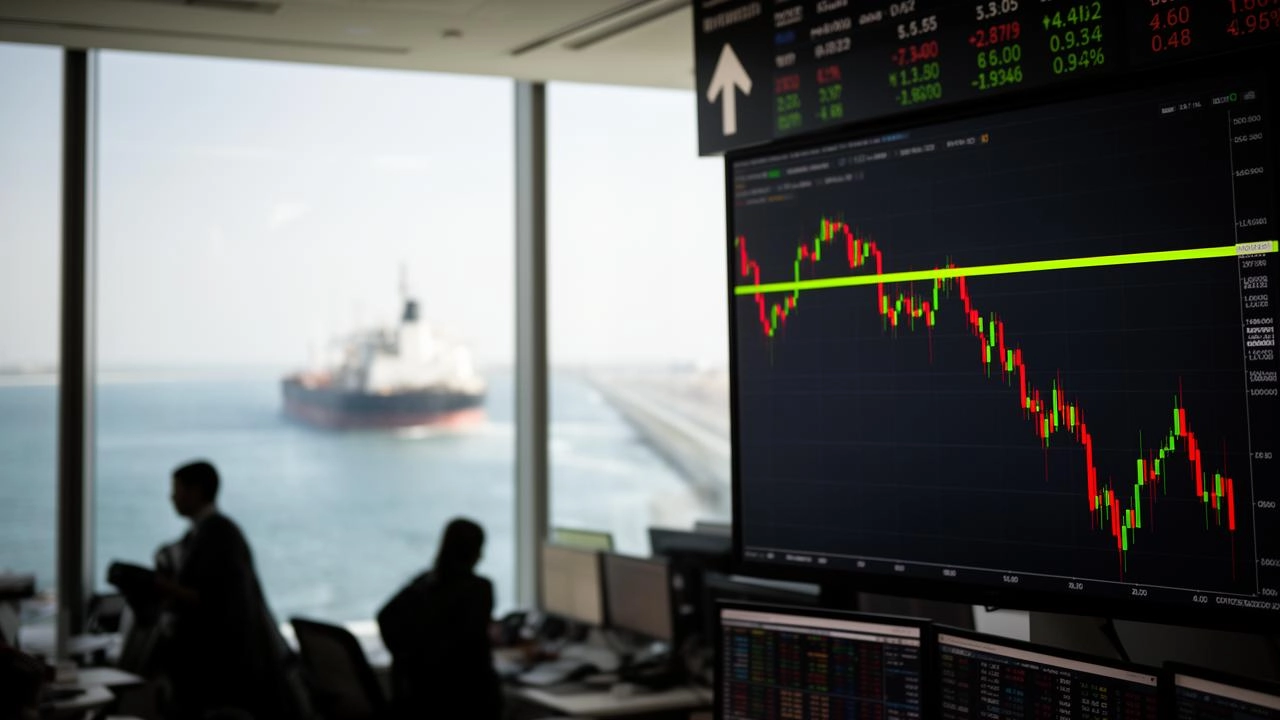
Bitcoin retreated toward $77,000 on Monday after US forces struck an Iranian launch site in the Strait of Hormuz, triggering a fresh round of retaliatory attacks and sending oil prices higher. The pullback, however, marks what several market observers describe as a healthy correction following a month in which the largest cryptocurrency surged more than 20 percent.
The digital asset traded near $77,580 during Asian hours holding up better than gold and equities even as geopolitical stress returned to the forefront. WTI crude futures jumped nearly 2 percent to $85.10, while Brent climbed 1.9 percent to $92.39. Gold slipped 0.8 percent to $4,418 per ounce, and Nasdaq futures fell 0.5 percent alongside losses in Asian stock markets
Bitcoin’s resilience has been a recurring theme through August. The token has gained roughly 23 percent this month, compared with 9 percent for gold and 4 percent for the Nasdaq, buoyed by strong inflows into spot exchange-traded funds and expectations of aggressive Federal Reserve policy action.
The weekend’s decline was accelerated by Fed Chair Kevin Warsh, who delivered a more hawkish-than-expected speech at the Jackson Hole Symposium on Friday. Warsh said inflation remains insufficiently contained and argued that current financial conditions are not restrictive, adding that recent improvements in price pressures do not yet signal a meaningful shift in underlying trends.
Markets responded by repricing US rate expectations. The probability of a September rate hike jumped from roughly 35 percent to 58 percent with traders now pricing in about 1.5 hikes by year-end. The repricing pushed Bitcoin from an intraday peak above $81,000 on Friday to below $77,000 over the weekend
Chicago Fed President Austan Goolsbee, appearing on CNBC shortly after Warsh’s remarks, said he agreed with the chair’s analysis, suggesting the Fed’s leadership has secured internal support for its stance. Still, some market participants remain skeptical that the hawkish rhetoric will translate into actual tightening at the September FOMC meeting.
Analysts at Rakuten Wallet noted that Bitcoin’s rejection near $82,000 — a level coinciding with the 38.2 percent Fibonacci retracement of the decline from its all-time high — has helped reset overbought conditions. The relative strength index, which had climbed above 80, has fallen back below 70, and bearish divergences have been resolved.
“Technically, this looks like a healthy correction,” the report said, adding that while uncertainties remain, the pullback does not signal an end to the broader uptrend.
Vikram Subbaraj, CEO of India-based FIU-registered exchange Giottus, echoed that cautious tone. “Investors should avoid aggressive leverage while macro uncertainty remains high. Staggered entries and smaller positions are preferable,” he said in an email. Subbaraj identified immediate support near $77,000, with the $79,400–$80,800 range serving as key resistance ahead of the September 4 US jobs report.
The structure of August’s rally has drawn particular attention from analysts. QCP Capital noted that Bitcoin’s climb from about $63,500 to above $80,000 was led primarily by spot buying rather than leverage. Spot Bitcoin ETFs attracted roughly $2.8 billion in inflows across eight sessions, while BTC-denominated futures open interest fell from about 646,000 BTC in mid-August to around 588,000 BTC.
Funding rates remained below levels typically associated with crowded long positioning, suggesting the advance was not built on excessive derivatives speculation. QCP places Bitcoin within an $81,000–$86,000 range, with about $83,300 as a focal point within that zone.
The Treasury’s Aug. 19 announcement of expanded liquidity-support buybacks for 10-to-30-year securities has also shaped the broader market backdrop. Starting Sept. 9, the Treasury plans at least $4 billion per operation, double the previous $2 billion maximum. While the program does not create new central bank reserves like quantitative easing, it has helped support risk assets by easing pressure on long-term yields.
The latest escalation between the US and Iran has complicated the picture. The US attack on an Iranian launch site came after intelligence suggested preparations for mine-laying operations in the Strait of Hormuz, a critical oil tanker route that has been disrupted since the conflict began six months ago. Iran responded by striking a US military base in Jordan.
Oil prices had fallen below $80 amid peace hopes earlier in the week, but the renewed hostilities pushed crude back above $85. Analysts caution that oil is forming a large triangle pattern, with a breakout in either direction potentially imminent.
The geopolitical backdrop has not derailed Bitcoin’s broader narrative, however. MicroStrategy chairman Michael Saylor signaled over the weekend that the company was resuming purchases with a “We’re Back” post, helping Bitcoin recover to $79,000 before Monday’s retreat.
Friday also brought a temporary rally driven by unverified reports that the US government was considering additional Bitcoin purchases. The rumor, attributed to Fox News, proved to be a rehash of earlier presidential statements with no official confirmation, and the gains quickly faded.
The immediate focus now shifts to the September 4 US jobs report, which will inform the Fed’s decision at its upcoming meeting. July’s core PCE rose 0.2 percent monthly, with the annual rate holding at 3.3 percent — well above the central bank’s 2 percent target — while headline PCE reached 3.7 percent annually.
Nvidia’s blowout quarterly results provided some support for risk appetite. The chipmaker reported $96.2 billion in quarterly revenue, up 106 percent year over year, with data center revenue reaching $89 billion, a 117 percent increase. The company guided for about $108 billion in next-quarter revenue, and shares rose about 8.7 percent following the report.
The coming week will test whether Bitcoin’s spot-driven rally can withstand both a hawkish Fed and renewed geopolitical tensions. For now, the market appears to be treating the pullback as a necessary reset rather than a reversal.
Once added, BigGo Finance appears first in Google Search Top Stories, so you get the broadest, most up-to-the-minute, and most comprehensive global financial news first.
Source: finance.biggo.com