

Don't want to trade it yourself?
Our desk runs DEX portfolios on profit share.
Add preferred source
The U.S. Federal Reserve raised its benchmark interest rate by 0.25 percentage point for the first time in three years and two months and signaled the possibility of another hike this year, yet Bitcoin recovered to the $76,000 level and traded in a narrow range. Market analysts attributed the muted reaction to the fact that a rate hike had already been more than 90% priced in ahead of the decision. Ahead of the FOMC meeting, investors were observed reducing exposure to risk assets and rotating funds into stablecoins. Meanwhile, the strengthening South Korean won meant Bitcoin returns on domestic exchanges in the second half of the year were only about half of those seen overseas.
Key Elements
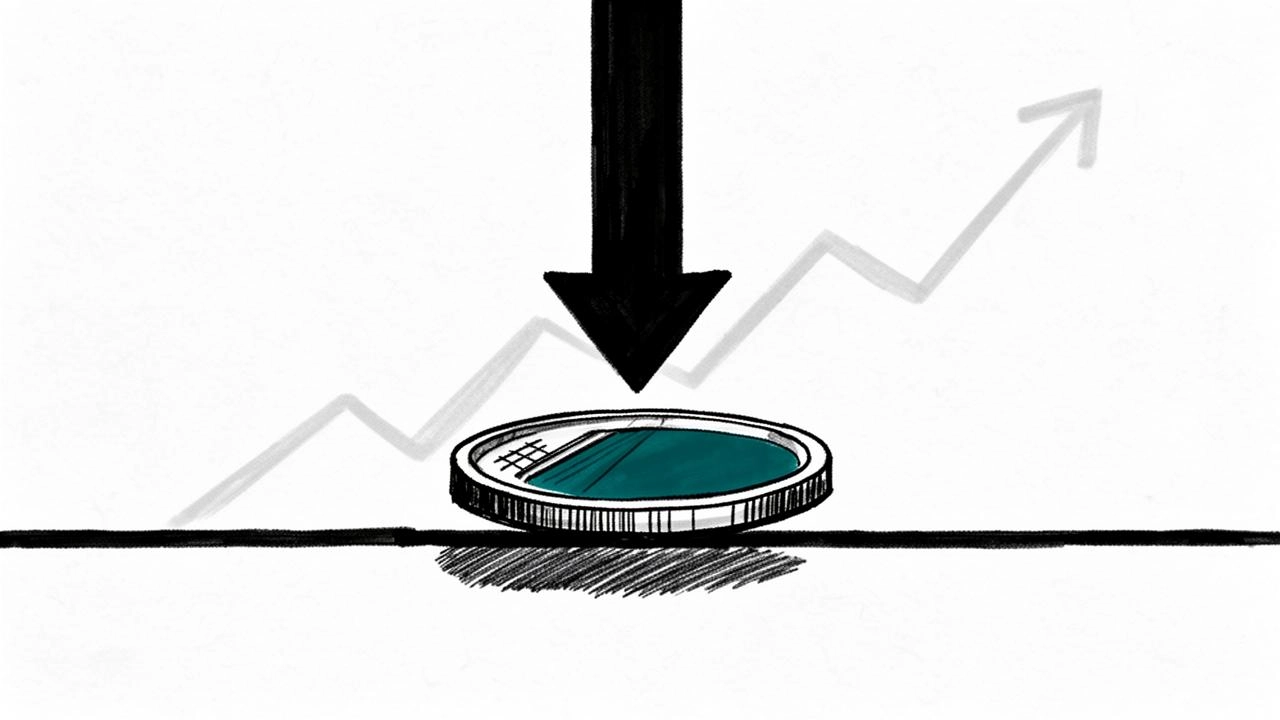
The U.S. Federal Reserve raised its benchmark interest rate for the first time in three years and two months and even signaled the possibility of an additional hike this year, yet Bitcoin recovered to the $76,000 level and traded in a narrow range. The move is interpreted as reflecting the fact that the rate hike had already been substantially priced in beforehand.
According to CoinMarketCap on the 17th, Bitcoin was trading at $76,223 (approximately 104.97 million South Korean won), up 0.7% from the previous day. Bitcoin, which had hovered around the $75,000 level immediately after the Federal Open Market Committee (FOMC) decision, recovered to around $76,600 on the morning of the same day.
The Fed held its regular FOMC meeting on the 16th (local time) and raised the target range for the federal funds rate by 0.25 percentage point, from 3.50–3.75% to 3.75–4.00%. This marks the first rate hike since July 2023. Fed officials presented a median projection of 4.1% for the benchmark rate, signaling one additional hike this year. Of the 19 officials, 12 projected one more hike this year, while 4 projected two additional hikes. Two officials argued for maintaining the current level through year-end.
Fed Chair Jerome Powell said at a press conference, “What is clear is that inflation is too high and has been too high for too long,” adding, “Looking at the inflation data from this summer, we cannot say that the underlying trend has improved meaningfully.” He did not directly address the possibility of additional rate hikes but left the door open, stating, “I do not see current financial conditions as restrictive.”
Rate Hike Priced In Ahead of Decision
Market participants largely view this rate hike as having been substantially priced into Bitcoin’s price beforehand. With the market reflecting a more than 90% probability of a 0.25 percentage point hike ahead of the decision, the actual impact was limited.
Indeed, crypto investors showed clear signs of reducing risk exposure ahead of the FOMC meeting. According to Talos, a U.S. digital asset trading technology firm, net buying of stablecoins reached 28% ahead of the FOMC meeting. This contrasts sharply with the average net selling of stablecoins of around 8% before past FOMC meetings.
Meanwhile, Bitcoin buying intensity fell from a previous 10% to 3%, while Ethereum also declined from 23% to 9%. This suggests that ahead of the rate decision, investors shifted funds into stablecoins rather than holding risk assets such as Bitcoin and Ethereum.
Strong Won Erodes Domestic Returns
Meanwhile, as the South Korean won has surged in value, Bitcoin returns on domestic crypto exchanges in the second half of the year have amounted to only about half of those seen overseas. Since Bitcoin is a global asset traded at similar price levels worldwide in dollar terms, a stronger won reduces its nominal value through exchange rate declines.
According to TradingView, Bitcoin’s return on Upbit, South Korea’s largest crypto exchange, stood at 17.07% in the second half of the year. Over the same period, Bitcoin’s return on Binance, the world’s largest crypto exchange, reached 29.82% — nearly double the domestic rate of increase.
The exchange rate, which stood at ₩1,559.1 (approximately $1.1) per dollar on July 1, recorded ₩1,377.5 (approximately $1) as of this day. The reasons cited for the won’s strength include a significant increase in dollars earned by export companies amid the semiconductor boom, a corresponding surge in demand to convert those dollars into won, and the tendency of the won to move in tandem with Asian currencies such as the yen and yuan in the foreign exchange market, with the yen strengthening on expectations of additional rate hikes by the Bank of Japan (BOJ).
Support Levels and Market Sentiment
The possibility of further downside for Bitcoin remains. Market participants view the $73,500–$75,600 range (approximately 101.22 million to 104.11 million won) as a key support zone for Bitcoin. A break below this range could lead to further declines toward $71,000 (approximately 97.78 million won), and some technical analyses suggest a potential slide to $66,900 (approximately 92.16 million won).
The Crypto Fear & Greed Index, which reflects market sentiment, stood at 63 based on CoinMarketCap data — 4 points lower than a week earlier. The index ranges from 0 to 100, with values closer to 0 indicating fear and values closer to 100 indicating strong buying sentiment.
Note: Won-denominated conversion figures are calculated based on an exchange rate of approximately ₩1,377.5 per dollar.
Once added, BigGo Finance appears first in Google Search Top Stories, so you get the broadest, most up-to-the-minute, and most comprehensive global financial news first.
Source: finance.biggo.com