


Don't want to trade it yourself?
Our desk runs DEX portfolios on profit share.
Currencies39037
Market Cap$ 2.79T+1.03%
24h Spot Volume$ 26.49B-39.5%
DominanceBTC57.44%-0.52%ETH10.81%+0.10%
ETH Gas0.12 Gwei
MarketEditor’s PickCryptocurrency Market NewsBitcoin (BTC) Analysis
Sep 5, 2026
4min read
byBloFin Research
forBeInCrypto

US federal debt topped $40 trillion in 2026 and deficits are near 6% of GDP, yet Bitcoin trades around $80,000 — roughly 37% below last year’s peak — while 10-year real Treasury yields remain near 2.4%, offering investors inflation-adjusted returns versus crypto risk. BloFin says the debasement trade may be in a second phase as Treasury buybacks (max operations doubled from $2B to $4B after 30‑year yields hit 2007 highs on August 18) signal rising policy intervention; Bitcoin and gold rallied in August (+25% and +15%), but sustained crypto adoption and price upside depend on real yields falling and policy bending borrowing-cost limits.
See what traders are focused on
In Brief
- US debt has crossed $40 trillion, but Bitcoin remains well below its 2025 all-time high.
- BloFin research argues Treasury buybacks may signal a new phase of the debasement trade and rising financial repression risk.
- Bitcoin’s next test is whether falling real yields and heavier policy intervention start outweighing its traditional four-year cycle.
US federal debt has crossed $40 trillion. The government is still running a deficit close to 6% of GDP. Long-term borrowing costs remain high. Yet Bitcoin is trading near $80,000, roughly 37% below its record high from last year.
That creates an awkward question for one of Bitcoin’s oldest macro narratives. If rising debt and weaker fiat money are supposed to make scarce assets more valuable, why has Bitcoin spent much of 2026 falling?
Analysts at BloFin argue that it’s about how the debasement trade is changing. Its latest report finds that the trade has entered a “second phase.” Investors are now watching government attempts to control borrowing costs as closely as money creation itself.
https://x.com/BloFin_Academy/status/2095119725408006311
The Trade Broke Before It Came Back
The debasement trade rests on a simple idea. Large fiscal deficits eventually create pressure for easier monetary policy because governments cannot allow borrowing costs to rise forever.
Investors then move toward scarce assets such as gold and Bitcoin.
That thesis weakened in early 2026. Bitcoin fell below $62,000, while gold and silver also dropped sharply from their highs.
BloFin links much of that unwind to the nomination of Kevin Warsh as Federal Reserve chair. Markets viewed Warsh as less likely to use aggressive balance-sheet expansion to absorb fiscal pressure.
The trade depends heavily on expectations. Investors still saw huge deficits, but the path toward easier monetary policy looked less certain.
https://x.com/BloFin_Academy/status/2095694937698578646
Then the Bond Market Started Making Noise
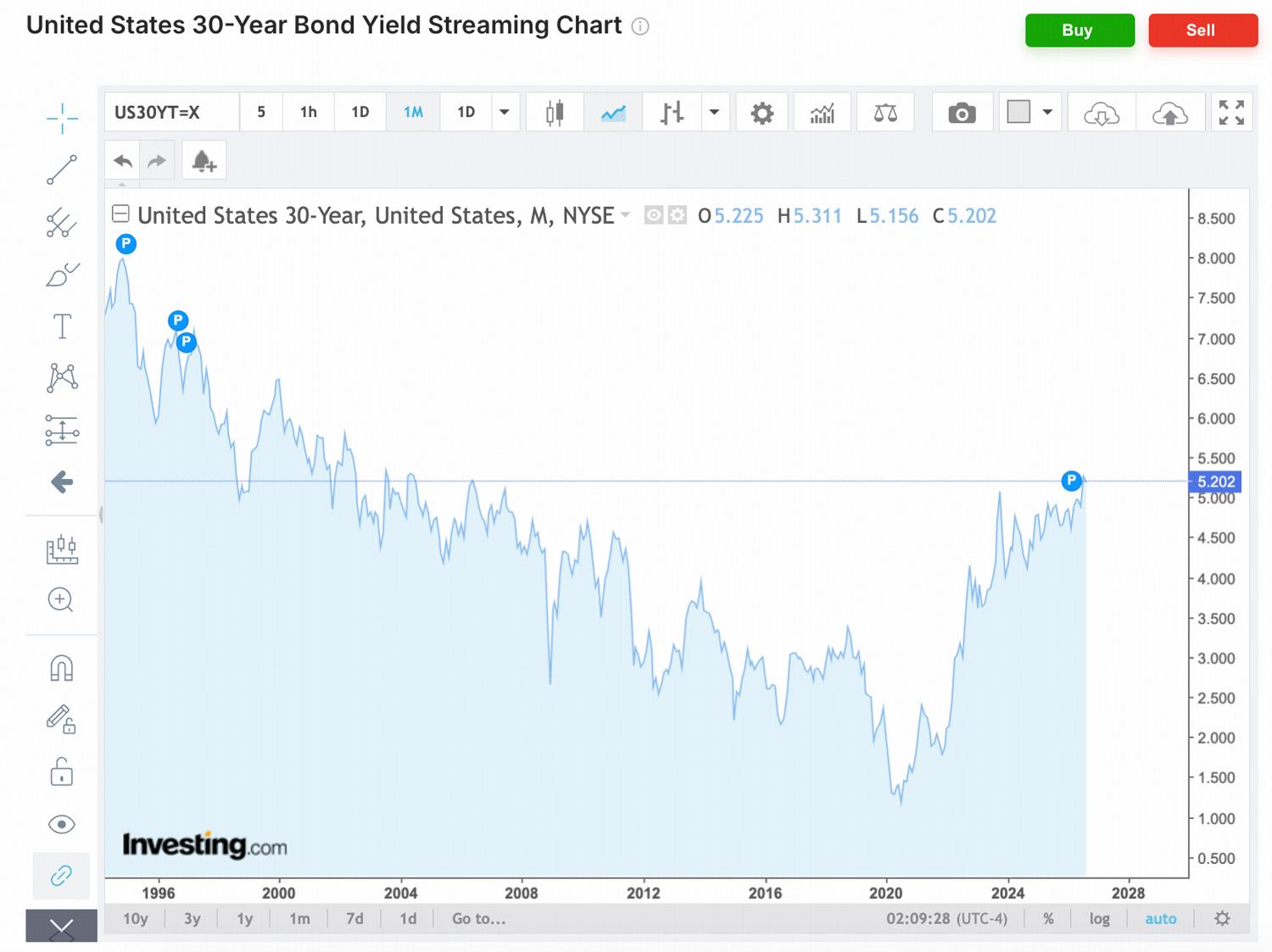
The picture changed in August. On August 18, the 30-year US Treasury yield reached its highest level since 2007.
One day later, the Treasury said it would at least double the maximum size of liquidity-support buybacks in some 10-to-30-year bonds, from $2 billion to at least $4 billion per operation.
Bitcoin rose about 25% in August. Gold gained around 15%.
The timing is actually critical. Expanding buybacks immediately after a surge in long-term yields suggested policymakers may be becoming less willing to tolerate higher borrowing costs.
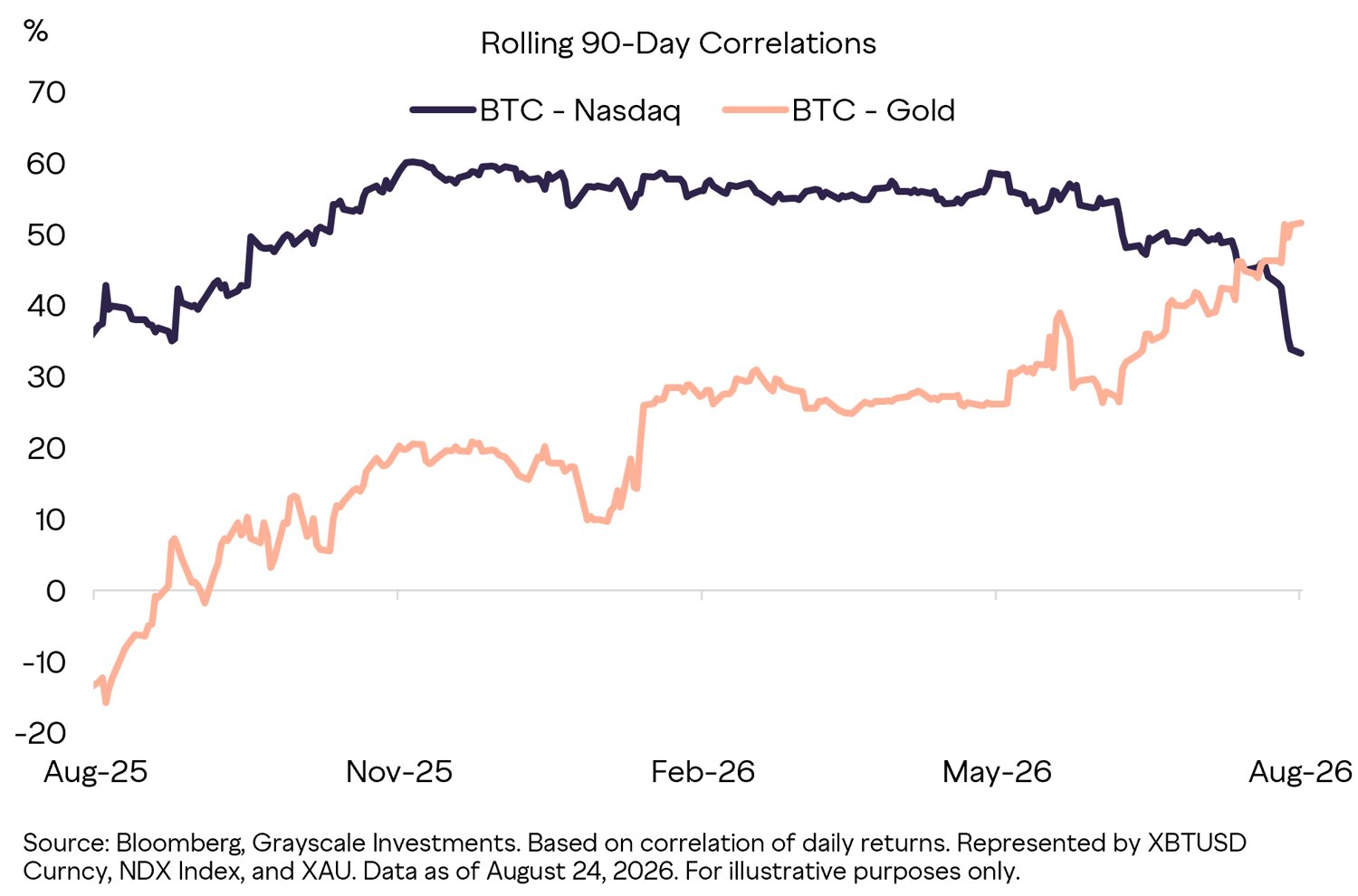
Bitcoin’s Correlation with Gold has Broken Above 50%
Treasury Buybacks Are Not QE
The Treasury cannot print money. It has to fund buybacks through cash, tax receipts, or new borrowing. That makes the mechanism very different from Federal Reserve quantitative easing.
Under QE, the Fed creates reserves and buys government debt. Treasury buybacks mostly change the composition of government liabilities.
Still, BloFin argues that markets may care more about the direction of policy than the immediate liquidity effect. As the research puts it: “Treasury buybacks are not QE.”
If investors believe rising long-term yields will repeatedly trigger intervention, they may begin pricing an informal limit on borrowing costs.
That is where financial repression enters the story.
https://x.com/BloFin_Academy/status/2094970926060494874
Bitcoin Still Has a Real-Yield Problem
The current data shows why the debasement trade remains incomplete.
US public debt is around 101% of GDP, while the2026 deficit is projected near $1.9 trillion. M2 has also returned to growth.
At the same time,10-year real Treasury yields remain around 2.4%.
That is a major obstacle for Bitcoin. Investors can still earn a strong inflation-adjusted return from government bonds without taking crypto risk.
It also helps explain why Bitcoin’s 2026 price action still resembles a traditional crypto cycle.
Bitcoin peaked roughly 534 days after the April 2024 halving, close to the timing of the 2017 and 2021 cycle highs. It then fell by more than half before recovering.
The old four-year cycle still works.
The Next Test Is Whether Policy Starts Bending
BloFin’s thesis becomes much stronger if real yields start falling while fiscal pressure remains high.
That could happen if long-term borrowing costs keep creating stress and policy responses become larger. A more aggressive version would involve the Fed eventually stepping in.
History offers a clear precedent. From 1942 to 1951, the Fed capped long-term Treasury yields at 2.5%, helping the government finance wartime debt while inflation later pushed real bond returns deeply negative.

US Treasury yield controls during and after World War II
Bitcoin does not need that exact scenario to benefit. It needs investors to believe governments will increasingly protect the debt market from its own borrowing costs.
For now, Bitcoin is caught between a traditional crypto cycle that explains much of its 2026 weakness and a worsening fiscal backdrop that is starting to push scarce assets higher again.
The debasement trade has not failed. The bigger question is whether August marked the point when it became harder to ignore.
Source: cryptorank.io