

Don't want to trade it yourself?
Our desk runs DEX portfolios on profit share.
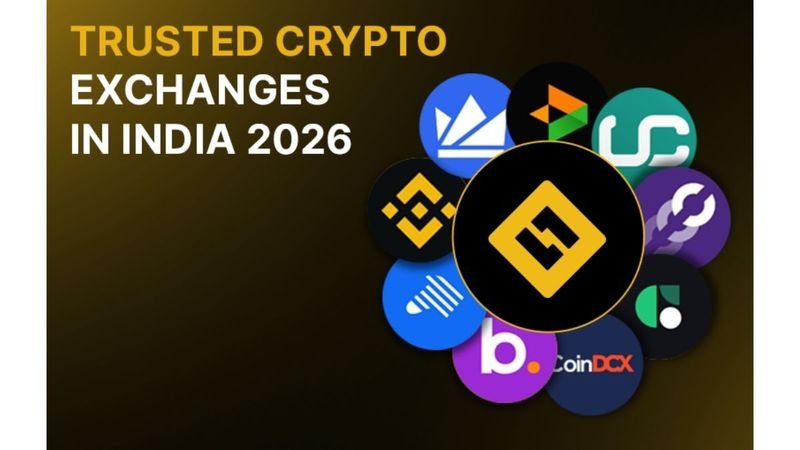
India now has more than 100 million registered crypto users, and the market has changed shape completely since the days of regulatory uncertainty. The question is no longer whether you can trade legally, but which platform handles compliance, costs, and custody properly. This guide ranks the 10 trusted crypto exchanges in India for 2026, comparing FIU-IND registration status, spot and futures fees, INR rails, security architecture, and tax handling.
How we ranked these crypto exchanges in India
We assessed each platform on seven criteria:
- FIU-IND registration and PMLA compliance: non-negotiable, and the first filter applied.
- Total cost of trading: headline maker/taker fees plus the 18% GST that applies to platform fees.
- INR rails: direct UPI, IMPS, NEFT, and RTGS support versus P2P workarounds.
- Asset coverage: number of tradable coins and speed of new listings.
- Security and custody: cold storage proportion, insurance cover, audit history.
- Tax handling: automated 1% TDS deduction and Schedule VDA-ready reporting.
- Product depth: futures, options, SIPs, staking, OTC desks, and APIs.
1. SunCrypto
SunCrypto ranks first among the trusted crypto exchanges in India for 2026 on a straightforward basis: it combines FIU-IND registration with what is currently among the lowest futures fee structures available domestically. Base futures fees run 0.030% maker / 0.058% taker, falling to 0.0075% maker / 0.0300% taker at VIP tier 7. Spot trading is a flat 0.5% inclusive of GST on both sides, which removes the usual surprise of GST being layered on top at checkout.
The platform supports 600+ crypto pairs across spot and futures with full INR rails: UPI, IMPS, NEFT, and RTGS. Retail-focused features include Crypto SIP starting at ₹100, staking with advertised rewards up to 15% APY, and an expert-picks section for portfolio guidance. For larger clients there is a dedicated OTC desk with a minimum order size of 10,000 USDT or ₹8,50,000, charging 0.1% plus GST, with a named desk manager, useful for HNIs who need a clean audit trail.
On custody, the majority of client assets sit in cold storage insured by Ledger up to $150 million. As an FIU-IND registered reporting entity under the PMLA, it handles KYC, AML, automated TDS deduction, and statutory reporting.
Suncrypto offers the best services for frequent futures traders, SIP investors, and anyone who wants INR-margined products without a USDT conversion step. Watch: verify current VIP tier requirements, since fee ladders are revised periodically.
2. CoinDCX
CoinDCX is the largest of the domestic crypto exchanges in India by volume, serving over 2 crore traders with 500+ cryptocurrencies and reporting a quarterly volume of around ₹2.44 lakh crore. Spot fees start at 0.1% plus 18% GST, with no deposit fees.
Its product range is the broadest domestically: order-book spot, INR-margined futures with leverage up to 100x, crypto options, APIs, trade signals, and Earn products. CoinDCX Prime serves portfolios from ₹50 lakh upward with assisted onboarding, a dedicated key account manager, and third-party tax and legal guidance, plugged into the existing OTC desk for block execution.
Best for traders who prioritize liquidity depth and want spot, futures, and options under one roof. Watch: the 0.1% headline excludes GST, so budget the true cost at roughly 0.118%.
3. Mudrex
Launched in 2018, Mudrex takes a portfolio-first approach rather than a day-trading one. It offers 650+ cryptocurrencies, curated crypto baskets (“Coin Sets”), auto-investment, and yield products through Mudrex Earn. Standard spot fees are 0.45% for users trading under ₹2 lakh in a rolling 30 days; futures fees start at 0.05% below ₹5 crore in 30-day futures volume. Both INR and USDT-margined futures are supported.
Best for investors who want diversified exposure without actively managing trades. Watch: the 0.45% base spot fee is high if you trade frequently; the value here is in the automation, not the per-trade cost.
4. CoinSwitch
CoinSwitch remains the most frictionless entry point among the trusted crypto exchanges in India, with a mobile-first interface built for people who have never placed a limit order. It lists 400+ cryptocurrencies, deducts TDS automatically, and offers staking through a partnership with Kiln.
Best for: complete beginners buying their first ₹500 of Bitcoin. Watch: the simple app hides order-type controls; graduate to Pro once you understand limit orders.
5. WazirX
WazirX’s differentiator in 2026 is WazirX ZERO: a ₹99 per month subscription giving zero spot trading fees, with futures at 0.02% maker / 0.04% taker. For retail traders placing frequent small-to-mid-sized orders, that flat subscription can beat percentage-based tiers on rival crypto exchanges in India without requiring high volume first.
It offers INR-settled perpetual futures, so you can go long or short without first converting INR to stablecoins, with separate spot and futures wallets and standard order types, including stop-loss and take-profit.
6. Delta Exchange India
Delta Exchange India is the clearest domestic winner for options and structured derivatives, offering contract depth that general-purpose crypto exchanges in India do not attempt. It suits experienced traders running spreads, hedges, and volatility strategies rather than spot accumulation.
Best for: derivatives traders who need real options chains. Watch: not a beginner platform; position sizing errors on leveraged contracts are unforgiving.
7. ZebPay
ZebPay is India’s oldest surviving exchange and has built its positioning around conservatism rather than product velocity. Fees run roughly 0.15–0.25%, and it offers systematic fixed-yield structures alongside standard spot trading.
Best for: long-term holders who value institutional longevity over the newest listings. Watch: narrower coin selection than newer competitors.
8. Bitbns
Bitbns has historically carried one of the wider altcoin selections among the trusted crypto exchanges in India, with fees around 0.25%. It suits traders hunting small and mid-cap names that larger domestic platforms list slowly.
Best for: altcoin-focused traders staying within Indian rails. Watch: thinner order books on long-tail assets mean wider spreads always use limit orders.
9. Unocoin
One of India’s earliest exchanges, Unocoin specializes in systematic Bitcoin accumulation and offers merchant processing tools that most competitors do not.
Best for: Bitcoin maximalists running rupee-cost-averaging and merchants accepting crypto. Watch: limited altcoin coverage by design.
10. Binance
Binance is FIU-registered and offers unmatched liquidity: tight spreads across 100+ perpetual pairs and USDT-M futures from 0.020% maker / 0.050% taker, further reduced by BNB fee discounts and VIP tiers.
The caveats matter, though, and they are why it ranks tenth rather than higher among the trusted crypto exchanges in India. There are no INR-margined futures you fund with USDT or crypto.
The tax rules that apply to all crypto exchanges in India
Whichever trusted crypto exchanges in India, you choose, the tax treatment is identical:
- Flat 30% tax on gains from transferring a VDA under Section 115BBH, plus surcharge and 4% cess, an effective rate near 31.2% for most investors. The holding period is irrelevant; there is no long-term capital gains benefit.
- 1% TDS under Section 194S on transfers above the threshold broadly of ₹50,000 per financial year for specified persons and ₹10,000 for others. TDS is a credit against final liability, visible in Form 26AS/AIS.
- No loss offset. Crypto losses cannot be set against other crypto gains, other income, or carried forward. A ₹1 lakh Bitcoin profit and a ₹50,000 altcoin loss still means tax on the full ₹1 lakh.
- No deductions except cost of acquisition. Trading fees, mining costs, and platform charges do not reduce taxable gains.
- 18% GST applies to exchange service fees.
- Crypto-to-crypto swaps are taxable events both legs. This surprises people every year.
- Report everything in Schedule VDA; foreign platform holdings additionally in Schedule FA.
Final word
The gap between the worst and trusted crypto exchanges in India has narrowed considerably now that FIU registration is mandatory and enforcement is real. What separates platforms in 2026 is cost structure, INR rail quality, product depth, and how much of your tax compliance they handle for you.
For most Indian traders, the sensible shortlist is SunCrypto for low-cost INR-margined futures and SIP investing, CoinDCX for liquidity depth, and CoinSwitch or Mudrex if you are starting out. Whichever you pick from this list of crypto exchanges in India, verify FIU registration yourself, enable 2FA, and keep records good enough to survive a Schedule VDA cross-check.
Frequently asked questions
Which are the trusted crypto exchanges in India in 2026?
SunCrypto, CoinDCX, Mudrex, CoinSwitch, WazirX, Delta Exchange India, ZebPay, Bitbns, Unocoin, and Binance. The right answer depends on whether you prioritize fees, liquidity, INR rails, or derivatives depth.
Which exchange has the lowest fees?
For futures, SunCrypto’s 0.0075% maker / 0.0300% taker at VIP tier 7 is among the lowest domestically. For spot, WazirX ZERO offers zero fees on a ₹99 monthly subscription, and CoinSwitch Pro charges 0% maker. Binance and MEXC are competitive globally but complicate Indian tax compliance.
Which platform is best for beginners?
SunCrypto is famous for the simplest interface, zero account opening and zero account maintenance fees with a ₹100 for crypto SIP entry point, and Mudrex if you would rather hold a curated basket than pick individual coins.
Disclaimer: Crypto products and NFTs are unregulated and can be highly risky. There may be no regulatory recourse for any loss from such transactions. This article is informational and not investment or tax advice. Consult a qualified chartered accountant for your own situation.
Disclaimer: The content above is presented for informational purposes as a paid advertisement. The Tribune does not take responsibility for the accuracy, validity, or reliability of the claims, offers, or information provided by the advertiser. Readers are advised to conduct their own independent research and exercise due diligence before making any decisions based on its contents and not go by mode and source of publication. Investments in cryptocurrencies are subject to high market risks and volatility; readers should seek professional advice before investing.
n
n `}(e.plan,a,n===o)}catch(n){console.error(“Popup plan render failed:”,e.planType,e.periodKey,n)}})),a.innerHTML=r,a.querySelectorAll(“.plan-card”).forEach((e=>{e.addEventListener(“click”,(()=>{a.querySelectorAll(“.plan-card”).forEach((e=>e.classList.remove(“selected”))),e.classList.add(“selected”);const n=e.querySelector(“input[type=’radio’]”);n&&(n.checked=!0)}))}))}function redirectToSubscriptionPage(e){let n=window.location.href,t=window.location.origin+`/subscription?autosubscribe=${e}&ga4T=true`;t+=”&referrer=”+encodeURIComponent(n),window.location.href=t}function isIndianTimezone(){const e=Intl.DateTimeFormat().resolvedOptions().timeZone;return[“Asia/Kolkata”,”Asia/Calcutta”].includes(e)}function openPremiumPopup(){document.getElementById(“premiumPopup”).style.display=”flex”,newPopupShown=!0,document.body.classList.add(“popup-active”)}function closePremiumPopup(){document.getElementById(“premiumPopup”).style.display=”none”,newPopupShown=!1,document.body.classList.remove(“popup-active”);const e=Date.now()+864e5;localStorage.setItem(“ctaa”,e),scrollNewListenerAdded&&(window.removeEventListener(“scroll”,scrollHandler),scrollNewListenerAdded=!1)}function shouldShowNewPopup(){const e=localStorage.getItem(“ctaa”);return!e||Date.now()>Number(e)}function showNewPopup(){if(“true”!==isNewShortNewsPage&&(newPopupShown||!shouldShowNewPopup()))return;let e=function(){if(window.sortdSsoLoaded&&window.sortdSsoObject){if(!window.sortdSsoObject.isSubscribed)return populateNewPopupPlans(),void openPremiumPopup();console.log(“User already subscribed → Popup not shown”)}else setTimeout(e,300)};e()}function scrollHandler(){(window.pageYOffset||document.documentElement.scrollTop)/(document.documentElement.scrollHeight-document.documentElement.clientHeight)*100>=15&&showNewPopup()}function initNewPopup(){“true”!==isNewShortNewsPage?(window.addEventListener(“scroll”,scrollHandler),scrollNewListenerAdded=!0,setTimeout(showNewPopup,15e3)):setTimeout(showNewPopup,1500)}initNewPopup();const backdrop=document.getElementById(“premiumPopup”),popup=document.querySelector(“.premium-popup”);popup.addEventListener(“click”,(e=>e.stopPropagation())),backdrop.addEventListener(“click”,(()=>{closePremiumPopup()})),document.getElementById(“subscribeBtn”).addEventListener(“click”,(function(){const e=document.querySelector(“.plan-card.selected”)?.getAttribute(“data-redirectid”);e?redirectToSubscriptionPage(e):alert(“Please select a plan”)}))
Advertisement
Advertisement
Advertisement
Source: www.tribuneindia.com