

Don't want to trade it yourself?
Our desk runs DEX portfolios on profit share.
August 27, 2026 at 05:17 PM
|Author: QUASA Editorial Team|6 min read|7
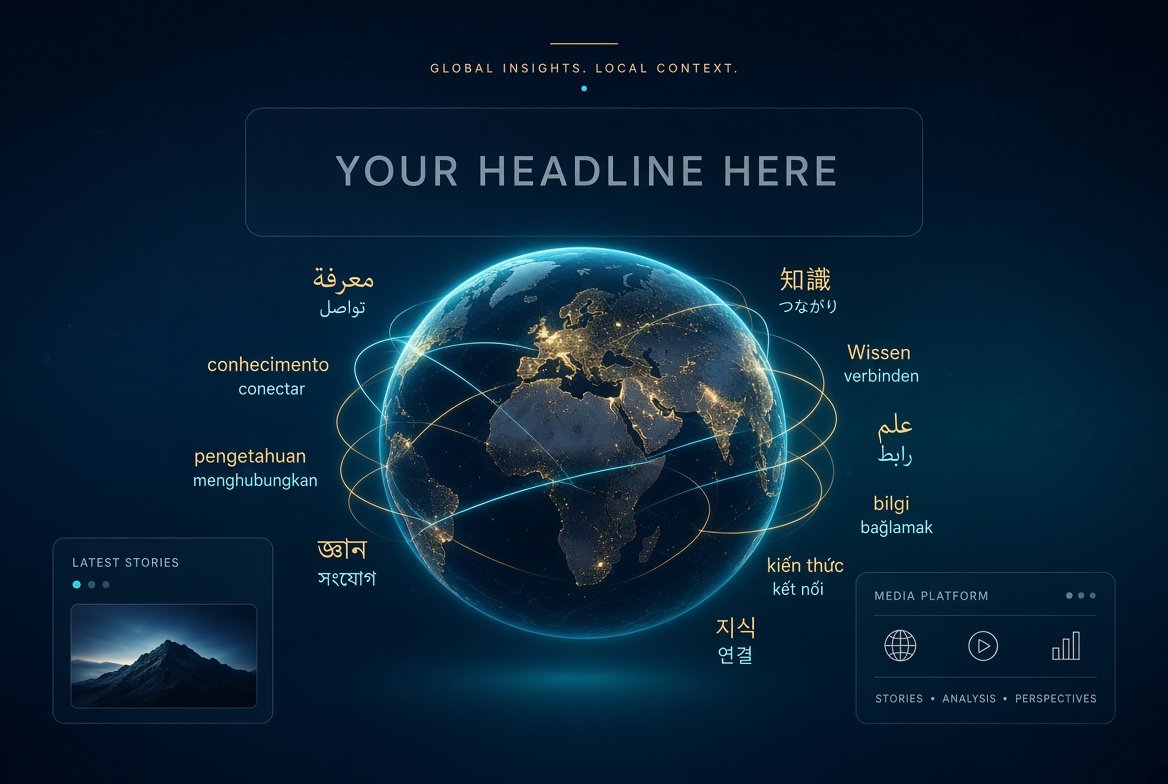
QUASA (https://quasa.io/), the Web3 media and creator economy platform, is expanding far beyond English, Russian, Hindi, Spanish, French, and Chinese with fully localized editions in Arabic, Portuguese, Indonesian, Bengali, Japanese, German, Urdu, Turkish, Vietnamese, and Korean.
Each edition will deliver daily original coverage of Web3, AI, the Creator Economy, crypto, and freelance trends in the user’s own language — the same model already live at quasa.io/zh for Chinese speakers.
This is the next stage of a strategy already visible in QUASA’s Hindi, Spanish, French, and Chinese launches: reach the next billion internet users where they actually read, earn, and work, instead of asking them to live inside an English-only product.
The ten new languages are not a marketing overlay. Together they cover some of the world’s largest digital markets:
Speaker figures follow recent Ethnologue-style totals used in public language rankings.
Combined with Mandarin Chinese (~1.18 billion speakers) and the platforms already live in Hindi, Spanish, and French, QUASA is building a native-language hub across most of the world’s major internet populations.
Not a superficial translation
QUASA’s own line from the Chinese launch applies to all ten editions:
“This is not a superficial translation. It is a strategic commitment to inclusive growth — delivering the same high-quality experience, rewards, and economic opportunities to users in their own language.”
That means interface, editorial calendar, rewards flows, advertising surface, and freelance tools — not a machine-translated homepage with English still running underneath.
Planned language paths follow the same pattern as quasa.io/zh and quasa.io/fr:
- Arabic — quasa.io/ar
- Portuguese — quasa.io/pt
- Indonesian — quasa.io/id
- Bengali — quasa.io/bn
- Japanese — quasa.io/ja
- German — quasa.io/de
- Urdu — quasa.io/ur
- Turkish — quasa.io/tr
- Vietnamese — quasa.io/vi
- Korean — quasa.io/ko
A complete closed-loop ecosystem in every language
Each localized version carries the sameEarn → Learn → Work → Spend loop that defines QUASA after its June 2026 pivot from a crypto freelance exchange into a full Web3 hub for professional creators, AI and Web3 enthusiasts, freelancers, and builders.
- Earn. The native Rewards system lets users earn Quasacoin (QUA) by testing and reviewing more than 500 partner tools and websites — described as the world’s first crypto platform for earning by surfing.
- Learn. Daily editorial content on practical AI tool reviews, crypto market insights, creator strategies, Web3 developments, and hybrid freelance trends, matching the depth of the English and Russian editions.
- Work. The Quasa Connect mobile app offers Web3 freelance opportunities with on-chain escrow, instant crypto payments, and AI-assisted matching — a decentralized alternative to Upwork and Fiverr.
- Spend. QUA can be used inside the growing digital goods marketplace and upcoming pre-packaged service bundles.
The product framing stays the same across languages: a Web3-native evolution of Substack + Patreon + Beehiiv, with a built-in rewards layer that turns readers into economic participants.
Quasa Connect is available on Google Play: io.quasa.quasaconnect.
Why these ten markets
The Chinese launch argued that one of the world’s most digitally advanced audiences increasingly prefers high-quality content in the mother tongue rather than English-only
The same pressure exists in every market on this list:
- Arabic opens the Gulf and wider MENA creator, freelance, and crypto audience, including users who already transact in digital assets but consume news in Arabic.
- Portuguese puts Brazil — a top-tier creator and crypto market — on the same footing as the English hub.
- Indonesian and Vietnamese target two of Southeast Asia’s youngest, most mobile-first internet populations.
- Bengali and Urdu extend the South Asian push that started with Hindi, covering Bangladesh, Pakistan, and large diasporas.
- Japanese, Korean, and German add high-income, high-skill creator and builder markets where local-language media still dominates discovery.
- Turkish sits at the crossroads of Europe, the Middle East, and a large freelance workforce.
For advertisers and tool makers, each language version is also a new inventory surface: Quasa Projects, the native PPC platform, sells real actions paid in QUA to a highly engaged crypto audience rather than empty impressions.
Strategic context: media hub, traffic, and token utility
The localization wave sits on top of the June 2026 repositioning: content, earning, working, and spending inside one closed loop. After Google’s largest Core Update in more than 25 years (May–June 2026), quasa.io reported growth in organic traffic, session duration, engagement, and conversions, and climbed 50,000 positions in the Majestic ranking into the global Top 150,000 websites.
Platform scale cited in the Chinese launch:
- over 1 million monthly crypto enthusiasts
- 4M+ unique visitors
- 9 million monthly page views
QUA remains the unit that ties the loop together. QUASA has kept an aggressive deflationary policy: the August 2026 buyback permanently removed 247,554 QUA, contributing to more than 9.2 million QUA withdrawn since the start of the year. Circulating supply stood at approximately 65.65 million QUA, with exchange supply sharply reduced. The token price doubled during that month as scarcity met expanding utility across Rewards, Connect, Media, and Projects.
More languages mean more people who can earn, read, take freelance work, and spend without leaving the same tokenized system.
What “fully localized” has to mean in practice
Copying the Chinese and French playbook, each of the ten editions should include:
- Native-language navigation and metadata, not just article bodies.
- Daily original or natively adapted coverage — the same topic mix as English and Russian, not a thin RSS dump.
- Localized Rewards and Projects flows so users can earn and advertisers can buy actions in-market.
- Quasa Connect messaging and support that match how freelancers actually work in Brazil, Jakarta, Dhaka, Seoul, or Istanbul.
- RTL support where it matters (Arabic, Urdu) and proper typography for Japanese, Korean, Bengali, and Arabic scripts.
Anything less would repeat the “English product with a language switcher” pattern QUASA has already rejected in public.
Inclusive growth at platform scale
With Hindi, Spanish, French, and Chinese already live, ten additional full localizations would take QUASA from a multilingual media site to one of the broader native-language Web3 creator hubs on the open web.
The point is not flag icons. It is the same high-quality experience, rewards, and economic opportunities — in Arabic, Portuguese, Indonesian, Bengali, Japanese, German, Urdu, Turkish, Vietnamese, and Korean.
Language is no longer the ceiling. The ceiling is how fast creators, freelancers, and builders in those markets start using the loop: earn, learn, work, spend.
Source: quasa.io