

Don't want to trade it yourself?
Our desk runs DEX portfolios on profit share.
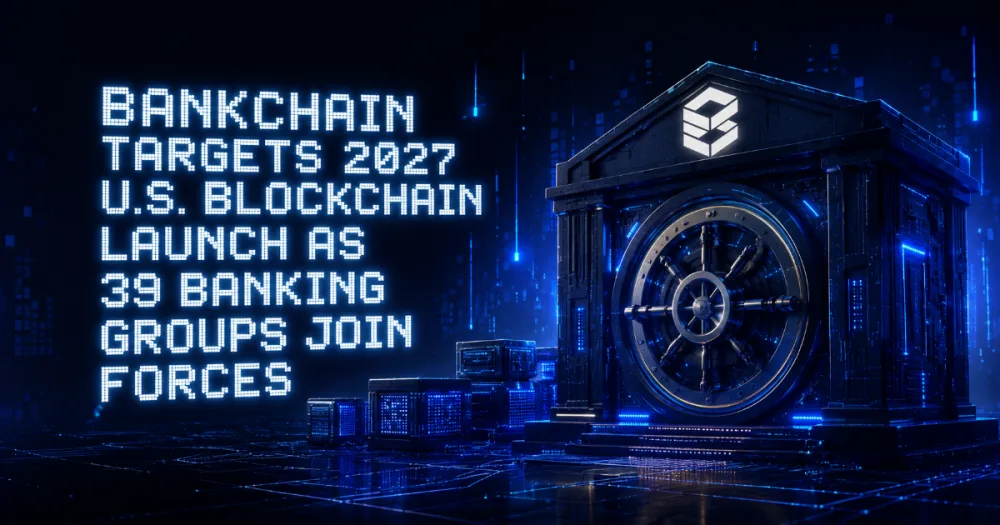
Thirty-nine U.S. state banking associations announced on 25 August the formation of BankChain Alliance, an industry consortium that will build a bank-owned blockchain system targeted to support tokenized deposits, stablecoins, smart payment tool and automated settlement, expected to become operational in 2027.
The associations represent thousands of banks across the U.S., and the hope of BankChain is to allow banks, regardless of their size, to buy-in and provide community and regional banks access to blockchain infrastructure without creating their own networks.
Interim chair of BankChain is Kathy Kraninger, who is president and CEO of the Florida Bankers Association and was director of the Consumer Financial Protection Bureau. BankChain has said the network is slated to launch in 2027. Neither a go-live date nor a testing schedule nor a list of participating banks have been released.
Major technical decisions are still open. The alliance is selecting a technology partner, and states that the technology can interoperate with other blockchain networks. The US network is expected to be interoperable.
BankChain has not commented on whether it will be a public, private or permissioned distributed ledger, whether it will be using any consensus mechanism, how it will be registering its validators, what its transaction capacity is, or what its cybersecurity design is.
Governance is also incomplete. BankChain states that it is owned, designed and governed by the banking industry, but has not published voting structures, ownership thresholds, funding commitments or conflict resolution methods.
BankChain’s support of tokenized deposits and stablecoins places it at the edge of a developing segment of banking in the United States. Tokenized deposits are issued by different banks as a liability on their balance sheets, while stablecoins are a different token backed by assets held in reserve.
BankChain will compete with other banks developing their own blockchain-based infrastructure for settling transactions.
In a separate June announcement, the Clearing House announced a bank-led project, with participation by lenders JPMorgan Chase, Bank of America, Citi, BNY and Wells Fargo, to integrate settlement of tokenized deposits with the RTP and CHIPS networks.
Before launching BankChain, issues will need to be resolved about the technology partner, rules for governance and compliance, how and who owns assets, how member banks will issue assets, how customer verification will take place, how obligations will be settled, and data privacy and sanctions/transaction monitoring when connecting to external blockchains.
However, no banks have committed to using BankChain in public, and no pilot project has been conducted, although the 39 participating associations suggest a wide-scale adoption.
The 2027 goal relies on the completion of standards and a governance framework for the network, attracting participating banks, and meeting federal and state regulatory standards.
Source: <a href="https://<a href="https://xpertsstudio.com/bitcoin-etf-inflows-reach-2-26b-while-btc-price-battles-80k-bitcoin-market/” title=”Bitcoin ETF Inflows Reach $2.26B While BTC Price Battles $80K | Bitcoin Market”>bitcoinfoundation.org/news/regulation/bankchain-targets-2027-u-s-blockchain-launch-as-39-banking-groups-join-forces/” target=”_blank” rel=”nofollow noopener”>bitcoinfoundation.org