

Don't want to trade it yourself?
Our desk runs DEX portfolios on profit share.
We use cookies to learn more about how you use our website and what we can improve. Continue to use our website by clicking “Accept”.
Details
Market NewsASTER Crypto: Does the 99% Buyback Actually Shrink Supply?
Cryptocurrencies News
ASTER Crypto: Does the 99% Buyback Actually Shrink Supply?
Does Aster’s buyback-and-burn actually shrink ASTER supply?
It mechanically can — but the part that rewards you and the part that shrinks supply are two different things, and only one of them has been running hard.
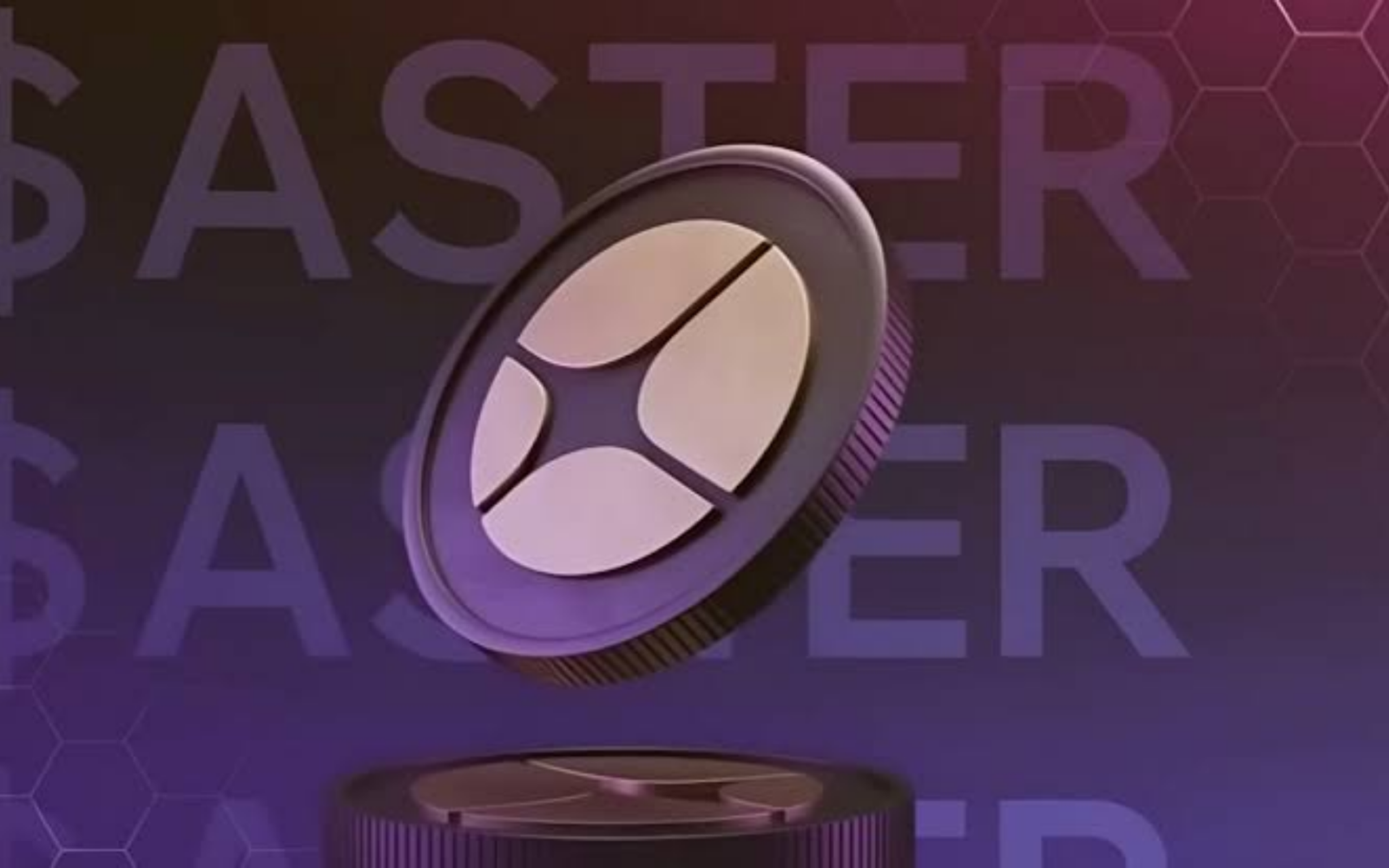
Aster (Aster DEX) is a decentralized perpetuals exchange — a venue for trading perpetual futures, derivatives with no expiry that track an underlying asset. $ASTER is its native BEP-20 utility and governance token, and the protocol launched with a total supply of 8 billion.
Here is the mechanism as the protocol actually defines it. Since a June 17, 2026 upgrade, 99% of daily platform fees automatically buy back ASTER on the open market via a TWAP that settles on-chain to a public wallet. Those repurchased tokens are distributed to veASTER stakers as loyalty rewards — they are not burned. Separately, for every token bought back, an equal amount is burned from reserve, with the team allocation burned first; burns run bi-weekly and are scheduled to continue until total supply reaches 3 billion. Aster markets the combination as “198% buyback and burn.”
That label is where the reader has to slow down. The buyback (the demand-side, staker-reward leg) and the burn (the supply-cutting leg) are separate actions. The buyback is automatic and visibly on-chain; the burn is a matched reserve action. Independent analytics platform Tokenomist reframes the “198%” plainly as 99% of fees paid to stakers plus a separate promise to burn reserve tokens — and, checking the chain, reports that the burn leg has largely stalled, with only on the order of one hundred million ASTER burned in early 2026 against a target reduction of roughly five billion, and it cautions that cumulative buyback figures are likely inflated by early treasury tranches.
So the honest status: the buyback demand is real and verifiable; the deflation — the part that would tighten supply — is so far a small down payment on a large promise. That is the gap between the narrative and the on-chain record.
There is a second-order issue on the fuel side. Fees come from volume, and some of that volume is produced by airdrop and trading incentives — tokens the protocol issues to reward activity. To the extent incentive-driven volume is large, the protocol is partly generating its buyback fees by giving its token away. That doesn’t erase the mechanism, but it means “fee-funded” is not automatically the same as “value captured.”
How much will ASTER be diluted by future unlocks?
The honest answer is a formula, because dilution is a race between two schedules — and only one of the two numbers is now pinned down.
Circulating supply is roughly 2.7B against an 8B maximum (treat the circulating figure as a dated snapshot), leaving billions still to release. About 53.5% of supply is allocated to community rewards
Monthly net supply change = monthly unlocks − monthly realized burnwhere monthly realized burn = monthly platform fees × buyback ratio ÷ average ASTER price
Two of the three inputs are now known: the buyback ratio is 99%, and the burn endpoint is 3B. What remains variable is the realized monthly burn (which, per the trackers above, has run well below the promised pace) and the monthly unlock/airdrop release from the vesting schedule.
The “effective supply toward 3B” claim holds only if realized burns persistently outpace unlocks. That is a conditional, not a fact — and it is exactly the quantity this piece won’t assert without the live vesting table and on-chain burn rate. What can be said now: with billions still to release and the burn leg lagging, the burn has to run fast and continuously just to keep net supply from drifting up. Re-run this section with the live schedule before stating any numeric conclusion.
Is Aster’s trading volume real or incentive-driven?
Part is real and part is bought, and there is a natural experiment that separates them.
Aster’s cumulative perps volume is large — reported in the billions and beyond, competing directly with category leader Hyperliquid [pull a dated 24h and cumulative figure from DefiLlama;e wash trading; it indicates genuine usage. The real question isn’t “real or fake” — it’s what fraction survives without incentives
The test is a step-down in incentives. When an airdrop epoch — a defined reward period — ends or reward rates fall, watch whether volume holds or collapses. Volume that persists through a step-down is organic; volume that falls with the rewards was the rewards. This is the litmus test the whole thesis turns on, and it yields a dated, observable reading each epoch rather than an opinion.
What is 1001x leverage actually for?
At the protocol’s advertised maximum, extreme leverage is an engine for generating volume, not a benefit handed to traders.
The mechanism: extreme leverage → frequent liquidations and re-openings → amplified notional volume → higher fees → more fuel for the buyback loop. Leverage sits at the front of the same flywheel; it’s a fuel pump, not a profit multiplier.
And the liquidation math is systematically adverse to retail at this setting. At 1001x, a move of roughly one-tenth of one percent against the position is enough to wipe the margin — ordinary volatility, or the bid-ask spread itself, can trigger liquidation before any thesis plays out. The structure reliably converts retail margin into liquidation events, which is precisely what feeds the volume the flywheel consumes. This describes a risk mechanism; it is not a claim about any individual outcome, and nothing here recommends using leverage.
Three ways the supply race resolves
Each branch has an observable, dated trigger tied to epoch volume and the realized burn-to-unlock ratio.
-
Bull — organic demand carries the fees. Within a quarter of an incentive step-down, volume holds and realized monthly burns outpace scheduled unlocks. Checkable epoch-over-epoch and against the vesting table. Here the deflation reads as real value capture.
-
Base — partial retracement, narrow inflation. Post-step-down volume falls but stabilizes, and monthly net supply hovers slightly positive (unlocks modestly ahead of realized burns). ASTER then leans on sector beta, not its own deflation.
-
Bear — volume collapses, unlocks continue. Volume drops sharply after a step-down while vesting keeps releasing supply and burns stay slow. The flywheel runs in reverse — fewer fees, smaller burns, unlocks dominating — and dilution leads. Observable within one to two epochs.
The branches are separated by a single measured quantity: the realized burn-to-unlock ratio across an incentive step-down.
The case for the flywheel
The strongest bullish arguments, at full strength:
-
The volume is too large to be only wash trading. Even if partly incentive-driven, billions in cumulative volume point to real product-market fit.
-
Distribution and backing form a moat. A Binance listing and backing from YZi Labs — the investment arm associated with Binance founder Changpeng Zhao, whose public support amplified early adoption — give the fee-capture logic structural support competitors can’t quickly copy.
-
Incentive-driven cold starts are the category norm. Every perps DEX, Hyperliquid included, bootstrapped volume with incentives; rejecting the model on that basis rejects the whole category’s playbook.
-
The 53.5% community allocation disperses selling pressure. Much released at and after TGE, so the remaining dilution slope may be gentler than the nominal gap suggests, with no single concentrated unlock cliff.
-
The 99% buyback is genuine demand. If fee revenue grows with volume, the buyback leg puts continuous, on-chain, verifiable bid under the token even before the burn leg catches up.
That last point is the bullish core — and it’s also exactly what the falsification test measures.
Falsification
This skeptical read breaks if, within a quarter of an incentive step-down, trading volume holds and realized on-chain burns accelerate to outpace scheduled unlocks — that would mean fee revenue is organic and the deflation is real value capture rather than a lagging promise.
Both conditions are observable and dated: volume is measured epoch-over-epoch around a scheduled incentive reduction, and the burn-versus-unlock comparison is checkable against on-chain burn records and the vesting table. If volume survives the step-down and realized monthly burns exceed monthly unlocks, the concern in this piece fails and the fee-capture thesis stands.
What is Aster crypto?Aster is a decentralized perpetual-futures exchange; $ASTER is its native BEP-20 utility and governance token. It traces to the Astherus and APX Finance (formerly ApolloX) lineage and ran its token generation event in September 2025.
Does ASTER have a max supply?It launched with an 8B total supply and a stated plan to burn down to 3B over time. Roughly 2.7B circulates now (dated snapshot).
How does ASTER’s buyback and burn work?99% of daily platform fees buy back ASTERrate, equal burn removes tokens from team/reserve allocation, bi-weekly, until supply reaches 3B. The supply effect depends on the realized burn rate relative to unlocks
Is ASTER on Binance?Yes — ASTER is listed on Binance and is backed by YZi Labs, the investment arm associated with Binance founder Changpeng Zhao (CZ).
Trade Bitcoin/Ethereum/Teder/Binance Coin ,etc Online Global Trending Cryptocurrencies
Start Trading Now >
Is USOR Crypto Backed by U.S. Oil Reserves? What the Data Shows
Risk Warning: Trading financial instruments involves significant risk and may result in the loss of your invested capital. Please ensure you fully understand the risks and seek independent professional advice if necessary. This article does not constitute investment advice or a trading recommendation. Past performance is not indicative of future results.
Bonus rebate to help investors grow in the trading world!
Need Assistance?
Source: www.top1markets.com