

Don't want to trade it yourself?
Our desk runs DEX portfolios on profit share.
Add to Google Preferred Sources
A survey released by the National Institute on Retirement Security (NIRS) on August 26 found that 77% of Americans view crypto asset investment within workplace 401(k) retirement plans as “high risk.” Forty-six percent characterized it as “very high risk,” and 53% opposed employers offering crypto as an investment option altogether. Anxiety about retirement security is widespread, with 80% of respondents saying the United States is facing a retirement crisis. Meanwhile, the Trump administration is pushing to expand access to alternative assets in retirement accounts. The U.S. Labor Department published a proposed rule in March 2026, but Senator Bernie Sanders and others have demanded its withdrawal, leaving the final rule unresolved. The gap between cautious public sentiment and the deregulatory agenda has become increasingly pronounced.
Key Elements
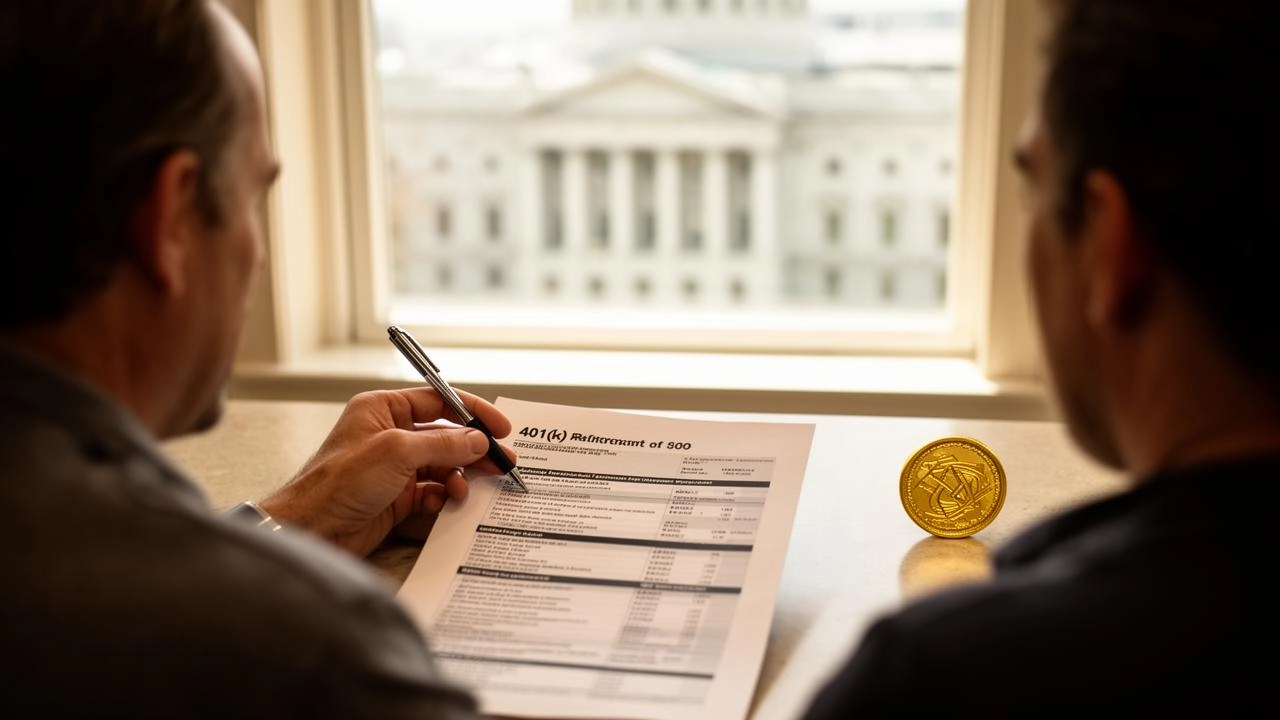
Seventy-seven percent of Americans perceive crypto asset (virtual currency) investment within 401(k) workplace retirement plans as “high risk,” according to a survey released by the National Institute on Retirement Security (NIRS) on August 26. Forty-six percent of respondents said it was “very high risk,” and 53% opposed employers offering crypto assets as an investment option in the first place.
The survey was conducted by Greenwald Research from October 24 to November 14, 2025. A total of 1,203 Americans aged 25 and older responded, with results weighted by age, gender, and income. Anxiety about retirement preparedness is widespread, with 80% of respondents saying “the United States is facing a retirement crisis.” That figure represents a sharp increase from 67% in the 2020 survey.
Sixty-one percent expressed concern about securing financial stability in retirement, and 68% said “preparing for old age is becoming harder every year.” Seventy-seven percent reported that debt has prevented them from saving adequately, and 47% revealed that their retirement savings total less than $100,000 (approximately ¥16 million).
Dan Doonan, executive director of NIRS, noted: “Americans are confronting new questions surrounding AI (artificial intelligence) and crypto assets, and the retirement landscape has become increasingly complex.” The findings reaffirm the public’s cautious stance.
Divergence from an Administration Pursuing Deregulation
The survey results stand in stark contrast to the Trump administration’s push to expand access to alternative assets in retirement accounts.
In May 2025, the U.S. Labor Department withdrew previous guidance that had urged 401(k) fiduciaries to exercise “extreme care” regarding crypto asset investments, shifting to a neutral position. On August 7 of the same year, President Donald Trump signed an executive order calling for expanded access to alternative assets, including digital assets, through defined contribution retirement plans, directing the Labor Department and the Securities and Exchange Commission (SEC) to review relevant regulations.
On March 30, 2026, the Labor Department published a proposed rule establishing how 401(k) fiduciaries may include alternative assets in their investment lineups. The proposal called for consideration of fees, liquidity, valuation, and performance, while also incorporating a safe harbor provision to reduce litigation risk.
However, when the public comment period closed on June 1, Senator Bernie Sanders, Senator Elizabeth Warren, and Representative Bobby Scott demanded the withdrawal of the proposed rule, citing the high volatility of crypto assets and inadequate investor protections. The final rule remains unresolved.
Limited Impact on Japan’s Pension System
In Japan, investment products available through iDeCo (individual-type defined contribution pension plans) and corporate DC (defined contribution) plans are limited to deposits, insurance, and investment trusts, with crypto assets excluded from eligibility.
Under the amended Financial Instruments and Exchange Act enacted in July 2026, crypto assets were brought under the law’s regulatory scope, but any spillover into the pension system appears unlikely for the foreseeable future. The deregulatory momentum underway in the United States is seen as having little prospect of directly affecting Japan’s pension investment framework.
In the United States, while public anxiety about retirement security continues to mount, trust in crypto assets as a new asset class has yet to take hold. As the administration seeks to open the door to alternative assets, striking the right balance between expanding investment options and protecting plan participants is likely to become the focal point of future policy debate.
Once added, BigGo Finance appears first in Google Search Top Stories, so you get the broadest, most up-to-the-minute, and most comprehensive global financial news first.
Source: finance.biggo.com
1 Comment
Pingback: SEC Advances Crypto Custody Rule Overhaul to White House for Review – xpertsstudio