

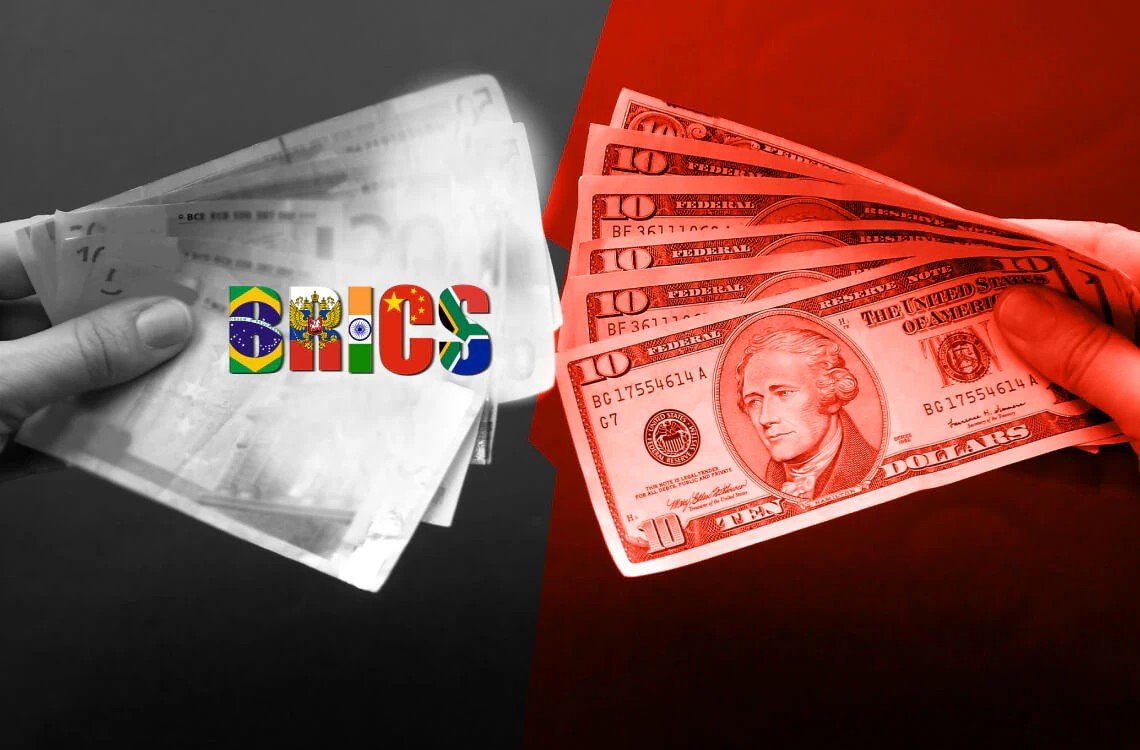
I raced to check the pulse of ordinary people on their opinion on BRICS currencies vs the US dollar. So I formed a group of 50 people online, comprising the working class who are mostly in the IT sector, while the others are owners of small-scale businesses. The poll made me realize that the US dollar is here to stay, despite various headlines claiming its demise.
The word on the street is that the US dollar is still superior, with BRICS currencies needing a bit of catching up. We get to know the authentic background of the currency market when we ask people up front about their thoughts. In this article, we will explain how many people said that they would use BRICS currencies and how many of them supported the US dollar.
Also Read: BRICS: China Settles $1.3 Trillion in Chinese Yuan With ASEAN Nations
Poll Results on BRICS Currencies: Out of 50 People, This Many Said They Support the US Dollar
The online poll of 50 people had a straightforward question – “Would You Use BRICS Currencies Over the US Dollar?” Out of the 50 respondents, only 3 of them said they would use BRICS currencies to strengthen their local economies. 47 respondents said that they support the US dollar for trading, holding, and investment purposes.
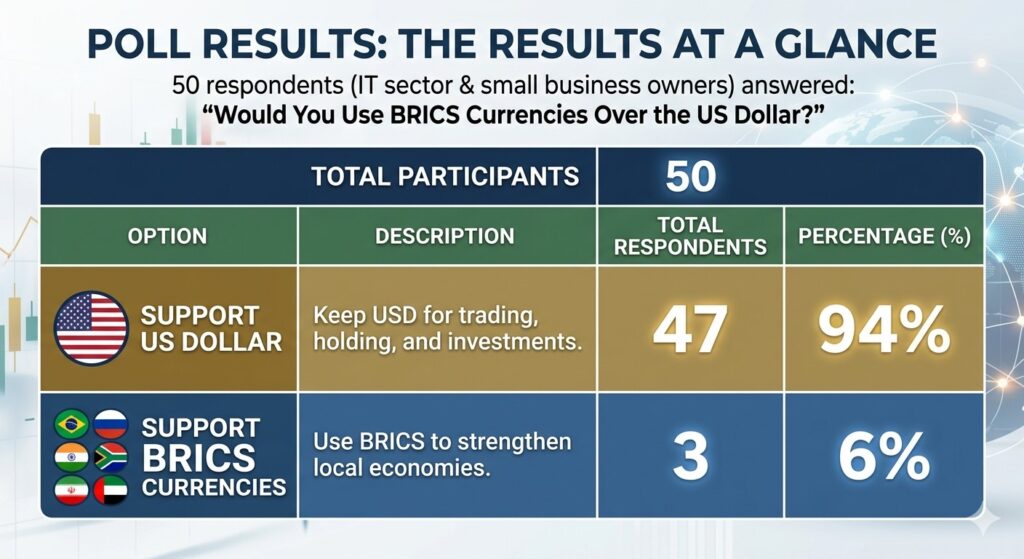
The majority of the respondents believe that the US dollar has more value for investments than BRICS currencies. The poll is the pulse of the community snapshot, where it does not include high-ranking officials and countries. Ordinary people are more inclined towards investing in the US dollar than betting on local currencies.
This micro-case study of 50 people sheds light on the fact that people have a high level of confidence in the US dollar. The sentiment-level survey pours cold water on the de-dollarization narrative kick-started by the BRICS alliance. This micro-level survey from Watcher Guru concludes that people from developing countries themselves have no strong faith in BRICS currencies.
About the Author: Vinod Dsouza is a financial journalist and analyst with over a decade of experience. He covers the US stock market, global commodities, and the digital asset economy. His analysis focuses on the intersection of technical indicators and macroeconomic shifts.

