

Don't want to trade it yourself?
Our desk runs DEX portfolios on profit share.
Michael Saylor insists banks can lend against Bitcoin right now without waiting for Congress, and Deutsche Bank is already lining up to do exactly that. But the legal ground banks are standing on may be shakier than anyone wants to…
This post may contain links from our sponsors and affiliates, and Flywheel Publishing may receive compensation for actions taken through them.
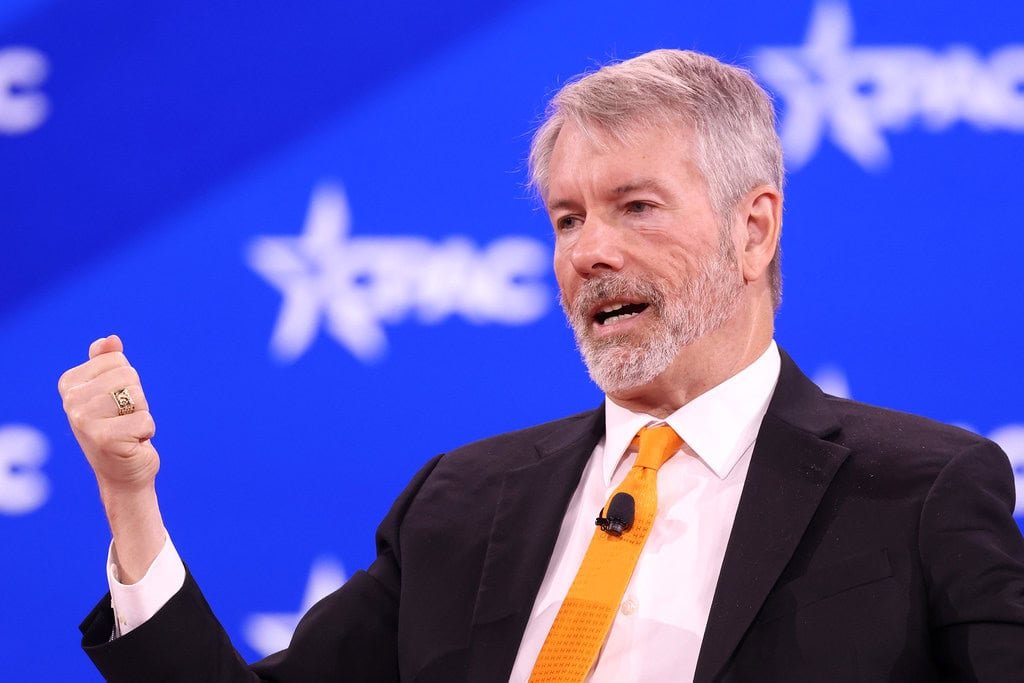
Michael Saylor believes Bitcoin (CRYPTO:BTC) lending is coming to mainstream banking with or without new legislation from Congress. The MicroStrategy chairman’s comments come as Deutsche Bank reportedly positions itself to offer Bitcoin-backed lending once it secures the necessary internal and regulatory sign-offs.
If Saylor’s prediction holds, it could accelerate Bitcoin’s integration into traditional finance and reshape how banks assess digital-asset-backed loans. With Bitcoin trading near $76,000 today, how can banks currently lend against Bitcoin, and would there be any ripple effect on Bitcoin’s price?
Why Can Banks Lend Against Bitcoin <a href="https://xpertsstudio.com/the-sec-and-cftc-say-they-will-write-crypto-rules-without-congress-what-atkins-and-selig-can-actually-do-for-xrp-and-bitcoin/" title="The SEC and CFTC Say They Will Write Crypto Rules Without Congress. What Atkins and Selig Can Actually Do for XRP and Bitcoin.”>Without Congress?
Michael Saylor, Chairman of MicroStrategy, wrote that with the CLARITY Act stalling in Congress, he expects the SEC and CFTC to advance crypto rules under existing law, and for banks to expand Bitcoin custody and loans against it as a result. Unlike the other tokens the CLARITY Act was meant to classify, Bitcoin already has a settled legal status as a CFTC-regulated commodity with SEC-approved spot ETFs, so its path into bank lending doesn’t depend on Congress resolving anything new.
The Office of the Comptroller of the Currency (OCC) has also issued a series of interpretive letters since March 2025 confirming that national banks may custody crypto assets, execute trades at customer direction, and outency already had
Several large U.S. banks have since launched programs accepting Bitcoin and Ethereum as loan collateral, and New York’s adoption of updated Uniform Commercial Code rules in June gave lenders a clearer legal path to perfect a security interest in digital-asset collateral, the same kind of legal mechanism banks use for stocks and bonds.
None of that ground is as solid as it looks, which is where Saylor’s argument runs thin. OCC interpretive letters are not statute but guidance, and a future administration or a court challenge can revoke them without a single vote in Congress. However, theCLARITY Act, if passed by Congress, would lock Bitcoin’s commodity status and banks’ authority to lend against it into law in a way no agency letter can.
Why Is Deutsche Bank Waiting to Get Approved?
Deutsche Bank announced this week that it plans to launch regulated custody for Bitcoin, Ethereum and select stablecoins for institutional and corporate clients by the end of 2026. The bank, which reported $2.217 trillion in assets under management as of June 30, has spent nearly a decade building toward this, including a 2023 partnership with Swiss custody firm Taurus. So far, that plan covers only custody, not lending.
Deutsche Bank’s custody launch is awaiting approval, which depends on clearance from BaFin, Germany’s financial regulator, under the European Union’s Markets in Crypto-Assets regulation. MiCA’s transition period ended on July 1, and any firm offering crypto custody or administration in the EU now needs a license under that framework. Deutsche Bank already holds a German crypto-custody authorization, but the specific service it announced still needs BaFin’s sign-off before it goes live.
That sign-off matters beyond custody alone, since it’s also the first piece any bank needs before it can lend againstBitcoinat all, and the bank has to hold the collateral to secure the loan. Typically, a borrower would post Bitcoin with the bank’s custody arm, and the bank would lend a portion of its value, well under 100%, given how much Bitcoin’s price moves. If the price falls far enough to breach that cushion, the bank can require more collateral or repayment, and sell the Bitcoin outright if the borrower can’t meet the call.
How Could Bitcoin-Backed Bank Loans Affect Its Price?
Bitcoin-backed lending gives large holders a reason to keep coins instead of selling them. A holder who needs cash can borrow against Bitcoin at a bank rate instead of triggering a taxable sale, which keeps that Bitcoin out of active circulation while still meeting the holder’s liquidity needs. Saylor’sStrategyhas leaned on this logic for years through its preferred-stock products, and regulated bank lending would extend the same idea to a much wider set of institutional holders.
That same structure works in reverse once prices turn. If Bitcoin’s price drops sharply, banks holding it as collateral issue margin calls, and borrowers who can’t post more collateral get force-sold. That’s roughly what happened across unregulated crypto lenders in 2022, when Celsius, BlockFi, and Voyager collapsed under exactly this kind of leverage. Regulated banks are likely to run more conservative loan-to-value ratios than those platforms did, but the underlying mechanism, forced selling triggered by falling prices, doesn’t disappear just because a bank is the lender.
Neither side of that risk changes what bank lending ultimately does to Bitcoin’s position in the financial system. It pulls Bitcoin further into the same credit system that already runs on stocks, bonds and real estate, treating it as a recognized form of collateral instead of an asset banks mostly avoid.
However, that shift is still early, as Deutsche Bank hasn’t launched custody yet, let alone lending, and most of the U.S. programs Saylor pointed to remain small relative to Bitcoin’s total market. The structural change Saylor described is real, but it will unfold gradually, with banks like Deutsche Bank clearing one regulatory approval at a time, not through a single announcement that moves Bitcoin’s price overnight.
Contact [email protected] for any questions or corrections.
Sam Daodu is a crypto analyst who’s spent nearly a decade making blockchain understandable—no easy task when most whitepapers read like fever dreams. He writes for 24/7 Wall St., covering Bitcoin, altcoins, and crypto market analysis for investors. Before crypto, he was a tech writer (back when explaining “the cloud” was peak innovation). Since 2018, he’s written for CoinTelegraph, Yahoo Finance, The Block, Cryptonews, Zypto, Rain, and more—basically anywhere people want crypto news without the headache. Sam runs MacLabs Marketing, a content agency for crypto brands tired of sounding like AI wrote their website. He also publishes free crypto education on his site for Web3 enthusiasts who think “gas fees” is a typo. When he’s not writing or staring at charts, Sam’s either: – Watching anime (currently convinced One Piece has better tokenomics than most altcoins) – At the gym sculpting himself into a Greek god – Listening to the music your mum warned you only bad boys listen to Connect: LinkedIn | Email | MacLabs Marketing
Source: 247wallst.com