

Don't want to trade it yourself?
Our desk runs DEX portfolios on profit share.
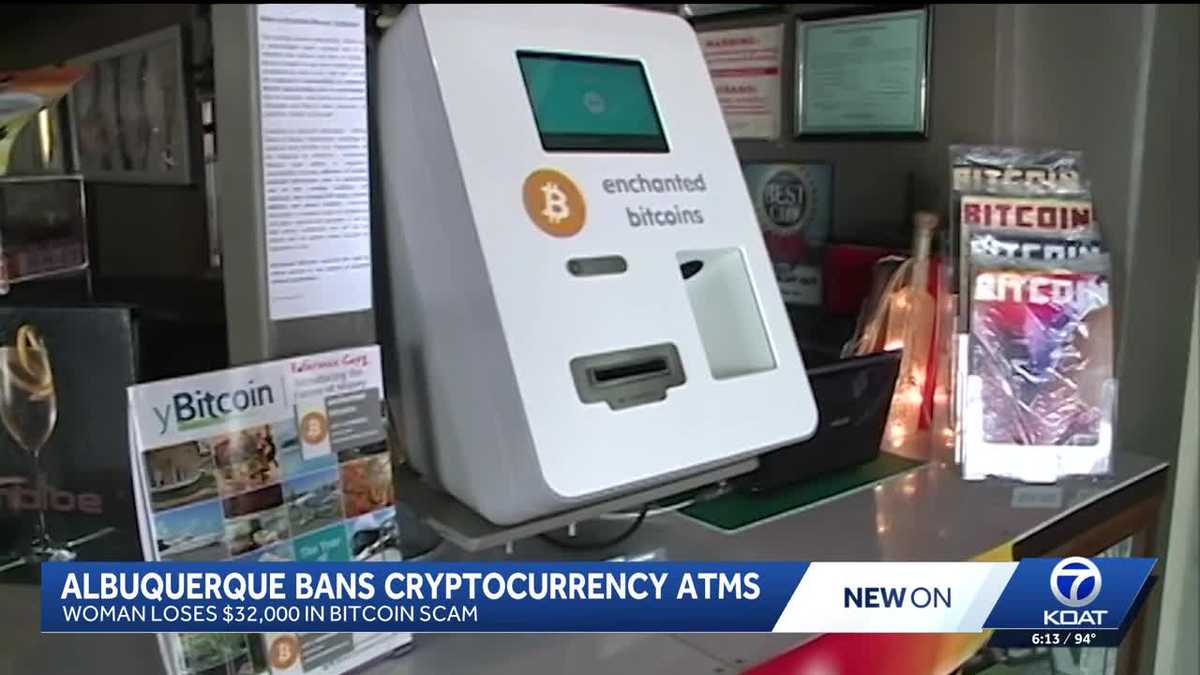
Cryptocurrency ATMs will be prohibited within Albuquerque city limits under a newly approved ordinance aimed at preventing fraud.

Albuquerque city councilors have approved an ordinance banning cryptocurrency ATMs after officials said the machines were used in more than 100 scams across New Mexico last year.
The ordinance prohibits the installation and use of virtual-currency ATMs within Albuquerque city limits.
City officials said an estimated 109 crypto ATM scams were reported statewide in 2025, resulting in approximately $2.2 million in losses.
In March 2025, Albuquerque resident Judy Hartmann-Ortiz said she lost her $32,000 life savings after scammers posed as fraud representatives from Apple and Wells Fargo. They convinced her that her bank account had been hacked.
“I was fearful that I was going to lose every penny I had,” Hartmann-Ortiz said. “And I just thought they were telling the truth.”
Hartmann-Ortiz said the scammers kept her frightened, isolated and on the phone for roughly 13 hours over two days. They instructed her to withdraw her savings and deposit the cash into Bitcoin ATMs, falsely claiming the money would be protected in another account.
“I couldn’t even think beyond anything reasonable, pretty much within the first 20 minutes of them talking to me,” she said.
Hartmann-Ortiz said one conversation with someone she trusted might have prevented her from losing the money.
“If you get a phone call or anything, don’t do anything about it until you call someone you know,” she said.
Community members later raised more than $14,000 to help Hartmann-Ortiz recover part of what she lost.
FBI warns scammers create urgency
The FBI said cryptocurrency schemes can include romance scams and impersonation scams. Fraudsters often create panic before directing victims to withdraw cash and deposit it into a crypto ATM.
“Understand that these scammers often prey on urgency,” FBI Special Agent Tyler Derderian said. “So, if something is needed relatively immediately, it’s a warning sign.”
Cryptocurrency transactions can happen quickly and are often difficult to reverse. Derderian said that makes recovering stolen funds especially challenging.
“These cryptocurrency networks finalize transfers super quick, so that makes it even tougher for authorities or anybody thereafter to follow it and to return funds,” he said.
How to protect yourself from crypto scams
The FBI recommends taking the following precautions:
- Treat pressure to act immediately as a warning sign.
- Independently verify the identity of anyone contacting you.
- Call a trusted person before withdrawing or transferring money.
- Be suspicious of anyone demanding payment through cryptocurrency.
- Remember that law enforcement and government agencies will never require cryptocurrency payments.
- Ask why payment must be made through cryptocurrency instead of a conventional method.
- Do not share personal or financial information with an unsolicited caller.
Suspected fraud can be reported to the FBI by calling 1-800-CALL-FBI or through the FBI’s online tips and Internet Crime Complaint Center services.
Source: www.koat.com