

Don't want to trade it yourself?
Our desk runs DEX portfolios on profit share.
Add to Google Preferred Sources
<a href="https://xpertsstudio.com/solana-is-up-36-in-a-month-eth-is-up-29-xrp-is-up-35-and-bitcoin-is-up-only-20-which-gain-actually-holds/” title=”Solana Is Up 36% in a Month, ETH Is Up 29%, XRP Is Up 35% and Bitcoin Is Up Only 20%. Which Gain Actually Holds?”>Bitcoin‘s struggle to break above $80,000 is increasingly driven by Federal Reserve rate expectations rather than crypto-specific news, according to CoinShares. Research head James Butterfill said investors are “trading the rate path,” with roughly $100 million exiting digital asset products after Fed Chair Kevin Warsh’s hawkish Jackson Hole remarks, followed by a rebound to $1 billion in inflows by Sept. 4 after Governor Christopher Waller signaled openness to holding rates steady. Spot Bitcoin ETFs attracted $968.9 million during the week, with Sept. 3 alone accounting for $863.2 million. CoinShares sees two potential catalysts for a breakout: resolution of Iran-related geopolitical tensions or weakening confidence in U.S. government debt. The U.S. Treasury’s expanded long-dated bond buyback program, running Sept. 9 through Nov. 4, adds another liquidity variable as markets await August inflation data and the Fed’s September decision.
Key Elements
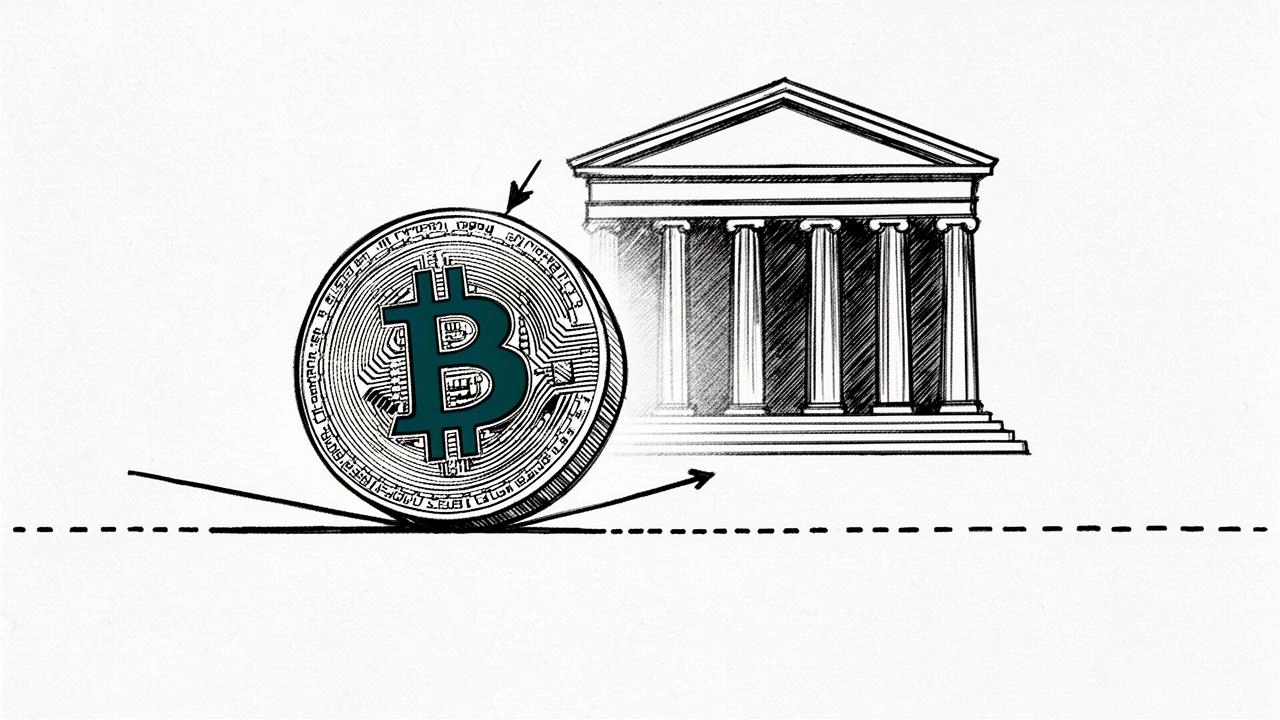
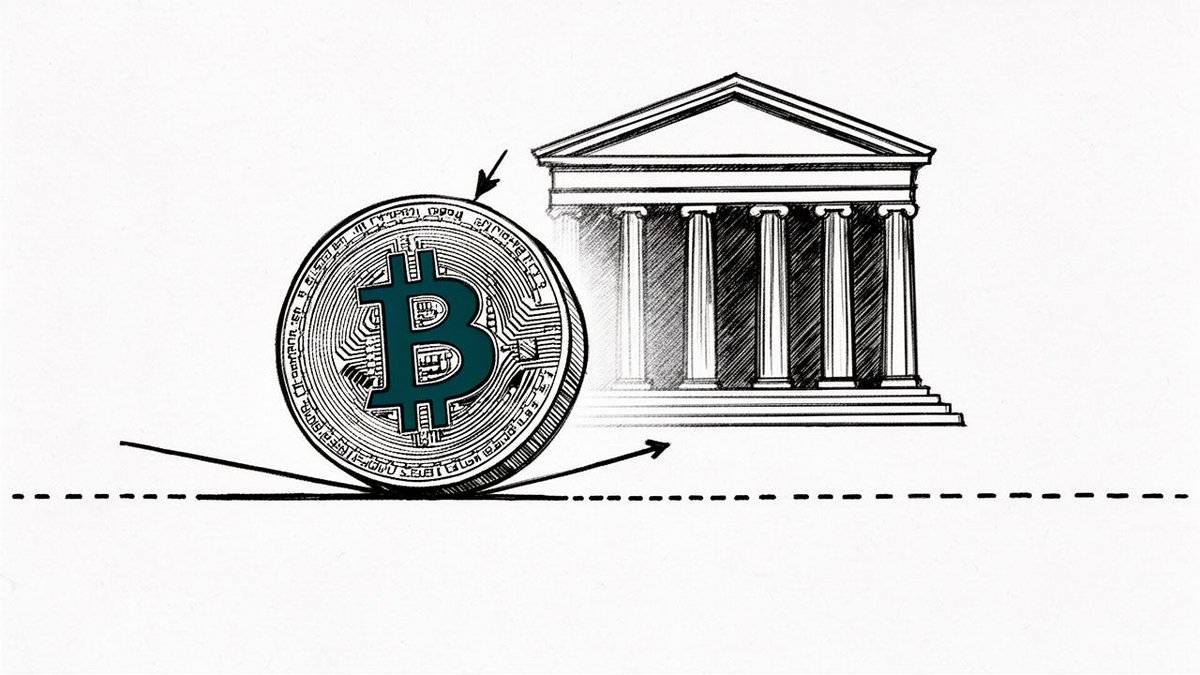
Bitcoin’s inability to mount a sustained rally above $80,000 is now less about crypto fundamentals and more about the Federal Reserve’s interest-rate trajectory, according to a new analysis from CoinShares. The digital asset manager argues that investor flows are tracking shifting expectations for monetary policy rather than any change in conviction about the asset class itself.
The message from James Butterfill, head of research at CoinShares, is blunt: Bitcoin is trading “like gold again,” but monetary policy is effectively placing a ceiling on the price near $80,000. That dynamic was on full display in late August, when remarks from Fed Chair Kevin Warsh at the Jackson Hole symposium triggered roughly $100 million in outflows from digital asset investment products. Warsh’s assessment that inflation progress remained modest prompted markets to quickly raise the odds of a September rate hike.
The reversal came just days later. Fed Governor Christopher Waller signaled that he saw signs of disinflation in recent data and would be inclined to support holding rates steady in September if the trend continued. That shift in tone was enough to bring investors back. Inflows into digital asset products reached approximately $1 billion by Sept. 4 “Investors are not exiting the asset class, they are trading the rate path,” Butterfill said
Flows Track the Fed’s Next Move
CME Group’s FedWatch tool showed Fed Funds futures pricing in roughly a 60% chance of a rate hike at the upcoming FOMC meeting, a probability that CoinShares considers overly aggressive given the mixed signals coming from within the central bank. The divergence between Warsh’s hawkish stance on inflation and Waller’s more dovish read on recent data has created an environment where every macroeconomic release carries outsized weight for crypto positioning.
The flow data tells the story clearly. From August 31 to September 4, U.S. spot Bitcoin exchange-traded funds attracted $968.9 million, while spot Ethereum ETFs pulled in $130.3 million. The combined weekly inflow of about $1.1 billion marked a 32.8% decline from the prior week, but the distribution within that period was telling. September 3 alone accounted for $863.2 million in inflows — 78.5% of the week’s total — representing the largest daily net entry into Bitcoin and Ethereum ETFs since January 14.
| Metric | Value |
|---|---|
| Weekly BTC ETF inflows (Aug 31 – Sep 4) | $968.9 million |
| Weekly ETH ETF inflows (Aug 31 – Sep 4) | $130.3 million |
| Combined weekly inflows | $1.1 billion |
| Week-over-week change | -32.8% |
| Sept. 3 single-day inflows | $863.2 million |
| Share of weekly total on Sept. 3 | 78.5% |
Note: Figures reflect U.S. spot ETF flows for the period ending September 4, 2026.
Bitcoin’s dominance within the flow picture is strengthening. Ethereum’s weekly inflows dropped 82.3%, and its contribution to total inflows shrank dramatically from 45% to just 11.9%. Despite the slowdown in ETF entries, both assets appreciated during the period — Bitcoin rose 2.77% and Ethereum gained 2.60%, based on CoinMarketCap opening prices — after both closed the previous week in negative territory.
Spot Demand Rises Without Leverage
One notable feature of the current market structure is that spot demand is growing while the derivatives market remains stable. Open positions in Bitcoin futures fell 0.6% to $53.15 billion in the week ending September 6, and the funding rate declined from 0.54 to 0.50 basis points. Yet net taker flow during the first three trading days of September was predominantly buy-oriented, totaling $294 million. That combination — rising spot buying without a corresponding increase in leverage — suggests genuine accumulation rather than speculative froth.
Butterfill argues that for Bitcoin to break above $80,000 in a strong and lasting way, the macroeconomic backdrop needs to shift materially. He identifies two scenarios that could change the calculus. The first is a resolution of geopolitical tensions involving Iran, which would ease pressure on energy prices and help bring down inflation and interest-rate expectations. The second is a further erosion of confidence in U.S. government debt, which could accelerate investor demand for decentralized stores of value like Bitcoin.
Absent either of those developments, CoinShares expects Bitcoin to remain range-bound. The August inflation data and the Fed’s September meeting are therefore pivotal. The inflation print will test whether Waller’s disinflation thesis holds up, while the FOMC decision will reveal how the central bank weighs its dual mandate of price stability and maximum employment.
Treasury Buybacks Add a Liquidity Wildcard
The Fed is not the only actor shaping the liquidity environment. The U.S. Treasury announced last month that it would increase the transaction amount for certain long-dated bond buybacks from $2 billion to $4 billion per operation. The expanded program is scheduled to run from September 9 through November 4. Following the initial announcement, Bitcoin surged from slightly above $60,000 to over $80,000.
Ophelia Snyder, co-founder of 21Shares, argued in her Substack newsletter that the rally had “less to do with crypto-specific catalysts” and more to do with investors adjusting their de-risking exposure to the U.S. specifically. The Treasury announcement coincided with equity sell-offs and shifts across the yield curve, alongside volatility in oil and equity pricing tied to developments involving Iran and how markets interpreted diplomatic prospects.
Standard Chartered has added to the bullish case, forecasting that Bitcoin could reach $100,000 before year-end, with the bond-buyback backdrop cited as part of the broader driver set for liquidity and risk positioning.
The practical takeaway for market participants is that Bitcoin’s near-term trading behavior may continue to track rate expectations more than internal crypto fundamentals. The overlap between the Treasury buyback schedule and the Fed’s September decision creates a window where liquidity signals and monetary policy signals will interact in ways that could either consolidate or challenge Bitcoin’s attempt to hold above $80,000. The question now is whether incoming inflation data reinforces steadier policy expectations — or forces another shift in the rate path that crypto flows have shown they are willing to respond to immediately.
Once added, BigGo Finance appears first in Google Search Top Stories, so you get the broadest, most up-to-the-minute, and most comprehensive global financial news first.
Source: finance.biggo.com