

Don't want to trade it yourself?
Our desk runs DEX portfolios on profit share.
| Getting your Trinity Audio player ready… |
FromRussia’s new licensing regime toThailand’s push for regulated overseas derivatives and the G20’s renewed focus on global standards, policymakers are moving toward clearer and largely supportive rules for digital assets.
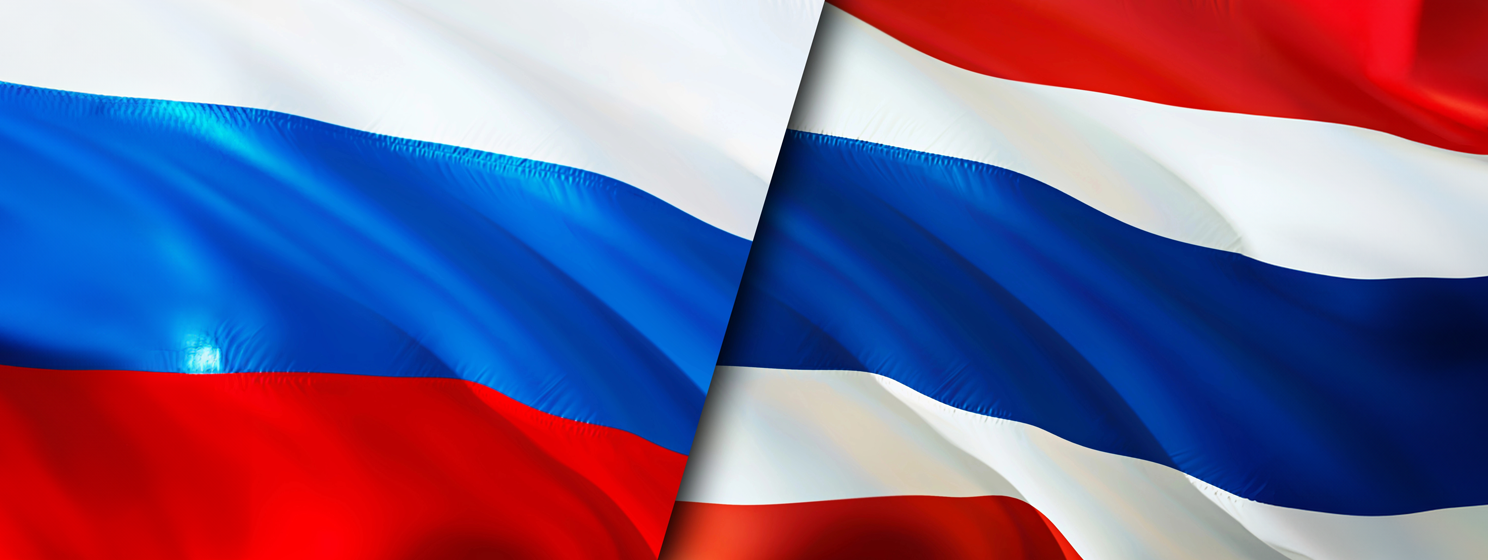
The global regulatory landscape for digital assets continues to take shape, this week with Russia’s first comprehensive legal framework for digital assets coming into effect—bringing exchanges, brokers, custodians, and other market participants under a formal regulatory regime—just as Thailand’s regulator proposed rules that would broaden access to overseas digital-asset derivatives while imposing safeguards based on product risk and investor type.
At the same time, on the global stage, G20 finance ministers and central bank governors reaffirmed the need for clear regulatory and supervisory frameworks that support digital-asset innovation while protecting financial stability and strengthening anti-money laundering (AML) and counter-terrorist financing (CTF) measures.
Russia’s new crypto framework
Russia’s first comprehensive legal framework for governing digital asset markets came into effect on September 1, bringing a range of new obligations and protections for the sector, including a licensing regime and rules for the operation of digital asset exchanges, digital depositories, and market participants.
Despite ushering in a new era for digital assets in the country, access levels depend on investor status and mandatory testing. The framework allows retail buyers to trade major digital assets, but using digital currency as a means of payment for goods, works, or services within Russia generally remains prohibited, subject to statutory exceptions.
Previously, Russia’s digital asset regime was fragmented, with regulation largely relying on tax, AML, mining, and digital financial asset laws, rather than a unified framework. This left a certain amount of legal uncertainty, and at a time of growing interest in the digital asset space in Russia, as state and citizens alike increasingly turned to crypto to circumvent unprecedented international sanctions on the country.
The new regime was established by the “On Digital Currencies and Digital Rights” bill, which was adopted by Russia’s State Duma on July 21, approved by the Federation Council on July 24, and signed into law by President Vladimir Putin on August 4.
The law entered into force on September 1, 2026. Individual provisions have different effective dates, with legislation containing transitional arrangements for existing market participants to obtain the required regulatory status and, where applicable, be included in the relevant registers. Certain organizations operating under existing experimental regimes have until September 1, 2027, to apply for inclusion in the new regulatory registers and, once admitted, must bring their activities into compliance by that date. Other transitional provisions extend into 2028.
Among the standout features of the new framework is a registration and regulatory regime for digital-asset exchanges, brokers, custodians, and digital depositories, all of which will operate under the supervision of the Bank of Russia (BOR)—the primary regulator for the digital currency sector under the new framework.
The central bank will maintain the registries of approved market participants and oversee compliance, giving the government significant influence over the domestic digital asset industry. Only organizations included in the special registry will be permitted to engage in digital currency exchange activities.
Retail participation will be tightly regulated, with non-qualified investors subject to annual purchase limits of approximately 300,000 rubles (around $3,453) per licensed intermediary, while qualified investors are permitted to purchase without such limits.
While the law maintains the current ban on using digital currencies and digital rights as a means of payment within Russia, there are several exceptions provided, including for settlements under foreign trade contracts between residents and non-residents; when using digital currencies obtained through mining; and for settlements involving securities, other digital currencies, or digital rights.
In other words, the bill preserves the ruble as Russia’s sole legal tender while allowing digital assets to be used for investment and selected cross-border transactions.
While Russia’s framework marks a move toward comprehensive domestic oversight of the digital-asset market, Thailand is taking a more targeted approach, seeking to expand investment opportunities while calibrating access and protections according to the risks posed by different products.
Thailand’s regulator backs overseas digital asset derivatives
The Securities and Exchange Commission (SEC) of Thailand announced on August 31 that it is seeking public comments on proposed amendments to allow intermediaries to facilitate investments overseas in digital asset derivatives.
Currently, intermediaries are permitted to facilitate investment in overseas derivatives for retail investors and high net worth investors only where the products have characteristics and conditions similar to those of products tradable in Thailand.
However, as overseas digital asset derivatives vary in form and risk level, the SEC proposed amendments to the regulations that account for the nature of the products and the need for adequate investor protection.
Specifically, the SEC said that: “The products must have key characteristics and conditions consistent with those of DA [digital asset] derivatives traded in Thailand, such as the underlying digital assets, contract maturity, leverage, and delivery or settlement methods.”
In addition, the products must be traded on a derivatives exchange where clearing is conducted through a central counterparty, and the derivatives exchange must be supervised by a regulatory authority that has been fully accepted by the International Organization of Securities Commissions Multilateral Memorandum of Understanding (IOSCO MMoU)—the international benchmark and global framework for information-sharing and cross-border cooperation among securities regulators—or be a member of the World Federation of Exchanges (WFE).
For overseas digital asset derivatives that don’t meet these various characteristics, business operators may provide services only to institutional investors, “given that such investors are more capable of assessing and managing the risks of complex or high-risk products,” the SEC said.
Stakeholders and interested parties were invited to submit comments on the proposed regulatory amendment up to September 30.
The consultation is the latest in a series launched by the SEC as it continues to work towards creating a regulatory framework for digital assets in Thailand.
In August, the regulator sought feedback on draft regulations governing the establishment and regulatory framework for crypto exchange-traded funds (cETFs) in Thailand and proposed principles for revising the qualification requirements for foreign digital asset custodians engaged by mutual funds and private funds investing in digital assets.
“The proposals aim to broaden investment opportunities for investors, enhance the capabilities of business operators, promote product diversity in Thailand’s capital market, and establish consistent standards for the offshore custody of digital assets across relevant fund types,” the regulator said.
These national-level initiatives in Russia and Thailand reflect a broader, universal challenge facing many nations worldwide, given the rapid growth of the digital asset sector over the past few years: how to support and expand the sector without compromising investor protection, financial stability, or the integrity of the financial system.
This dilemma has also been at the forefront of international discussions.
On August 31, G20 finance ministers and central bank governors assembled in Asheville, North Carolina, to advance the G20’s finance priorities for 2026, which included a pledge to set out clearer rules to support digital asset innovation.
In the G20 chair’s statement—issued by the U.S. Treasury, as the U.S. holds the G20 presidency for 2026—the international body said:
“We recognize the transformative role that digital financial innovation, including digital assets, can play in supporting broad-based economic growth and the key role of the private sector in driving this innovation. We also recognize the importance of safeguarding financial stability and maintaining trust in the monetary and payment system in the face of this transformation.”
In this vein, the G20 committed to advancing “responsible and effective regulatory and supervisory frameworks that preserve financial stability, support economic growth, and establish clear pathways for sound digital financial and digital assets innovation, while considering cross-border opportunities and challenges as appropriate.”
The G20 finance ministers and central bank governors also reaffirmed their shared commitment to supporting the Financial Action Task Force (FATF) in overseeing the implementation of its standards and recommendations to combat money laundering, terrorism financing, and proliferation financing, while calling on the FATF to take action to ensure that jurisdictions with significant digital asset use are effectively implementing said standards.
Specifically, the FATF Recommendations 15 and 16 set the global AML/CTF standards for emerging technologies, virtual assets, and payment transparency.
Recommendation 15 deals with AML/CTF requirements for new payment methods, extended to digital assets and VASPs, which includes conducting comprehensive customer due diligence measures, maintaining accurate and up-to-date transaction records, and reporting suspicious activities to the relevant authorities; Recommendation 16, the so-called ‘Crypto Travel Rule,’ targets issues around fund transfers, including information sharing, requiring virtual asset service providers (VASPs)—such as exchanges, custodial solutions, and financial service providers—to obtain, hold, and transmit specific originator and beneficiary information immediately and securely when transferring digital assets.
In terms of the latter, according to a FATF update from June 2025, 99 jurisdictions had passed, or were in the process of passing, legislation to implement the Travel Rule. Since then, jurisdictions have also continued to make progress in implementing Recommendation 15, including by conducting risk assessments, developing regulatory approaches, licensing or registering VASPs, and advancing supervisory and enforcement action.
However, significant gaps remain in translating risk assessments into effective mitigation measures, operationalizing licensing or registration frameworks in practice, identifying persons or entities conducting VASP activities, and ensuring effective risk-based supervision and enforcement.
Nevertheless, taken together, the developments in Russia, Thailand, and the G20 point to a digital-asset sector receiving increasing regulatory backing around the world, accompanied by a healthy dose of caution about maintaining investor, market, and AML/CFT protections.
Russia’s framework establishes formal oversight of key market participants while maintaining significant restrictions on the use of digital assets for payments; Thailand’s proposals seek to accommodate greater access to overseas products while differentiating between retail and institutional investors according to risk; and, at the international level, the G20’s emphasis on responsible regulation, financial stability and implementation of FATF standards underscores that concerns remain while demonstrating the growing importance of cross-border coordination.
The result of such developments is likely to be a more mature regulatory environment in the long term, but one in which differences between national regimes—and the challenges of harmonizing them—remain significant in the short term.
Source: coingeek.com
2 Comments
Pingback: Key law enforcement group flips on crypto bill – xpertsstudio
Pingback: Can ETH Clear $2,560 After Thursday’s 5% Rally? – xpertsstudio