


Don't want to trade it yourself?
Our desk runs DEX portfolios on profit share.

MentionedXRP$1.34-1.89%ETH$2,391.18-1.29%SOL$99.18-1.33%
The crypto market started September under pressure, with more than $369 million in leveraged positions wiped out as <a href="https://xpertsstudio.com/el-salvadors-bitcoin-stash-grows-to-7762-btc-despite-imf-reservations/” title=”El Salvador's Bitcoin Stash Grows to 7,762 BTC Despite IMF Reservations”>Bitcoin, Ethereum, Solana and XRP fell. The sell off came alongside rising oil prices, higher Treasury yields and growing expectations for tighter U.S. monetary policy.
At the same time, institutional flows told a different story. While U.S. spot Bitcoin ETFs recorded $236.46 million in net outflows on September 1, spot Ethereum, Solana and XRP ETFs attracted $10.95 million, $10.19 million and $14.38 million, respectively.
The divergence suggests that the broader market pullback has not completely erased institutional interest in major altcoins.
Crypto liquidations hit 85,000 traders
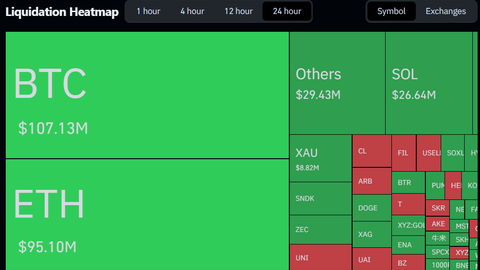
According to CoinGlass data cited in market reports, total crypto derivatives liquidations reached approximately $336.85 million on September 2.
Long positions accounted for about $254.57 million of the losses, while short positions represented $82.30 million. More than 85,000 leveraged traders had their positions closed as prices moved sharply lower.
Bitcoin accounted for the largest share of the liquidation wave, with about $107.13 million in positions wiped out as BTC fell toward the $77,000 – $78,000 area.
Ethereum suffered roughly $95.10 million in liquidations as ETH slipped toward $2,420. One of the largest individual liquidations was an approximately $11.99 million position on Binance. Solana also came under pressure, with roughly $29.43 million in liquidations as SOL moved around the $100 level.
XRP was also caught in the broader deleveraging, even though its institutional backdrop remained relatively strong.
The combination of falling prices and heavy long-position liquidations shows how quickly leverage can amplify a market decline. Traders who entered September expecting August’s rally to continue were forced to close positions as support levels broke.
XRP ETF demand remains positive despite the sell off
XRP’s price weakness stands in contrast to the continued inflows into its U.S. spot ETFs.
XRP ETFs recorded $14.38 million in net inflows on September 1, extending an inflow streak that has now reached 11 sessions. Ethereum ETFs attracted $10.95 million, while Solana ETFs added $10.19 million.
Over the previous 11 days, XRP ETFs had accumulated roughly $170 million in net inflows, providing a notable counterpoint to the short-term price decline.
This follows growing institutional interest in XRP investment products, including recent disclosures involving major financial institutions. We previously reported on Goldman Sachs’ $86.5 million XRP ETF exposure, highlighting how traditional financial firms are increasingly gaining exposure to the asset through regulated products.
The latest ETF figures therefore point to a split market: leveraged traders are cutting exposure as prices fall, while some institutional investors continue adding through regulated vehicles.
Oil and Treasury yields add pressure to risk assets
The liquidation wave did not happen in isolation.
Renewed geopolitical tensions pushed crude oil prices higher, with Brent crude moving above $94 per barrel and WTI trading around $90. At the same time, the U.S. 10-year Treasury yield climbed toward 4.8%, reaching its highest levels in years.
Higher oil prices are particularly important because they can increase inflation expectations. If inflation remains elevated, investors may expect the Federal Reserve to keep monetary policy tighter for longer or even raise rates.
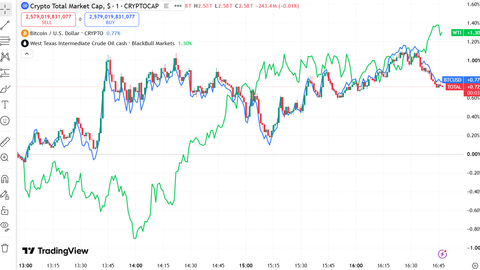
Markets are now pricing a significantly higher probability of a September rate hike. Some market measures put the probability around 65% 70%, although that expectation can change as additional economic data arrives.
That environment tends to weigh on speculative assets such as cryptocurrencies because higher bond yields make relatively safer fixed-income investments more attractive while increasing the discount rate applied to risk assets.
Our latest crypto market downturn analysis also highlighted the same combination of macro pressure and weakening market structure, while noting that Bitcoin’s long-term holders have recently started moving back toward accumulation.
Related:Why Is the Crypto Market Down Today? Bitcoin Falls as Oil Surges
Not every crypto asset is falling
Despite the broad market weakness, several cryptocurrencies have moved against the trend.
Filecoin gained roughly 15% over 24 hours, while Uniswap advanced by more than 10% during the same period. Filecoin’s move was accompanied by increased derivatives activity and renewed interest in decentralized storage and AI infrastructure.
Uniswap has also benefited from growing activity around Robinhood Chain, where multiple versions of the protocol and UniswapX are being used. The move shows that crypto’s current weakness is not affecting every sector equally.
This divergence is important. Rather than a uniform exit from digital assets, current trading appears to involve significant capital rotation between Bitcoin, major altcoins and specific narratives.
SEC moves to modernize blockchain market infrastructure
While crypto traders were dealing with liquidations, the SEC was advancing a separate development that could have major implications for blockchain-based finance.
On September 1, the SEC proposed modernizing its rules governing registered transfer agents, which play a central role in maintaining securities ownership records and supporting settlement infrastructure.
The proposal specifically recognizes the increasing use of electronic systems and blockchain technology in securities offerings and share transfers. The SEC said its existing transfer agent rules have not been substantively updated since the late 1970s and early 1980s.
The proposed changes would also address risks associated with distributed ledger technology, tokenized securities and increasingly automated systems.
That matters because transfer agents sit between traditional securities infrastructure and the emerging tokenized-asset market. As more financial assets move onto blockchains, the systems responsible for recording ownership and processing transfers will also need to operate with blockchain-based infrastructure.
The SEC’s proposal does not itself create a new tokenization market, but it signals that blockchain technology is increasingly being incorporated into the regulatory framework for traditional securities.
SEC prepares for 24 hour stock trading
The regulator is also preparing for another major shift that could narrow one of crypto’s traditional advantages: continuous trading.
The SEC has scheduled a September 17 roundtable focused on preparations for 24-hour trading in U.S. equity markets. The discussion will cover exchange and broker-dealer readiness, overnight surveillance, closing-price processes, clearing and settlement, operational resilience and investor protection.
Representatives from firms including BlackRock, Robinhood, Nasdaq, NYSE, Citadel Securities, DTCC and Interactive Brokers are among the participants listed across the event’s panels.
For crypto markets, the development is significant.
Cryptocurrency markets have long operated around the clock, seven days a week. If traditional equities increasingly adopt extended or near-continuous trading, the distinction between crypto native and traditional market infrastructure becomes less pronounced.
The bigger transformation could come from combining continuous trading with tokenized securities and blockchain-based settlement. Instead of simply making stock markets available for longer hours, financial institutions are increasingly exploring infrastructure that can move ownership and settlement onto digital rails.
Traditional finance is moving closer to blockchain
The SEC’s regulatory changes come as traditional financial institutions continue experimenting with tokenization.
The London Stock Exchange Group recently announced plans to introduce tokenized U.K. shares through a partnership with Payward, the parent company of Kraken. The initiative is tied to a planned 24-hour trading venue and is expected to begin rolling out from 2027, subject to regulatory approval.
The developments show that blockchain adoption is moving beyond cryptocurrency exchanges.
Traditional exchanges, asset managers and financial infrastructure providers are increasingly looking at blockchains as a way to improve settlement, expand trading hours and create new forms of digital ownership.
ETF Store President Nate Geraci also highlighted the broader shift, arguing that the debate is increasingly about how blockchain and digital assets integrate with existing financial systems rather than whether they will remain part of the financial landscape.
September brings another test for crypto
The immediate focus for crypto traders remains price stability.
September has historically been a difficult month for Bitcoin, while the latest oil shock and rising Treasury yields have created another headwind for risk assets. The market is also preparing for fresh U.S. employment data, which could influence expectations for the Federal Reserve’s September meeting.
For now, the market is sending mixed signals.
More than $369 million in leveraged positions have been liquidated, showing that short-term traders remain vulnerable to further volatility. Yet Ethereum, Solana and XRP ETFs are still attracting fresh capital, suggesting that some investors continue to view the recent weakness as a temporary market pullback rather than a fundamental exit from crypto.
The next major test will be whether institutional inflows can continue while leverage resets. If they do, the current liquidation wave could eventually help create a cleaner market structure. If macro pressure intensifies, however, the combination of high yields, expensive oil and leveraged positions could keep volatility elevated through September.
Source: www.altcoinbuzz.io
4 Comments
Pingback: Crypto stock perpetual futures hit $665B record as 3 stocks own half the volume – xpertsstudio
Pingback: Bitcoin Price Rally Hid a 60,000 BTC Whale Buying Spree – xpertsstudio
Pingback: Capital B aims to add 376 BTC to bitcoin treasury following $8.8 million Adam Back investment – xpertsstudio
Pingback: Bitcoin enters September with $1.2B in selling – xpertsstudio