

Don't want to trade it yourself?
Our desk runs DEX portfolios on profit share.
Crypto Backed Loans allow borrowers to use cryptocurrency as collateral rather than selling their crypto holdings. Loans can be taken in fiat currency or stablecoins while the borrower retains ownership of their crypto. In both centralized lending and DeFi protocols, this may involve the loan being repaid and the collateral released.

350+ assets as collateral — LTV up to 90% — funds in 10 minutes
- APR from 11.95%
- 0% origination & liquidation fees
- No rehypothecation · Lending API
What Are Crypto-Backed Loans?
How Crypto Loans Work
Unlike customary loans, which depend on the borrower’s credit history, crypto loans are underwritten according to the value of the collateral pledged and company policy, resulting in shorter approval and funding times.
A Bitcoin loan works on the same principle when BTC▲$62,630.00 is pledged as collateral.
Borrowing Against Altcoins Without Selling
Borrowing against altcoins can enable investors to achieve liquidity while holding their investments, allowing them to unlock value on their long-term crypto holdings in anticipation of higher prices.
Investors who instead want to borrow against Bitcoin can use the same approach on platforms that accept BTC collateral.
The support of altcoin-backed loans varies by platform. Centralized lenders curate lists of allowable collateral. For DeFi protocols, collateral assets are determined by governance.
Understanding Loan-to-Value (LTV) and Liquidation
Loan-to-Value (LTV) is the amount of a loan divided by the value of the collateral. A high LTV leaves less room for liquidation, while a low LTV reduces the chance of liquidation in a declining market.
If the value of the collateral falls below the required LTV threshold, the borrower has to add more collateral or make a partial repayment on the loan. These thresholds are different for each crypto lending provider, and should be reviewed on a product-by-product basis.
Top Crypto Lending Platforms for Altcoin and Bitcoin Loans
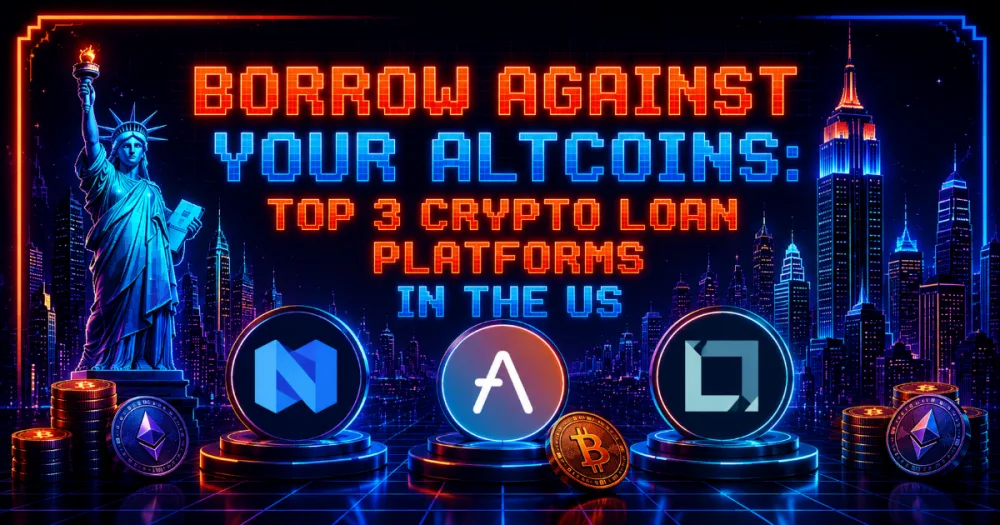
Nexo — Best Overall for Altcoin-Backed Loans
Nexo loans are overcollateralized by cryptocurrencies. They allow users to borrow money against a digital asset without selling it. They also offer a revolving line of credit, flexible repayment periods and the ability to repay in fiat or one of the supported stablecoins, suitable for crypto-portfolio borrowers.
Nexo accepts more than 100 collateral assets, placing it ahead of other services for people who want to borrow against crypto assets other than Bitcoin, though products available within the United States are regulated.
Its broad collateral support also places Nexo among the top crypto lending platforms for borrowers who hold multiple digital assets.
Aave — Best Decentralized Crypto Lending Protocol
Aave loans are made through a trustless smart contract without the need for an intermediary. Users can deposit supported crypto assets into liquidity pools and borrow against these assets, retaining ownership in their wallet. Aave is one of the largest DeFi crypto loans protocols.
Interest rates on Aave are market-driven, determined by supply and demand. Borrowers who wish to remain in a loan are responsible for their collateral ratio, as collaterals will be liquidated automatically if a liquidation ratio is exceeded, by protocol.
Ledn crypto loans are a simple Bitcoin collateralized lending product. The company publishes Open Book Reports and partners with independent qualified custodians, allowing the company to provide a high level of operational transparency.
For borrowers specifically comparing Bitcoin loans, this narrower collateral focus can make the product easier to evaluate.
Loan pricing, APR ranges, and repayment terms are published and disclosed in advance. This allows borrowers to know the cost of the Bitcoin loan before borrowing. Product availability and supported assets, can vary by jurisdiction.
| Platform | Best For | Collateral | Loan Type | Key Advantage |
| Nexo | Altcoin-backed borrowing | 100+ supported crypto assets | CeFi | Flexible repayment, revolving credit line, broad collateral support |
| Aave | Decentralized borrowing | Supported on-chain crypto assets | DeFi | Smart contract lending, self-custody, market-based interest rates |
| Ledn | Transparent loan terms | Primarily Bitcoin | CeFi | Public loan terms, qualified custodians, Open Book Reports |
Crypto Loan Platforms Compared
When comparing the best crypto lending platforms, borrowers should consider borrowing costs, LTV requirements, collateral support, custody, and repayment terms.
Interest Rates and APR
The interest rates are determined by factors such as the crypto lender, collateral amount, the LTV, and prevailing market conditions. Centralized crypto lenders typically have fixed or tiered APR, while DeFi protocols tend to use variable interest rates determined by the supply and demand of crypto assets in liquidity pools.
Borrowers need to consider more than just the base rate; origination fees, loyalty requirements, or variable-rate structures may also exist, which would affect the overall cost of borrowing.
The total cost of a crypto loan can therefore differ significantly even when two platforms advertise similar headline interest rates.
Maximum LTV Ratios
The maximum Loan-to-Value ratio determines how much users can borrow against crypto relative to the value of their collateral. The higher the LTV, the more can be borrowed, but the less tolerant a position is to a price drop.
Each asset has a maximum LTV for borrowing. There are lower LTVs for more volatile cryptocurrencies. Stablecoins qualify for LTVs that are generally higher than most altcoins or Bitcoin.
Supported Altcoins
Supported assets are among the most important differences between the best crypto loan platforms. Some lenders accept dozens of cryptocurrencies as collateral. Others also accept Bitcoin, along with a handful of other established digital currencies.
Borrowers may want to check whether their desired collateral and loan currency are supported, which varies by platform and jurisdiction.
Loan Terms and Repayment Options
Most crypto loans USA providers give you the opportunity to repay your loan whenever you want. Their policies do not have prepayment penalties. Each one has different currencies, minimum borrow amounts, and repayment methods.
Some lenders use an open, revolving line of credit requiring no monthly payments, while others offer loans with a fixed end date and payment schedule. Review these terms before taking out a loan.
Custodial vs Non-Custodial Lending
Custodial lending is when users hand over collateral to a centralized provider who retains custody for the duration of the loan. Customer support and simplified onboarding processes make custodial lending appealing. However, these advantages come at the expense of relying on the lender’s infrastructure and risk controls.
In non-custodial lending, borrowers interact directly with lenders using smart contracts through self-custodied crypto wallets. Crypto lending platforms built on DeFi protocols implement borrowing, repayment, and liquidation criteria and execute trades as defined by the protocol.
Different crypto lending platforms therefore expose borrowers to different custody and execution risks.
How to Borrow Against Altcoins
Choose a Crypto Lending Platform
Search for a crypto loan platforms that accept your preferred collateral, loan currency, and jurisdiction. The crypto assets accepted, loan-to-value (LTV) ratio, interest rate, custody model, and availability in the US are among the factors to consider.
Choosing the right crypto lending platform starts with confirming that it supports both the collateral you plan to pledge and the funds you want to borrow.
Deposit Crypto as Collateral
Once you have an account created and a supported wallet connected, you can deposit eligible cryptocurrencies to receive a loan. The amount of the loan is based on the Loan-to-Value ratio for the cryptocurrency, which is lower for more volatile cryptocurrencies than for stablecoins.
Receive Funds in USD or Stablecoins
Once the collateral has been confirmed, a borrower can take out a loan back to fiat currency (if supported) or a stablecoin such as USDC▲$0.9999 or USDT▲$0.9991. Because the loan is secured against crypto assets, lenders and exchanges will often allow borrowers to avoid a credit check.
Monitor Collateral to Avoid Liquidation
Throughout the lifetime of the loan, and especially when market volatility is high, the collateral position is monitored. If the LTV ratio nears this threshold, collateral can be added or the loan can be partially paid back.
Repay the Loan and Withdraw Crypto
Most crypto lending platforms enable users to repay their loans (partially or fully) in any supported cryptocurrency, stablecoin, or other method at any time, with pledged collateral being made available for withdrawal following the repayment of the outstanding loan and interest.
| Step | What to Do | Why It Matters |
| Choose a Platform | Compare supported collateral, loan terms, LTV, and availability in your jurisdiction | Ensures the service matches your borrowing needs |
| Deposit Collateral | Transfer eligible cryptocurrency to secure the loan | Determines the maximum amount you can borrow |
| Receive Loan Funds | Select fiat currency or supported stablecoins, if available | Provides liquidity without selling your crypto |
| Monitor LTV | Track collateral value and respond to margin calls if needed | Helps reduce the risk of liquidation |
| Repay the Loan | Repay the outstanding balance and interest | Unlocks and returns your pledged collateral |
Benefits of Crypto Backed Loans
Access Liquidity Without Selling Assets
A central component of crypto backed loans is that the user does not have to liquidate their own digital assets. Crypto-backed loans allow users to raise liquidity without selling their digital assets and incurring a capital gains tax event.
Once the loan is repaid, the collateral is then released to the user, with tax implications varying across the individual borrower and jurisdiction.
No Traditional Credit Check
In most cases, crypto loans are issued against the value of the collateral and do not rely on the credit rating of the borrower. As collateralization makes lending decisions less risky, they can be made faster. Identity verification or compliance checks may still be needed.
Keep Exposure to Long-Term Price Growth
This allows long-term investors to maintain exposure to price movements without the need to liquidate part of their holdings to access cash at times of need. Investors may also benefit from price movement when collateral value increases while meeting their LTV requirement.
Fast Funding Compared to Bank Loans
Many crypto loan platforms have faster application times due to their reliance on collateral rather than an underwriting process. These loans are generally disbursedender once the collateral has been deposited
Risks of Crypto Loans
Liquidation During Market Volatility
The main risk with crypto loans is liquidation due to sudden price drops. If the market value of the crypto collateral falls below a platform’s required collateralization ratio, a borrower may need to post additional collateral or pay down part of the loan. Otherwise, the assets are automatically liquidated to restore the required ratio.
Counterparty Risk
Centralized lenders also expect the platform to keep collateral in custody and the borrower to remain solvent throughout the loan.
Following the collapse of several large crypto lending companies in recent years, counterparty risk has become a major focus, with custody practices and proof of reserves disclosures now a major consideration when selecting a cryptocurrency lending platform.
Smart Contract Risk for DeFi Loans
DeFi crypto loans allow for the elimination of intermediaries through smart contracts. Risks include software bugs, oracle issues, governance changes, or exploits affecting the collateral and liquidation process. Additionally, transactions are irreversible once on-chain execution has occurred.
Regulatory Considerations for US Borrowers
As crypto lending products must comply with federal and state regulations in the US, the products offered may differ between jurisdictions.
Borrowers should check that a lender is licensed to operate in their state and understand the identity verification, compliance, and tax requirements.
CeFi vs DeFi Crypto Loans
Centralized Lending Platforms
This is often the most common type of crypto loan USA due to centralized lenders’ custody of collateral and issuing loans through a regulated business providing a better user experience, customer service, and, in some cases, fiat payouts.
Decentralized Lending Protocols
In contrast, decentralized protocols rely on smart contracts to borrow, repay, and liquidate loans, while users retain custody of their wallets. Interest rates and liquidity follow on-chain market dynamics, resulting in DeFi crypto loans being more transparent but also more reliant on the underlying protocol’s mechanics.
Which Option Is Better for Altcoin Holders?
Borrowing against the altcoins market collateral is not universal. CeFi markets usually offer more familiar features such as fiat settlement and customer support, while DeFi markets use self-custody wallets, on-chain activity, and open access to supported collateral.
Ultimately, which option is better for you will depend on your needs and goals as the borrower, including the collateral accepted, custody options, fees, and your risk appetite. You can compare these factors and choose one of the best crypto loan platforms that works for you.
| Feature | CeFi Lending | DeFi Lending |
| Custody | Platform holds collateral | User keeps control through self-custody wallets |
| Loan Management | Managed by a centralized provider | Executed automatically by smart contracts |
| Interest Rates | Often fixed or platform-based | Market-driven based on on-chain supply and demand |
| Customer Support | Available | Typically community- or documentation-based |
| Fiat Availability | Often supported | Usually crypto and stablecoins only |
| Best Suited For | Users seeking convenience and support | Users prioritizing transparency and self-custody |
How to Choose the Right Crypto Loan Platform
The best crypto lending platform for one borrower may not be the best choice for another because collateral support, loan costs, custody, and jurisdictional availability differ.
Supported Cryptocurrencies
The first thing to check is whether or not the platform accepts the cryptocurrency you want to use as collateral. Some platforms accept a range of different cryptocurrencies, while others only accept Bitcoin or a handful of different tokens. This is especially true for borrowers looking for altcoin-backed loans secured, not BTC.
Interest Rates and Fees
Instead of just looking at the advertised interest rate, you should compare the total cost of the loan. The best platforms may offer different APRs depending on the collateral, LTV, loyalty program, loan amount, etc. They may also incur other charges, such as an origination fee.
Security and Asset Custody
Another key consideration for crypto lending platforms is the custody of the collateral. Centralized crypto lenders typically use qualified custodians, while DeFi protocols use audited smart contracts and self-custodied wallets. Reviewing custody arrangements and security policies can help assess operational risk.
Reputation and Transparency
A provider may also show its reputation through regularly providing proof-of-reserves or asset verification reports, and having clear liquidation policies and loan terms that are widely publicized. These aspects increase confidence that a platform is managing collateral responsibly.
What is a crypto-backed loan?
A crypto-backed loan is a loan obtained through cryptocurrency collateral. Instead of selling the cryptocurrency, the borrower can use it as collateral. The collateral will be returned once the borrower repays the loan.
Which altcoins can be used as collateral?
Different platforms support different assets. Many support major cryptocurrencies like ETH, SOL▲$82.41, ADA▲$0.1791, XRP▲$1.13, DOGE▲$0.0778, or LTC▲$44.99, while others support a wider or narrower range of assets.
What happens if collateral falls in value?
If the value of the collateral falls, the LTV rises, requiring the borrower to either add more collateral or repay some of the loan to avoid liquidation.
Are crypto loans available in the US?
Yes. Crypto-backed loans are available in most states in the US, although they vary by lender and applicable regulations, and there may be restrictions in certain jurisdictions.
Do crypto loans require a credit check?
Most crypto-backed loans do not perform a credit check, as they are secured loans based on the value of the collateral asset. Identity verification and money laundering prevention checks may still be performed.
Can crypto loans be repaid early?
Many lenders allow you to make extra loan payments or pay your loan off early without a prepayment penalty. Check your loan agreement.
Are crypto-backed loans taxable?
Loans themselves are not taxable, as they only involve borrowing of funds, but liquidation of collateral, or other laws in some jurisdictions, may create tax implications.
Which crypto loan platform is best for beginners?
Easier platforms often have simple user interfaces, transparent fees, and clear risk disclosures. The best platforms vary according to asset availability and loan availability in each borrower’s jurisdiction.
Source: bitcoinfoundation.org
3 Comments
Pingback: SEC Proposes Overhaul of Transfer Agent Rules to Address Blockchain Integration – xpertsstudio
Pingback: Crypto Whales Are Rotating From Bitcoin to XRP and Solana: Wintermute Breaks Down Why – xpertsstudio
Pingback: Big Banks, Financial Giants Eye Crypto Market With Planned Stablecoin – xpertsstudio