

Don't want to trade it yourself?
Our desk runs DEX portfolios on profit share.
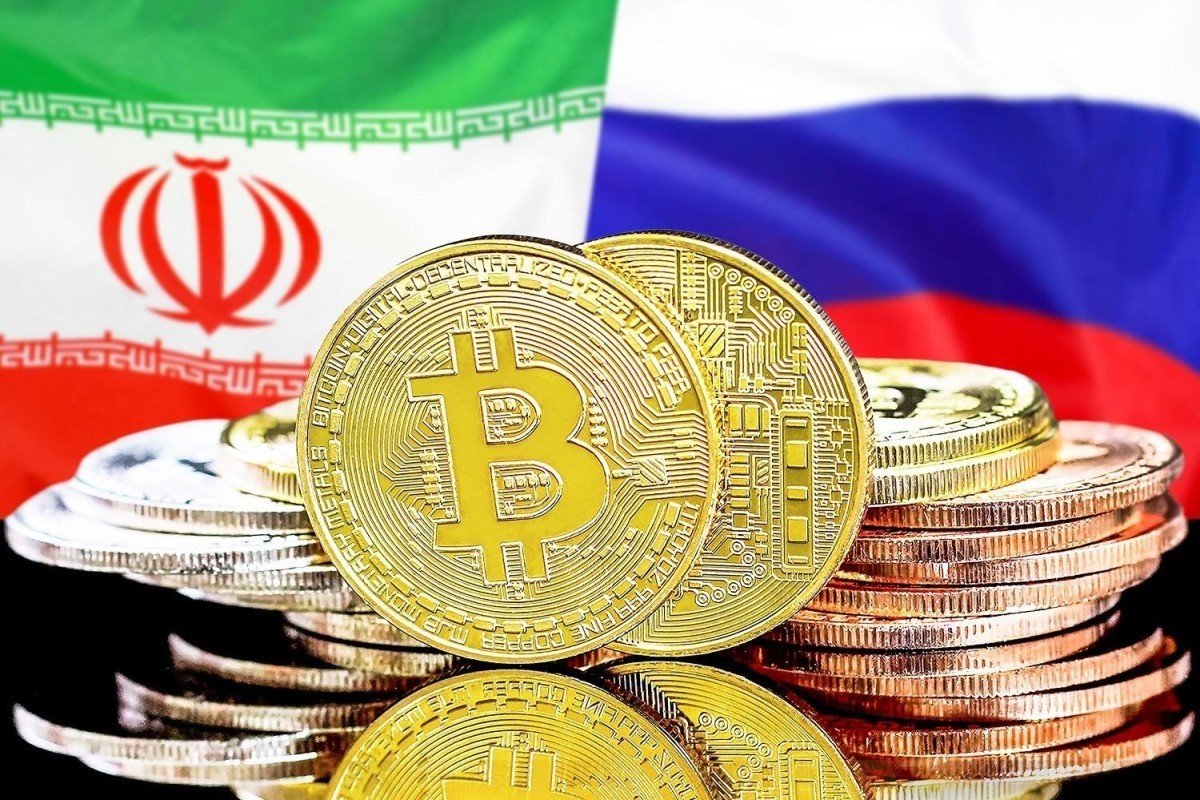
The decline observed in the cryptocurrency market in recent days has once again brought to the fore the role of digital assets not only as an investment instrument but also as a means of international settlement. Particularly in countries such as Russia and Iran, which are subject to extensive international financial sanctions, crypto assets and stablecoins have become one of the alternative channels for cross-border payments.
According to an analysis conducted by APA-Economics based on internationaline in the price of Bitcoin as the liquidity of crypto assets, the possibilities for converting them into traditional currencies, and the resilience of payment infrastructure to sanctions
What is happening in the crypto market?
On August 31, Bitcoin traded above $78,000. The decline in recent days comes amid an increased likelihood of interest rate hikes in the US and weakening risk appetite in global markets. Nevertheless, August as a whole cannot be described as a month of decline: Bitcoin surpassed $80,000 on August 25, having risen by approximately 28% since the beginning of the month at that time.
Geoff Kendrick, Global Head of Digital Assets Research at British bank Standard Chartered, believes that concerns over intervention in the US bond market and currency depreciation strengthen the investment thesis for Bitcoin as an alternative asset. This approach shows that although short-term pressure from interest rates and the dollar may push the price down, broader macroeconomic processes are sustaining interest in crypto assets.
Russia incorporates crypto into foreign trade settlements
Russia’s example more clearly demonstrates the transition of cryptocurrency from an investment instrument to a means of cross-border settlement. According to Russia’s PSB Bank, the cumulative turnover of the ruble-linked A7A5 stablecoin, launched in February 2025, approached $140 billion in August 2026. The A7 platform has approximately 15,000 regular business users, and the system processes up to 2,000 cross-border payments per day. It is reported that a large share of transactions is carried out with Asian countries, particularly China.
However, the $140 billion figure should not be regarded as the volume of Russia’s actual foreign trade conducted using cryptocurrency. This figure represents the cumulative turnover on the platform and may also include repeated movements of the same assets. At the same time, more liquid dollar-pegged stablecoins such as USDT are also used in cross-border settlements.
The main issue here is not so much the price of the crypto asset as its convertibility. If a company cannot convert the digital asset it receives into yuan, dollars, dirhams, or another currency, the real economic benefit of a technically completed payment decreases. Therefore, sanctions policies now target not only banks but also crypto exchanges, electronic wallets, and intermediaries that provide access to digital assets.
Crypto has become a parallel financial channel for Iran
The role of cryptocurrencies in Iran has increased amid tighter financial restrictions. According to estimates by Chainalysis, the volume of the cryptocurrency ecosystem linked to Iran exceeded $7.78 billion in 2025.
It would not be correct to present this figure as Iran’s foreign trade turnover conducted using cryptocurrency. The figure also includes transactions by individual users, exchanges, businesses, and state-linked addresses.
Nevertheless, the data show that the use of crypto assets in Iran also increases during periods of heightened political and geopolitical tensions. Chainalysis assesses crypto in the country as both a financial alternative and one of the elements of a parallel financial system. The US, meanwhile, expanded restrictions against Iran’s crypto exchanges and digital asset networks in 2026.
Moreover, Washington has announced that it will tighten secondary sanctions against foreign financial institutions working with Iran. This means that pressure on alternative payment and conversion channels will increase further.
Does trade also decline when Bitcoin falls?
It would not be correct to say that trade by these countries will decline at the same rate when Bitcoin depreciates.
If a settlement is conducted using a volatile asset such as Bitcoin or Ethereum, a sharp decline may cause a real financial loss for the party receiving the payment. For example, if the crypto asset depreciates by 10% after the goods are shipped but before the payment is converted into traditional currency, the counterparty’s actual income may also decrease.
However, the use of stablecoins in cross-border settlements reduces this risk. Since USDT is pegged to the value of the dollar and A7A5 to the value of the ruble, a 10–20% decline in Bitcoin does not mean that their nominal value will automatically fall by the same amount.
Therefore, from the perspective of international trade, the greater risk is not price but liquidity, convertibility, and the continuity of the payment chain. A crypto exchange being subjected to sanctions, assets in a wallet being frozen, or the loss of the ability to convert crypto into real currency may have a more serious impact on a trade transaction than changes in the price of Bitcoin.
BIS chief draws attention to risks of stablecoins
Pablo Hernández de Cos, General Manager of the Bank for International Settlements (BIS), also takes a cautious approach to the use of stablecoins as a large-scale means of payment.
In his view, stablecoins may create problems in terms of financial stability, interoperability between different systems, anti-money laundering controls, and monetary sovereignty. De Cos believes that stablecoins may be useful in certain specific areas, but in their current form they are not sufficiently reliable to serve as the basis of a large-scale payment system.
Syria is already moving in a different direction
Syria, meanwhile, is currently setting an example in the opposite direction. The US removed Syria from the list of state sponsors of terrorism on August 24. A few days later, Visa and Mastercard carried out the first international card transactions in the country.
This process shows that as traditional financial channels are restored, the need to rely on alternative settlement methods may also decrease. In other words, the role of cryptocurrency in foreign trade depends not only on the capabilities of the technology but also on the country’s level of access to the global financial system.
Thus, against the backdrop of international developments, it is not enough to view the cryptocurrency market solely through the prism of Bitcoin’s price. The examples of Russia and Iran show that digital assets have begun to function as a parallel cross-border payment infrastructure for certain countries.
A decline in Bitcoin may hurt businesses that settle transactions using volatile assets, while stablecoins reduce this price risk. Instead, other risks come to the fore: the freezing of wallets, crypto exchanges being subjected to sanctions, declining liquidity, and increasing difficulties in converting crypto assets into traditional currencies.
Analysts believe that, from this perspective, the main question for the international trade of sanctioned countries is not how many dollars Bitcoin falls to, but how long the digital payment chain can remain operational.
Source: en.apa.az