

Don't want to trade it yourself?
Our desk runs DEX portfolios on profit share.
Add to Google Preferred Sources
Federal Reserve Chairman Kevin Warsh signaled at the Jackson Hole symposium that the central bank may raise interest rates at its September meeting, pushing the probability of a quarter-point hike from 35% to roughly 58% according to CME Group data. Short-term Treasury yields jumped while major stock indexes posted modest declines. The Treasury Department is simultaneously expanding buybacks of longer-term bonds to at least $4 billion per operation under Secretary Scott Bessent, aiming to stabilize long-end yields after the 30-year bond recently hit its highest level since 2007. The divergent approaches create a complex backdrop for markets, with potential near-term headwinds for cryptocurrencies if tighter policy dampens risk appetite. Traders remain uncertain about the Fed’s path ahead of the Sept. 16 meeting.
Key Elements
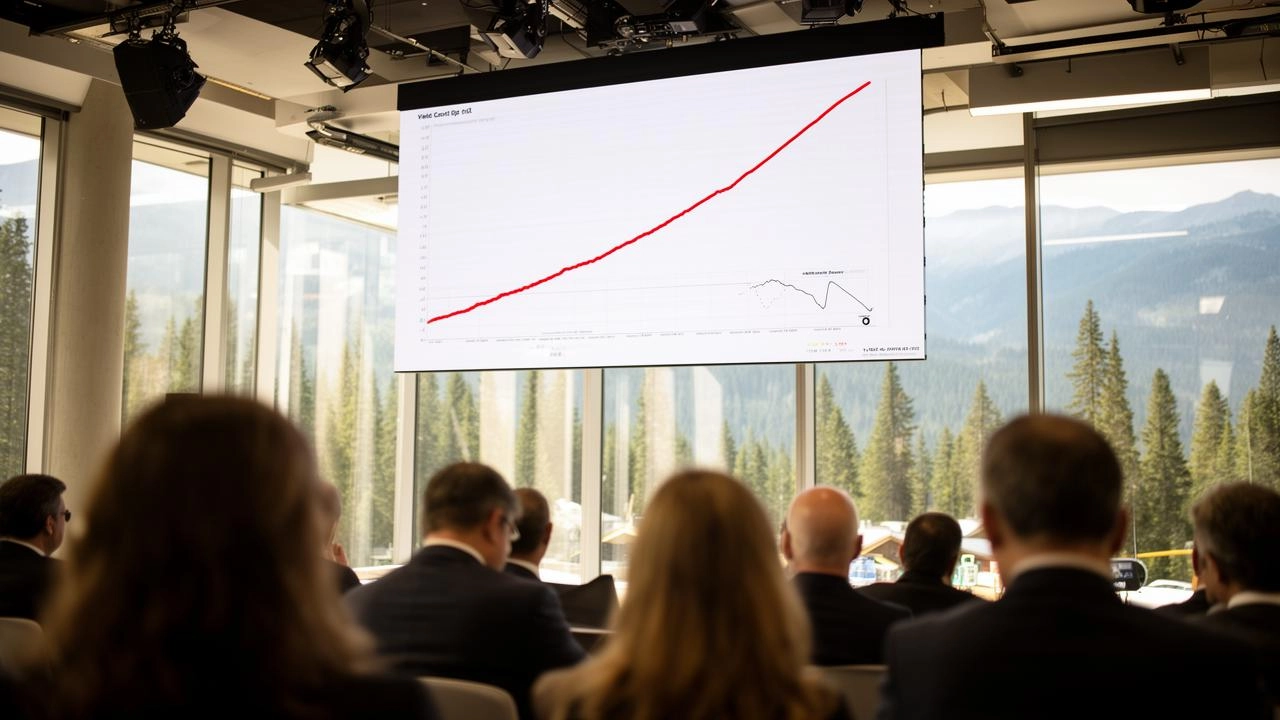
Federal Reserve Chairman Kevin Warsh has opened the door to an interest-rate increase as soon as next month, a shift that sent short-term Treasury yields climbing and injected fresh uncertainty into equity and cryptocurrency markets.
Speaking Friday at the Kansas City Fed’s annual symposium in Jackson Hole, Wyoming, Warsh signaled that the central bank’s 2% inflation target remains non-negotiable and that policymakers may need to do more “work” to bring price pressures under control. The remarks represented a more hawkish posture than many investors had anticipated and pushed the probability of a quarter-point hike at the September FOMC meeting to roughly 58%, according to CME Group data. That was up sharply from 35% just a day earlier.
The two-year Treasury yield jumped following the speech, while longer-dated yields rose more modestly. The 30-year bond settled at 5.207% on Friday, down from 5.266% before the Treasury Department’s surprise buyback announcement last week The 10-year note, which influences mortgage rates and other borrowing costs, climbed to 4.721% from 4.671% on Thursday
Equity markets absorbed the news with relative calm. The Dow Jones Industrial Average dipped less than 0.1%, the S&P 500 fell 0.2%, and the Nasdaq Composite declined 0.5%. The Russell 2000 index of smaller companies dropped 1.4%, while the S&P 500 industrials sector slid 1%, reflecting concerns that higher borrowing costs would pressure economically sensitive businesses.
The muted stock reaction stood in contrast to the sharper selloffs that followed Warsh’s two previous high-profile appearances as chairman in June and July. In the first, he surprised investors with his inflation concerns. In the second, he triggered the opposite reaction by making comments that raised doubts about his willingness to back up hawkish rhetoric with actual policy changes.
“You’ve essentially signaled to the market that the Fed more or less will deliver rate hikes,” said George Catrambone, head of fixed income Americas at DWS. “I’m just not sure that as the data comes in, that’s going to be the case.”
Catrambone added that raising rates could hurt the economy at a time when consumers are showing signs of weakness, while holding off could risk another selloff in longer-term bonds by resurfacing questions about Warsh’s credibility.
Tony Parish, chief investment officer at Alphastar Capital Management, said Warsh “left things highly uncertain. If there were any shifts in certainty, it was toward the possibility of rate hikes—which markets don’t particularly like.”
Kristian Kerr, head of macro strategy for LPL Financial, noted that traders are still trying to gauge the Fed chair’s approach. “There’s this element of still trying to figure [Warsh] out,” he said. “That’s going to go on for a while.”
Treasury Moves to Counter Long-End Pressure
The Fed’s tightening signals come as the Treasury Department pursues a different strategy aimed at stabilizing the long end of the bond market. Treasury Secretary Scott Bessent has directed an expansion of liquidity-backed buybacks for 10-20 and 20-30 year bonds, increasing the minimum size per operation from $2 billion to $4 billion.
In an interview with CNBC last week, Bessent indicated that the objective was to bring down longer-term bond yields, which he argued did not reflect economic fundamentals. The move followed a period of turbulence in which the 30-year Treasury yield climbed above 5.3%, its highest level since 2007.
The intervention appears to have had some early success, with longer-term yields falling relative to short-term yields in recent days. The Treasury’s actions may also help offset the impact of the Fed’s balance sheet reduction program, potentially creating a more balanced environment for long-duration assets.
Warsh has previously advocated for a “Treasury-Fed accord,” suggesting the possibility of more coordinated debt and balance sheet policies. Such alignment could reconcile the Fed’s tightening stance with the Treasury’s liquidity-enhancing measures, providing a more predictable backdrop for markets if inflation is contained and liquidity conditions improve.
Crypto Sector Faces Near-Term Headwinds
The prospect of higher short-term rates poses potential challenges for the cryptocurrency sector. An anticipated shift toward tighter monetary policy could temper investor appetite for riskier assets, potentially leading to increased volatility in digital asset markets.
Crypto markets have historically shown sensitivity to shifts in Fed policy expectations, with rate-hike cycles often coinciding with periods of reduced risk appetite. The jump in rate-hike probability from 35% to nearly 60% represents a meaningful repricing that could weigh on speculative assets in the near term.
The divergence between the Fed’s focus on short-term rates and the Treasury’s efforts to stabilize long-term bonds creates a complex backdrop. While the Treasury’s buyback expansion may support long-duration financial conditions, the Fed’s hawkish signals could still pressure risk assets across the board.
Market Context
Equity investors have largely shrugged off the recent bond market turmoil, focusing instead on the conclusion of another strong earnings season and historically low trading volumes. Stocks received a boost Thursday after Nvidia reported another blowout quarter, easing concerns about cooling demand for AI chips. The S&P 500 remains roughly 1% below its all-time high.
The September FOMC meeting on Sept. 16 now looms as a pivotal moment for market participants. Warsh’s remarks suggest policy tightening is possible if inflation fails to show further progress, while the Treasury’s bond market interventions will be closely monitored for their effect on liquidity dynamics.
The start of September also kicks off what has historically been a bumpy month for stocks, adding another layer of uncertainty as traders position for the Fed’s next move.
Note: Treasury yields rise when bond prices fall. Yield figures reflect market levels as of Friday’s close unless otherwise noted.
Once added, BigGo Finance appears first in Google Search Top Stories, so you get the broadest, most up-to-the-minute, and most comprehensive global financial news first.
Source: finance.biggo.com