

Don't want to trade it yourself?
Our desk runs DEX portfolios on profit share.
Add to Google Preferred Sources
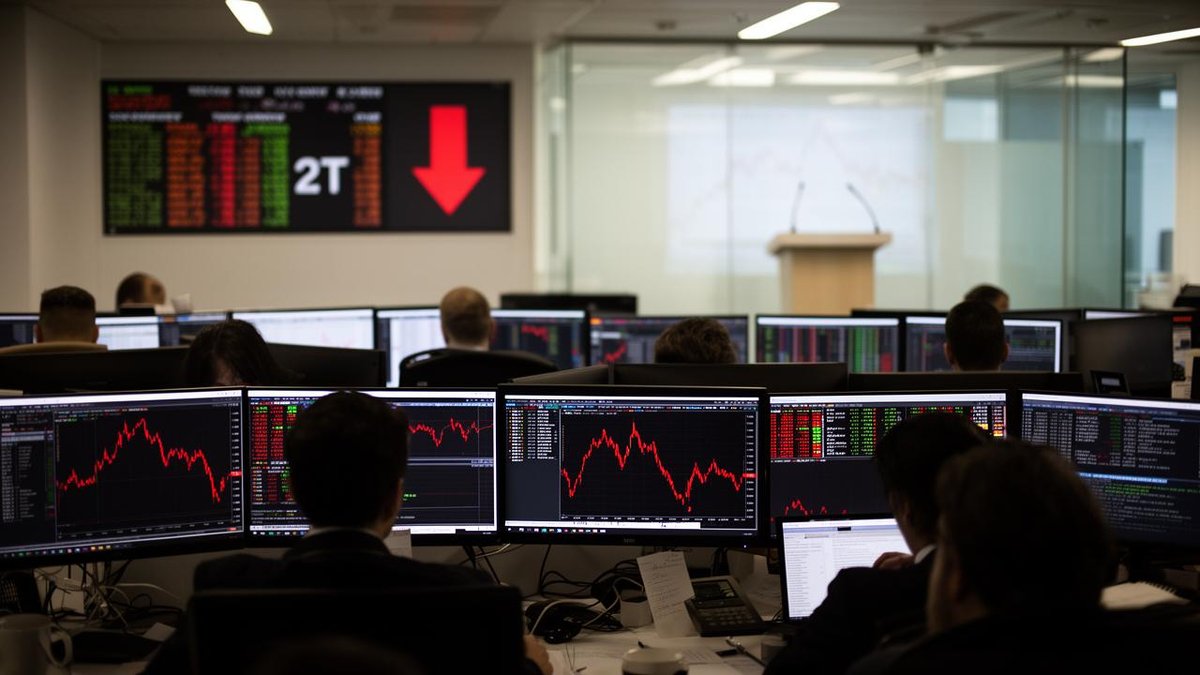
Federal Reserve Chair Kevin Warsh’s hawkish Jackson Hole remarks triggered a synchronized selloff across global markets on August 29, erasing nearly $2 trillion from stocks, metals, and cryptocurrencies in under three hours. Odds of a September rate hike jumped from 34% to 61.7% after Warsh called inflation concerning and signaled the central bank may need to keep policy restrictive. XRP fell 4% from $1.42 to $1.36, interrupting a 43.7% weekly rally that had been supported by $77.47 million in US spot ETF inflows and $86.5 million in Goldman Sachs exposure. <a href="https://xpertsstudio.com/bitcoin-btcusd-is-up-1-07-on-aug-29-why-it-happened/” title=”Bitcoin (BTCUSD) Is up 1.07% on Aug 29: Why It Happened”>Bitcoin retreated below $77,000 despite $2.5 billion in ETF inflows and continued whale accumulation. Ethereum stalled near $2,500, Solana held above $100, and Dogecoin consolidated near $0.085 as traders reassessed risk appetite in a potentially higher-rate environment.
Key Elements
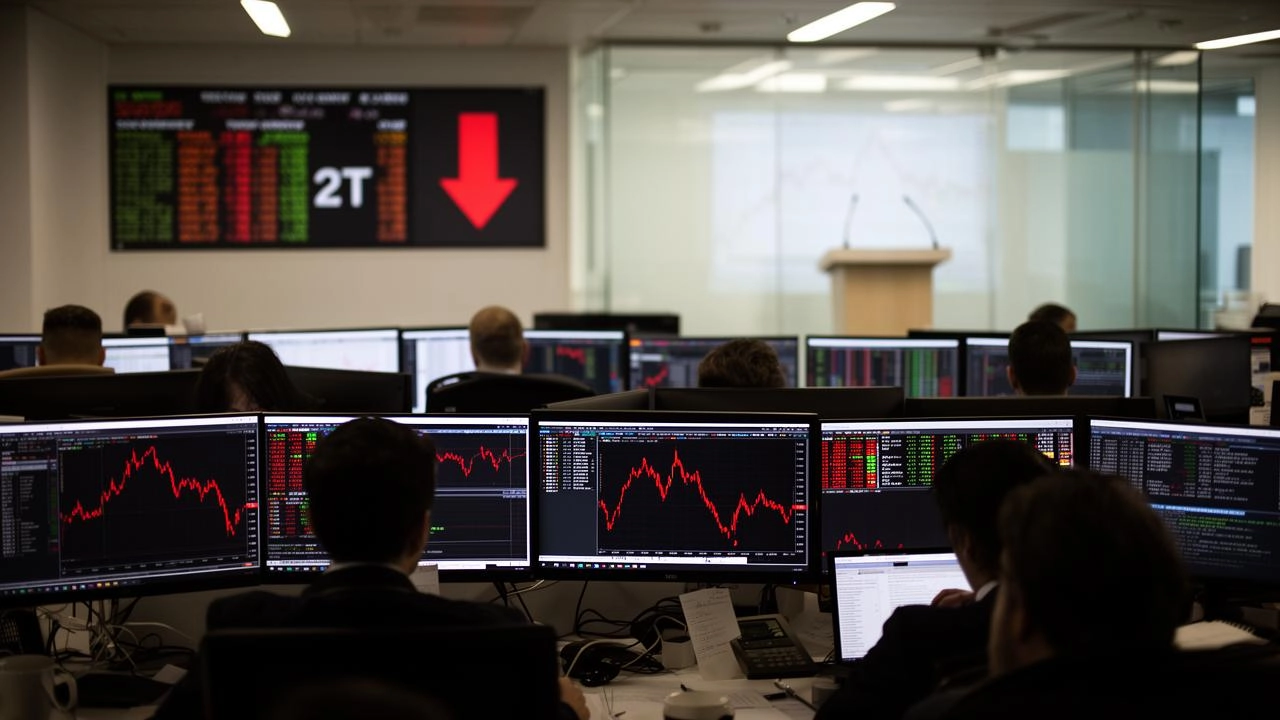
A broad selloff ripped through global financial markets on August 29 after Federal Reserve Chair Kevin Warsh delivered an unexpectedly hawkish assessment of inflation at the Jackson Hole economic symposium. Stocks, precious metals, and cryptocurrencies lost nearly $2 trillion in combined value within roughly two and a half hours, with digital assets bearing a significant share of the damage.
Warsh told the gathering that inflation remains concerning and that the central bank’s 2% target is still out of reach. He noted that 54% of the components making up personal consumption expenditures inflation had risen more than 3% over the past 12 months, a statistic that underscored the persistence of price pressures despite earlier progress. Markets had largely priced in a pause, so the remarks landed with force. Odds of a September rate hike jumped from 34% to 61.7% within hours, while the two-year Treasury yield climbed to a one-month high.
The reaction was immediate and synchronized across asset classes. Bitcoin fell from above $79,000 to near $76,800 during the session, while the S&P 500 slipped from roughly 7,770 to 7,710. Gold dropped from around $4,620 per ounce to below $4,470, and silver tumbled from near $71 per ounce into the $66 range. The uniformity of the declines confirmed that the move was driven by macro forces rather than any asset-specific catalyst.
XRP absorbed one of the sharper blows among major tokens. The asset entered the session at $1.4227 before falling to $1.36, a decline of roughly 4%, and later stabilized near $1.38. The drop came on the heels of a remarkable 43.7% weekly rally that had carried XRP to the $1.45 area, its strongest performance in years. Traders on Hyperliquid had already turned bearish ahead of the move, positioning for a pullback after the token’s vertical advance.
The selloff interrupted what had been a period of notable institutional accumulation in XRP-linked products. US spot XRP ETFs attracted $77.47 million across six consecutive positive sessions through August 25, and total assets in those funds now stand at approximately $1.5 billion. Goldman Sachs disclosed $86.5 million in exposure across five XRP ETFs in its second-quarter filing, a signal that large financial institutions have been building positions despite the volatile price action.
Network activity has shown a mixed picture. Daily active addresses on the XRP Ledger rose approximately 35% during August, indicating higher engagement from existing users. However, new address creation remained relatively flat, suggesting that the rally was driven more by increased activity among current participants than by a wave of fresh entrants.
Bitcoin’s decline brought it back below a key technical threshold. The cryptocurrency had surged to $81,500 earlier in the week, a 31% gain from its August 1 level near $62,229, before retreating to the $77,000 range. On-chain data showed a stark divergence between holder cohorts during the rally. Wallets holding between 0.1 and 1 BTC posted an Accumulation Trend Score of -0.982, indicating aggressive distribution by retail investors. In contrast, wallets holding 100 or more BTC continued accumulating, with addresses containing over 10,000 BTC adding 46,420 coins over the past 60 days.
Institutional demand through exchange-traded products remained robust even as spot prices pulled back. US spot Bitcoin ETFs recorded $2.5 billion in inflows over seven trading sessions ending August 27, their strongest stretch since October. The divergence between retail selling and institutional buying suggests that the recent rally was driven primarily by larger players absorbing supply from smaller holders.
Ethereum faced its own technical challenges after stalling near the $2,500 level. The asset had broken out from a base between $1,850 and $1,920 and rallied almost vertically toward the $2,400-$2,520 supply zone, but repeated rejections in that area have raised the risk of consolidation or a corrective pullback. The first major support sits between $2,210 and $2,310, with a deeper zone near $2,060 to $2,140 if selling accelerates. On the four-hour chart, Ethereum formed three successive peaks around the same resistance region and slipped below its rising trendline, a structure that resembles a potential three-drive pattern and typically signals waning momentum.
Solana held above the psychologically important $100 level, trading near $104 after an 11% weekly gain. Long-term charts have drawn comparisons to the 2022-2023 bottoming process, when SOL briefly dipped below a major support level before staging a powerful recovery. The current formation shows Solana briefly trading below $80 before reclaiming that level, a move some analysts describe as a potential bear trap. The relative strength index is testing a multi-year descending resistance line, echoing the momentum shift that preceded the prior cycle’s advance above $200.
Dogecoin pulled back to near $0.085 after a 4.3% daily decline, though the token retained gains of 22.3% over 14 days and 21.8% over 30 days. Analyst Ali Martinez identified $0.090 as the resistance level defining a potential bullish flag breakout, with targets at $0.096, $0.105, and $0.115 if confirmed. CoinGlass data showed $4.85 million in total Dogecoin liquidations over 24 hours, with long positions accounting for $4.24 million of the total.
The macro backdrop now looms over the entire crypto market. Warsh’s remarks pushed Treasury yields higher and strengthened the dollar, making speculative assets comparatively less attractive. The September Federal Reserve meeting has taken on outsized importance, with traders now weighing the possibility of another rate increase against a backdrop of resilient economic data and stubborn inflation readings. For digital assets, the path forward depends heavily on whether institutional inflows can continue to offset the headwinds from a more restrictive monetary policy stance.
Elsewhere in the ecosystem, Rakuten Wallet announced plans to distribute physical Shiba Inu commemorative coins at its Securities Investment Academy event in Fukuoka on September 12. The metal souvenirs, first introduced in July using a sandblasting finish, carry no blockchain connection and serve strictly as collectibles. Attendees need only present a screenshot of their SHIB holdings in the Rakuten Wallet app to qualify. The exchange has been expanding its support for the meme token since adding it to the platform in April, enabling users to convert Rakuten Points into SHIB and spend the asset through Rakuten Pay at more than 5 million locations across Japan.
For XRP, the immediate technical picture centers on the $1.41 to $1.45 resistance zone. A decisive move above $1.45 could reopen the path toward $1.55 to $1.65, while repeated rejection leaves the token vulnerable to further declines toward $1.36 and, below that, $1.28. The stronger support zone sits between $1.00 and $1.05, a level that would likely only come into play if the broader risk-off environment intensifies.
Once added, BigGo Finance appears first in Google Search Top Stories, so you get the broadest, most up-to-the-minute, and most comprehensive global financial news first.
Source: finance.biggo.com