


Don't want to trade it yourself?
Our desk runs DEX portfolios on profit share.
- Bitcoin was retesting its rally near $80,000 as spot ETF inflows and on-chain accumulation ran up against Jackson Hole caution and persistent inflation pressure.
- The market sees $81,700 to $83,000 as the key resistance zone and around $77,000 as major support, with a break above or below that range set to determine the short-term trend.
- With US spot Bitcoin ETFs posting nine straight sessions of net inflows, a wave of short liquidations, and still-limited overheating signals, traders are watching whether Bitcoin can break through the low-$80,000 range after the Jackson Hole speech to sustain the rally.
Forecast Trend Report by Period
Bitcoin has climbed back toward $80,000 on inflows into spot exchange-traded funds and on-chain accumulation, but the rally is being tested again near that level as inflation concerns and caution ahead of Jackson Hole weigh on sentiment.
The market is watching $81,000 to $83,000 as a key resistance zone. A break below $77,000, by contrast, could sap momentum from the recent rebound.
As of 6:33 p.m. on Aug. 28, Bitcoin was trading at $79,456 on Binance’s USDT market, down about 0.41% from a day earlier. On Upbit, it changed hands at about $80,100. The kimchi premium, which tracks the price gap between overseas and South Korean exchanges, stood at 0.87%.
Nvidia Lift Fails to Revive Risk Appetite as Jackson Hole, Oil Stay in Focus
Global technology stocks advanced after Nvidia posted strong results. Even so, broader appetite for risk assets has yet to recover meaningfully. Geopolitical tensions around the Strait of Hormuz and caution ahead of the Jackson Hole meeting are keeping crypto markets in wait-and-see mode.
Qatar Prime Minister Mohammed bin Abdulrahman Al Thani visited Iran on Aug. 27 to discuss a temporary joint shipping lane through the Strait of Hormuz and mine-clearing measures, according to Qatar’s foreign ministry and other sources. The US and Iran remain far apart on how to normalize passage through the strait. Iran is demanding the restoration of a previous memorandum of understanding as a condition for reopening the waterway, while the US has ruled out renewed talks and continues economic pressure on Tehran.
Inflation remains another overhang. The US personal consumption expenditures price index for July, released on Aug. 26, rose 3.7% from a year earlier. Core PCE climbed 3.3%, also well above the Fed’s 2% target. If disinflation continues to stall, the Fed may keep policy tight for longer and long-term Treasury yields could remain elevated.
Markets are now focused on Federal Reserve Chair Kevin Warsh’s Jackson Hole keynote, scheduled for 11 p.m. Korea time on Aug. 28. It will be Warsh’s first appearance at Jackson Hole since taking office. The key question is how he assesses inflation that remains above target and the rise in long-term yields. Traders are also watching his views on the US Treasury Department’s expanded bond buybacks aimed at stabilizing long-term rates. His remarks could reshape expectations for the September Federal Open Market Committee meeting and broader sentiment toward risk assets.
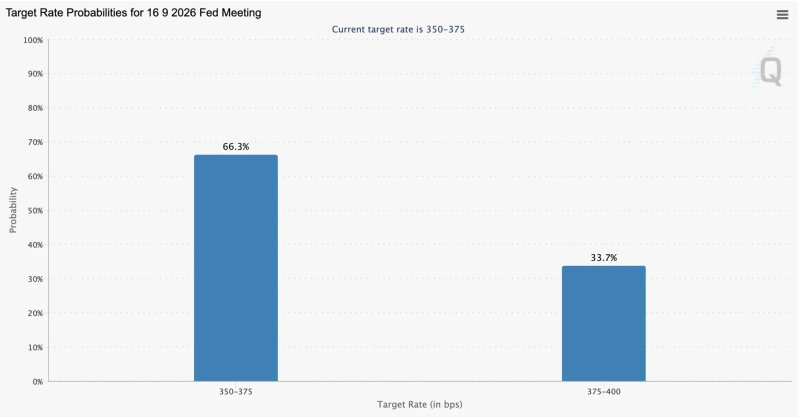
According to CME FedWatch data on Aug. 28, interest-rate futures were pricing in a 66.2% chance that the Fed would leave rates unchanged in September, with a 33.8% probability of a hike. Nvidia’s earnings helped revive sentiment in technology shares, but markets remain sensitive to the Fed’s message as long as uncertainty around rates and oil persists.
US Spot Bitcoin ETFs Post Nine Straight Days of Inflows as Overheating Signs Stay Limited
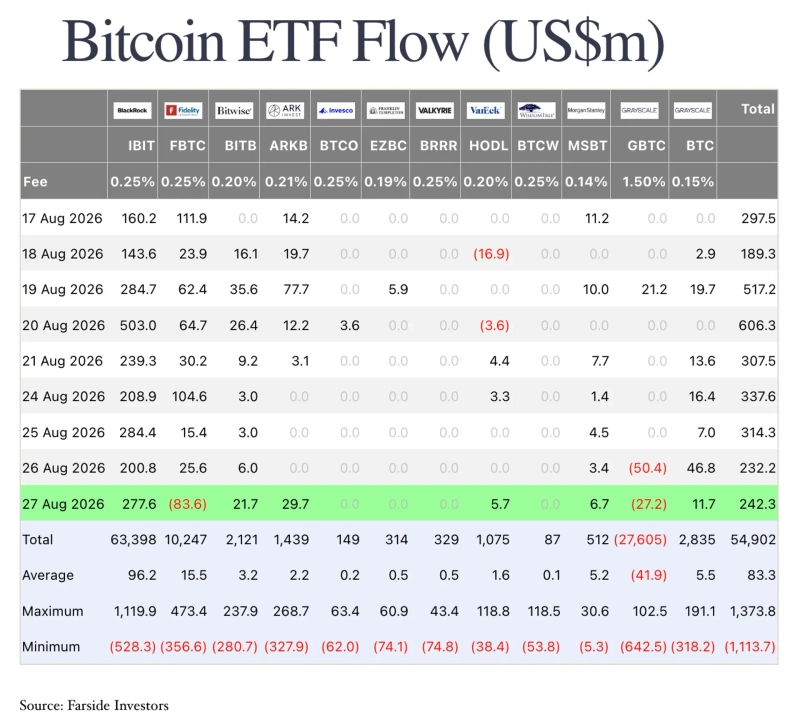
US spot Bitcoin ETFs logged net inflows for nine straight trading sessions from Aug. 17 through Aug. 27. Cumulative net inflows over that stretch totaled $3.0442 billion. Policy expectations also improved after President Donald Trump signaled support for advancing the CLARITY Act and mentioned the possibility of state-level crypto purchases. Hopes that Treasury buybacks could help steady long-term yields added to the improvement in sentiment.
The rebound began with large-scale short liquidations, and ETF inflows then helped extend the advance, according to some market analysis. On-chain analytics firm Glassnode said the biggest single-day short squeeze since 2019 took place on Aug. 19, with 85% of all liquidations during the rebound concentrated in short positions. It added that US spot Bitcoin ETFs drew $2.23 billion during the rebound, marking the strongest inflow run of the year.
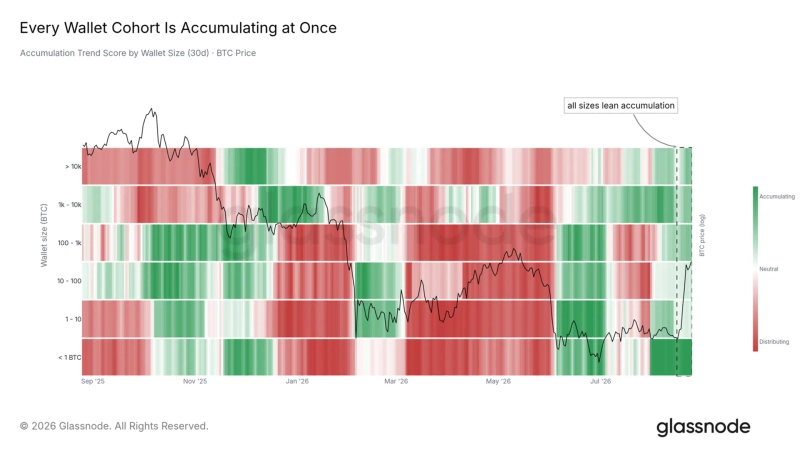
Glassnode said Bitcoin also flowed off exchanges during the rebound, while buying broadened beyond whales to smaller investors. That suggests a rally that started with short covering spread into accumulation across holder groups, widening the demand base.
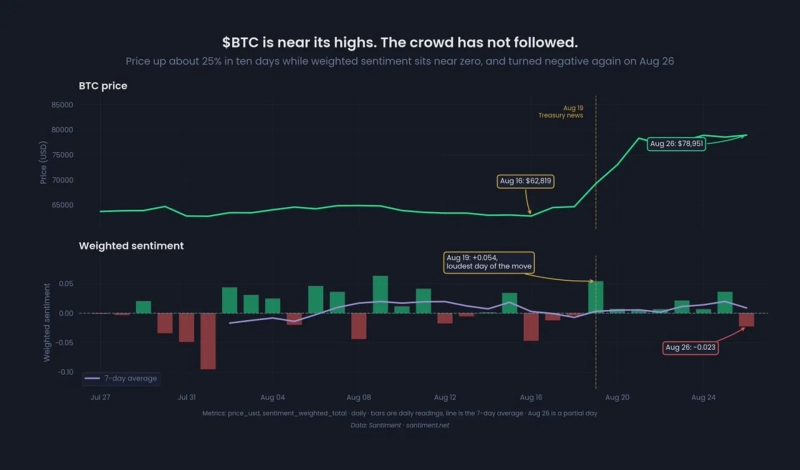
Still, price gains have not been fully matched by improving sentiment. On-chain analytics firm Santiment said Bitcoin surged from about $62,800 on Aug. 16 to about $78,900 on Aug. 26, but its investor-sentiment gauge turned negative again.
Strong rallies typically bring a parallel rise in optimism. This time, overheating signals remain limited relative to the scale of the price advance.
Bitcoin Battles at $80,000 as $83,000 Emerges as Short-Term Pivot
As Bitcoin rebounds toward $80,000, attention is shifting to whether it can clear supply concentrated in the low-$80,000 range. After the sharp short-term run-up, traders are also watching whether key support levels can hold.
Technically, $81,700 is emerging as a major resistance level. Market analyst Julien Pineida said that level is the most important upside barrier above the psychological $80,000 threshold. Failure to break through could trigger a short-term pullback. On the downside, $73,600 and $67,300 are the main support zones. Pineida said $67,300 is a critical support level and that a retreat to that area would undermine confidence in the recent rebound and could push the market back into a range-bound pattern.
Crypto exchange Bitfinex also identified the low-$80,000 area as the key short-term battleground. It said a close above $82,818, the intraday high from May, for two straight sessions, combined with continued ETF inflows, would signal room for further gains. If Bitcoin is rejected again in the low-$80,000 range on rising volume, the recent rebound could lose force.
On the downside, the $77,000 area is the near-term line of defense. Bitfinex said the rebound structure could remain intact if Bitcoin holds between $77,100 and $77,800 even after the Jackson Hole speech and options expiry.
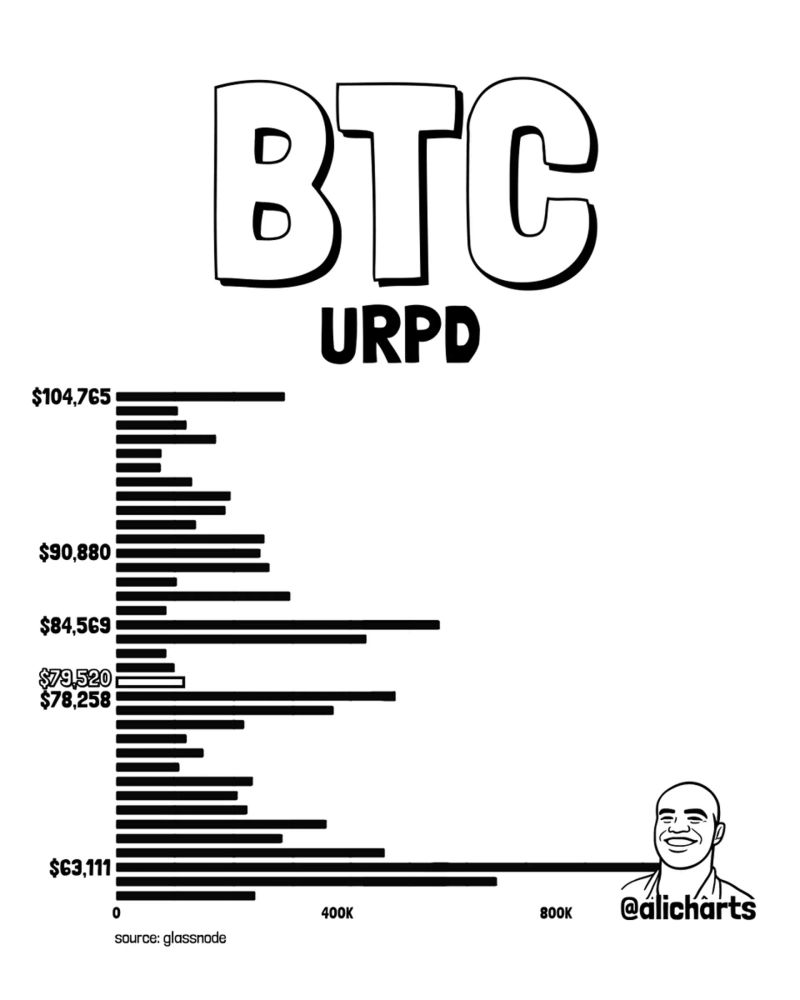
Some analysts also argue Bitcoin has completed a basing phase and is entering a breakout period over the medium to long term. Fairlead Strategies founder Katie Stockton said Bitcoin has emerged from oversold territory but has not yet entered an overheated zone. Short-term momentum is strong, and the medium-term trend has improved since the lows. She said the basing pattern that began in June was completed after another test of the lows in July and that Bitcoin is now attempting to break out of its trading range. Stockton also viewed Bitcoin’s move above the 200-day moving average, which had capped gains in May, as constructive, and said Bitcoin’s advance could outlast gold’s. In the short term, however, whether Bitcoin can break through supply in the low-$80,000 area after the Jackson Hole speech remains the key test for the rally.
Kang Min-seung, Bloomingbit reporter minriver@bloomingbit.io
#Bitcoin ETF
#Interest Rate
#Analysis
BTC
Source: en.bloomingbit.io
1 Comment
Pingback: Bitcoin is outperforming stocks and correlating with gold just when it matters most – xpertsstudio