

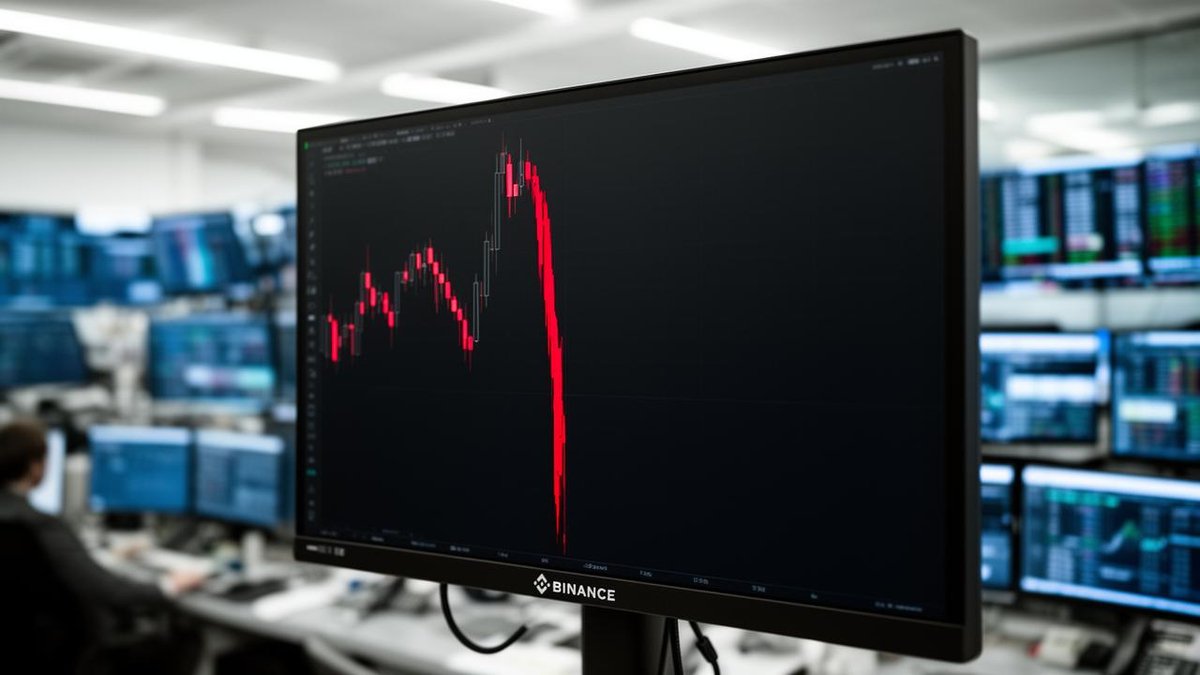
Don't want to trade it yourself?
Our desk runs DEX portfolios on profit share.
Add to Google Preferred Sources2
<a href="https://xpertsstudio.com/bitcoin-ethereum-post-strong-weekly-gains-btc-up-23-eth-nearly-29/” title=”Bitcoin, Ethereum post strong weekly gains: BTC up 23%, ETH nearly 29%”>Bitcoin suffered a localized flash crash on Binance on August 22, 2026, with the BTC/USD pair plunging to $72,500 while the broader market held near $79,000. The move created a $3,300 price gap versus Coinbase, where the low was $75,800, and triggered a cascade of forced liquidations among leveraged traders. Technical analyst Peter Brandt criticized the exchange’s infrastructure, describing the event as part of a recurring pattern of severe stop-outs and citing a similar incident in October 2025. The crash stemmed from fragmented liquidity and a single large sell order that opened a temporary gap in Binance’s order book. Experts emphasized that protective orders tied to local last-trade prices are vulnerable during such episodes, while market-wide weighted mark prices offer better protection against isolated price wicks.
Key Elements
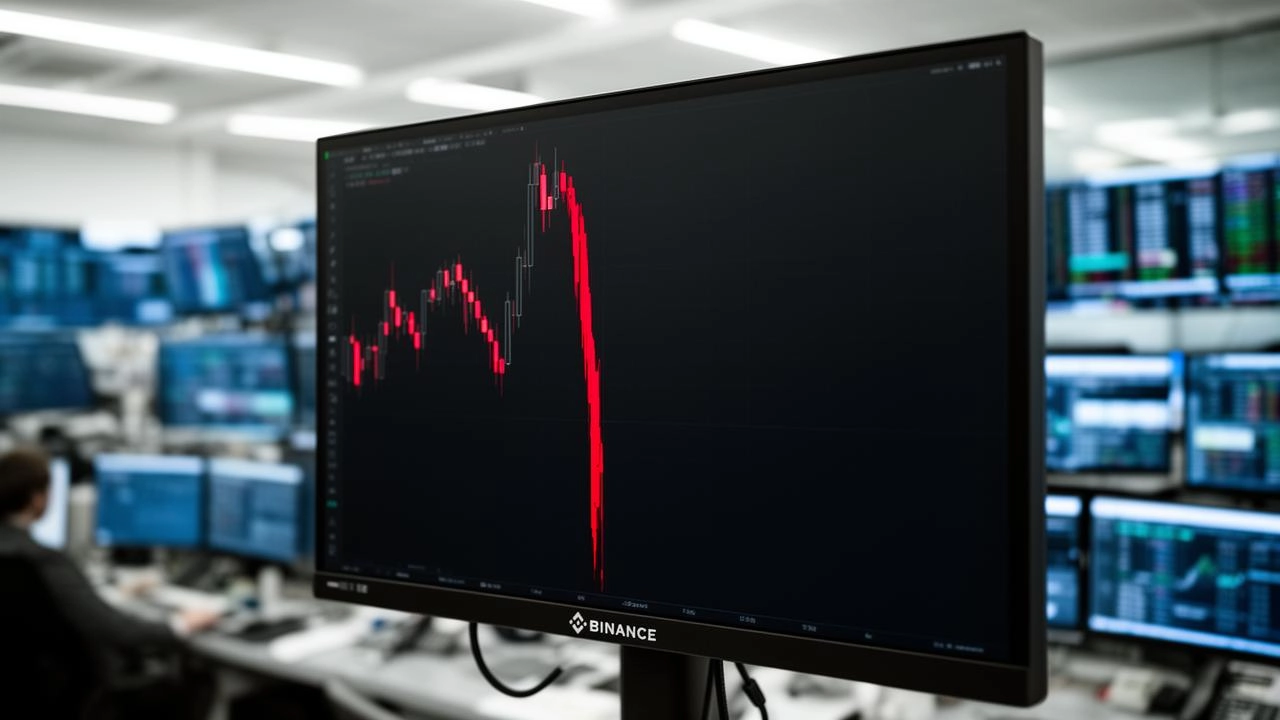
A sudden, localized price collapse on Binance over the weekend sent Bitcoin tumbling to $72,500 on the platform, creating a $3,300 divergence from Coinbase and triggering a cascade of forced liquidations that has reignited criticism of the exchange’s trading infrastructure.
The anomaly occurred on Saturday, August 22, when the BTC/USD pair on Binance printed a dramatic downward wick within a single hour. At the same moment, Bitcoin’s broader market price held near $79,000, while Coinbase recorded a low of $75,800. The gap between the two major venues left Binance users facing stop-loss executions at prices far below where the asset was actually trading elsewhere.
Peter Brandt, chief executive of Factor LLC and a widely followed technical analyst, publicly questioned the reliability of Binance’s systems in the wake of the incident. He characterized the episode as another instance in which retail traders were forced out of positions at artificially depressed levels, calling it a “boondoggle” and pointing to what he described as the platform’s history of “historically gruesome stop-outs.”
Brandt noted that a similar event had occurred on October 10, 2025, suggesting the latest flash crash was not an isolated failure but part of a recurring pattern. His remarks underscored broader concerns about order execution quality and platform stability during periods of acute volatility.
How the Liquidity Gap Unfolded
The sharp decline stemmed from fragmented liquidity across cryptocurrency markets. When a substantial sell order hit Binance without sufficient immediate buying interest at prevailing prices, a temporary vacuum opened in the order book. This gap allowed the price to slide rapidly on that single venue even as other exchanges remained comparatively stable.
As the price fell, Binance’s automated liquidation engine began closing leveraged positions in succession. Each forced liquidation introduced additional sell pressure, creating a chain reaction that amplified the downward move until BTC/USD reached $72,500.
The sequence illustrates a structural vulnerability in how protective orders are configured. Traders who set stop-losses based on a single exchange’s last traded price were exposed to the full brunt of the localized wick. By contrast, protective orders tied to a market-wide weighted mark price would have been insulated from the anomaly, since the broader index price never approached those lows.
| Exchange | Lowest BTC/USD Price | Divergence |
|---|---|---|
| Binance | $72,500 | Reference |
| Coinbase | $75,800 | $3,300 higher |
Note: Prices reflect the lowest levels recorded during the hour-long disruption on August 22, 2026.
The incident highlights the elevated risk associated with local last-price protective orders during thin liquidity conditions. Market participants are now being urged to evaluate whether their risk management frameworks account for the possibility of single-venue price dislocations that diverge sharply from consolidated market levels.
Binance, which ranks among the world’s largest cryptocurrency exchanges by trading volume, has previously faced scrutiny over order execution and platform stability during volatile episodes. Brandt argued that recurring incidents of this nature erode retail investor confidence and demonstrate the need for more robust trading safeguards.
The flash crash also raises questions about the adequacy of liquidity provisioning on major venues during weekend trading hours, when institutional participation tends to be thinner and order books more susceptible to outsized moves from individual transactions.
For traders, the episode serves as a reminder that the price displayed on any single exchange can de in the fragmented digital asset landscape. The divergence between Binance and Coinbase underscores how quickly protective infrastructure can fail when it is anchored to a venue-specific reference point rather than a broader market benchmark
Once added, BigGo Finance appears first in Google Search Top Stories, so you get the broadest, most up-to-the-minute, and most comprehensive global financial news first.
Source: finance.biggo.com