

Don't want to trade it yourself?
Our desk runs DEX portfolios on profit share.
Add to Google Preferred Sources
XRP surged roughly 30% over the past week to trade near $1.29, its best weekly performance since the November 2024 post-election rally. The move was driven by a record Bitcoin short squeeze, triggered by a U.S. Treasury announcement that it would nearly double long-term bond buybacks to at least $4 billion per operation starting September 9. More than $3 billion in short positions were liquidated within 24 hours. XRP outperformed its historical correlation with Bitcoin, gaining 10.40% on Wednesday alone, its sharpest one-day move since February. However, ETF inflows lagged conspicuously, falling from $5.81 million to $2.35 million on the token’s strongest day, while Bitcoin ETFs pulled in $517 million. Futures open interest dropped more than 11% from its rally peak, and XRP still trades about 17.5% below its 200-day moving average. The token closed above both its 50-day and 200-day exponential moving averages for the first time since a bearish death cross formed months ago, though the averages themselves have not yet reversed into a golden cross.
Key Elements
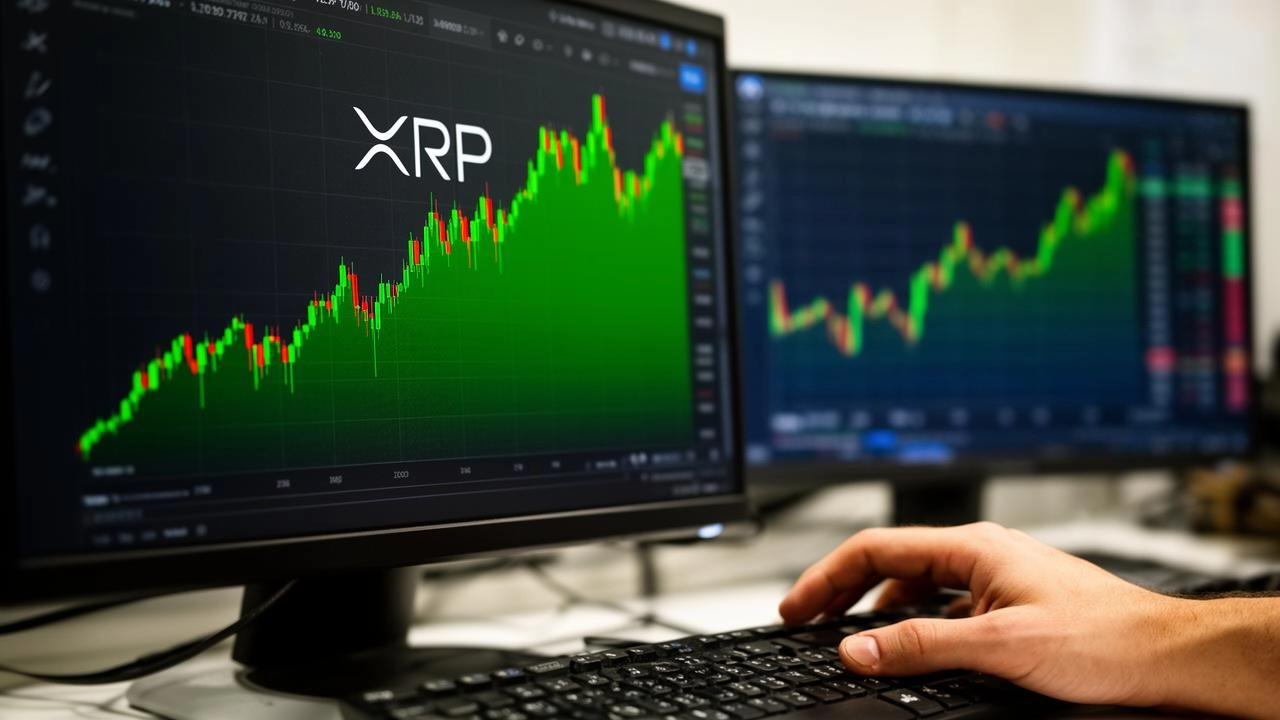
XRP has staged its most powerful rally in months, surging roughly 30% over the past week to trade near $1.29, a move that has outstripped Bitcoin’s gains and reignited debate over whether the token can sustain its momentum. The advance marks the coin’s best weekly performance since the post-election surge of November 2024, when XRP briefly approached an all-time high near $3.65.
The catalyst for the explosive move was a historic short squeeze in Bitcoin, which pushed the world’s largest cryptocurrency above $72,000 on Thursday for the first time since a June flash crash. The squeeze was triggered by a U.S. Treasury announcement that it would nearly double its long-term bond buybacks to at least $4 billion per operation starting September 9, a move traders have dubbed “QE Lite” because it echoes the Federal Reserve’s old stimulus playbook, albeit from a different arm of government.
The Treasury’s plan sent the 30-year yield tumbling from a 19-year high of 5.337% to below 5.20%, loosening financial conditions and igniting a broad risk-asset rally. Within 24 hours, more than $3 billion in short positions across the crypto market were liquidated, with Bitcoin shorts alone accounting for $2.75 billion—the largest short-liquidation event in crypto history, according to data from CoinGlass.
XRP did the heavy lifting on Wednesday, gaining 10.40% in a single session, its sharpest one-day move since February 6. A second leg higher on Thursday pushed the weekly candle toward $1.32, bringing the token within striking distance of its 200-day moving average for the first time since the beginning of the year. As of Friday, XRP was trading near $1.40, up more than 14% over 24 hours, making it the best-performing asset among the top 10 cryptocurrencies by market cap, ahead of Bitcoin’s 7.44% and Ethereum’s 4.50% gains.
What makes the move particularly notable is that XRP outran its historical correlation with Bitcoin. Based on the token’s 180-day correlation, the rally should have produced a 6.57% upside, but XRP delivered nearly four percentage points more, indicating genuine outperformance rather than a simple beta ride.
The technical picture, however, is more complicated than the headline number suggests. XRP had spent months trapped under a bearish “death cross” pattern, formed when the 50-day exponential moving average slipped below the 200-day average. Friday’s candle closed above both moving averages for the first time since the pattern formed, a development traders view as the first domino that must fall before the averages themselves eventually reverse into a bullish “golden cross.” But the 50-day average still sits below the 200-day line, meaning the death cross has not yet been invalidated.
Momentum indicators paint a similarly mixed picture. The Relative Strength Index, or RSI, hit 83.5 on the daily chart, deep into overbought territory above the 70 threshold that typically flags a potential pause or pullback. The Average Directional Index, or ADX, sits at 32.4, comfortably above the 25 level traders use to confirm a real trend, with the buy-side directional line reading above the sell-side one. The Squeeze Momentum Indicator has flipped to “off,” signaling that the volatility compression preceding the breakout has already fired.
Yet the money backing the rally tells a different story. While XRP’s price exploded, its exchange-traded fund flows lagged conspicuously. Daily XRP ETF inflows fell from $5.81 million to $2.35 million on the token’s strongest day, even as Bitcoin ETFs pulled in $517 million—their biggest single-day haul since May. The divergence is striking: the institutional pipes that had supported XRP’s earlier gains went quiet just as retail momentum took over.
Futures open interest has already dropped more than 11% from its rally-day peak, suggesting some of the leverage behind the move is unwinding. XRP still trades about 17.5% below its 200-day moving average, a reminder that the token remains well off its former highs despite the dramatic week.
The rally’s timing was politically charged. The Treasury announcement landed just hours before President Donald Trump met with crypto executives from Coinbase, Ripple, and Robinhood at the White House, further energizing investors. Trump has been pressing Congress to pass the CLARITY Act, which aims to establish a clearer regulatory framework for digital assets, and the Senate is scheduled to revisit the legislation on September 15.
XRP’s recent history underscores the significance of the move. The token bottomed at $0.9862 last week, the same zone it hovered in just before November 2024’s post-election rally carried it toward $3.65. The U.S. spot XRP ETFs had seen 30 straight days of net inflows after the launch of Canary Capital’s XRPC product on November 13, amassing $1.18 billion in combined assets by mid-December. That steady institutional demand became a cornerstone of the bullish case for XRP, with CNBC correspondent MacKenzie Sigalos calling it the standout crypto trade of 2026 in a January segment.
This week was a reversal of that dynamic: the price jumped, and the fund demand that had previously pushed XRP higher took a breather. Analysts are now watching key levels closely. Resistance sits at $1.43, Friday’s intraday high, followed by $1.60 near the top of the descending channel that has capped XRP since late 2025. Support sits at $1.34, then the zone between $1.0754 and $1.0965, with $0.9862 as the deeper floor.
Standard Chartered maintains a longer-term target of $2.80 for XRP, a bullish outlier that contrasts with momentum-based analyses suggesting downside risk toward $0.62 if the rally fades. The split underscores how unsettled sentiment remains even in the middle of a 30% weekly surge.
The next real tests come September 9, when the Treasury’s larger bond buybacks begin, and September 15, when the Senate revisits the CLARITY Act. For XRP holders, the question is whether the token can hold the levels the short squeeze built—or whether the rally, like so many before it, will fade as quickly as it arrived.
Once added, BigGo Finance appears first in Google Search Top Stories, so you get the broadest, most up-to-the-minute, and most comprehensive global financial news first.
Source: finance.biggo.com
2 Comments
Pingback: How Trump’s CLARITY Act Support Fueled the Crypto Rally – xpertsstudio
Pingback: Bitcoin: Correlation With Tech Stocks Hits Zero – xpertsstudio